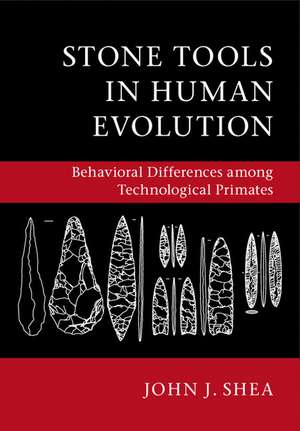
Stone Tools in Human Evolution
Autor John J Sheaen Limba Engleză Hardback – 7 noi 2016
Preț: 772.78 lei
Preț vechi: 898.58 lei
-14%
Puncte Express: 1159
Carte tipărită la comandă
Livrare economică 23 noiembrie-07 decembrie
Livrare prin curier în România Termenul estimat este afișat lângă disponibilitate.
Transport gratuit pentru acest produs Plată online sau ramburs, în funcție de opțiunile comenzii.
Retur gratuit în 14 zile Comandă securizată și suport în română.
Specificații
ISBN-13: 9781107123090
ISBN-10: 1107123097
Pagini: 258
Ilustrații: 51 b/w illus. 26 tables
Dimensiuni: 187 x 267 x 17 mm
Greutate: 0.72 kg
Editura: Cambridge University Press
Locul publicării:New York, United States
ISBN-10: 1107123097
Pagini: 258
Ilustrații: 51 b/w illus. 26 tables
Dimensiuni: 187 x 267 x 17 mm
Greutate: 0.72 kg
Editura: Cambridge University Press
Locul publicării:New York, United States
Cuprins
List of figures; List of tables; List of boxes; Preface; Acknowledgments; Introduction. Little questions vs big questions; 1. Why archaeologists misunderstand stone tools; 2. How we know what we think we know about stone tools; 3. Describing stone tools; 4. Stone cutting tools; 5. Logistical mobility; 6. Language and symbolic artifacts; 7. Dispersal and diaspora; 8. Residential sedentism; 9. Conclusion; Appendix 1. Traditional age-stages and industries; Glossary; Bibliography; Index.
Recenzii
'A useful counterbalance to hidebound Paleolithic systematics, Stone Tools in Human Evolution implements a better-grounded descriptive approach. It shows a way forward and therefore deserves close study.' Current Anthropology
'Designed for a readership of upper-division college and first-year archaeology graduate students (with 'boxes', plenty of line drawings, and a glossary of terms), but with a distinct message for all those who think about and research human evolution - biological and cultural - this interesting book has a valuable message. It is full of thought-provoking and sometimes provocative ideas.' Journal of Anthropological Research
'Designed for a readership of upper-division college and first-year archaeology graduate students (with 'boxes', plenty of line drawings, and a glossary of terms), but with a distinct message for all those who think about and research human evolution - biological and cultural - this interesting book has a valuable message. It is full of thought-provoking and sometimes provocative ideas.' Journal of Anthropological Research
Descriere
An exploration of how the evolution of behavioral differences between humans and other primates affected the archaeological stone tool evidence.