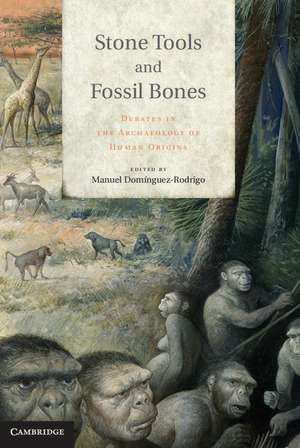
Stone Tools and Fossil Bones
Editat de Manuel Domínguez Rodrigoen Limba Engleză Hardback – 24 mai 2012
Nivel de studiu: masterat, doctorat și referință profesională. În cercetarea preistoriei timpurii, interpretarea modului în care hominizii interacționau cu mediul lor a generat numeroase dezbateri în ultimele decenii. Găsim în Stone Tools and Fossil Bones o sinteză riguroasă care nu se limitează doar la descrierea artefactelor, ci folosește metode științifice pentru a testa modelele comportamentale ale primilor oameni. Apreciem în mod deosebit abordarea holistică a editorului Manuel Domínguez Rodrigo, care reușește să integreze datele despre uneltele de piatră cu analiza detaliată a oaselor fosile, oferind o imagine de ansamblu asupra subzistenței și comunicării timpurii. Această lucrare reprezintă o evoluție firească a preocupărilor autorului, stabilind o legătură metodologică strânsă cu Deconstructing Olduvai: A Taphonomic Study of the Bed I Sites. Dacă în lucrarea anterioară accentul era pus pe tafonomie și pe specificul siturilor din Olduvai, volumul de față extinde cadrul dezbaterii la nivel global, incluzând perspective din primatologie. Stone Tools and Fossil Bones completează perspectiva oferită de Interdisciplinary Approaches to the Oldowan, adăugând o analiză mai profundă a faunei, care lipsește deseori din studiile axate strict pe tehnologia litică. În timp ce Making Silent Stones Speak oferă o reconstrucție narativă a vieții cotidiene, volumul editat de Rodrigo păstrează un ton academic precis, fiind structurat pe date cuantificabile, ilustrate prin hărți și tabele esențiale pentru înțelegerea contextului siturilor din Africa.
Preț: 819.17 lei
Preț vechi: 952.52 lei
-14%
Carte tipărită la comandă
Livrare economică 10-24 noiembrie
Specificații
ISBN-10: 1107022924
Pagini: 378
Ilustrații: 25 b/w illus. 1 map 9 tables
Dimensiuni: 157 x 235 x 25 mm
Greutate: 0.7 kg
Ediția:New.
Editura: Cambridge University Press
Locul publicării:New York, United States
V-ar putea interesa
-
 The Crucible of Creation: The Burgess Shale and the Rise of AnimalsSimon Conway Morris-14%Preț: 252.90 lei295.68 lei
 -
 How To Think Like a NeandertalThomas Wynn-25%Preț: 166.98 lei223.41 lei
 -
 Preț: 457.10 lei
 -
 The Ancient Human Occupation of BritainNick Ashton-31%Preț: 1096.34 lei1587.63 lei
 -
 Ancient Middle NigerRoderick J. McintoshPreț: 244.90 lei
 -
 Social ZooarchaeologyNerissa Russell-11%Preț: 443.88 lei498.75 lei
 -
 Mesolithic EuropeGeoff Bailey-11%Preț: 450.44 lei506.12 lei
 -
 Religion in the Emergence of CivilizationIan HodderPreț: 281.27 lei
 -
 The Rise of Bronze Age SocietyKristian Kristiansen-11%Preț: 498.51 lei560.13 lei
 -
 Origins and RevolutionsClive GamblePreț: 342.57 lei
 -
 Ancestral AppetitesKristen J. GremillionPreț: 176.08 lei
 -
 The Prehistory Of The MindProf Steven Mithen-27%Preț: 78.22 lei106.49 lei
 -
 Lithic TechnologyJr William AndrefskyPreț: 440.06 lei
De ce să citești această carte
Recomandăm această carte specialiștilor în paleoantropologie și studenților la arheologie care doresc să depășească descrierea tipologică a uneltelor. Cititorul câștigă acces la o dezbatere de nivel înalt între experți internaționali, primind instrumentele necesare pentru a evalua critic ipotezele actuale despre originile umane, bazate pe dovezi materiale concrete și analize comparative între specii.