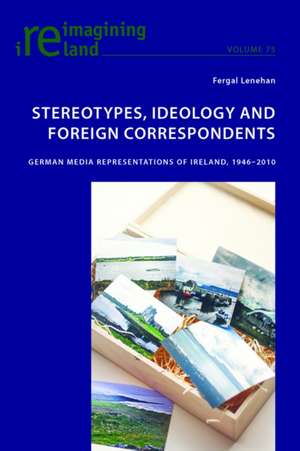
Stereotypes, Ideology and Foreign Correspondents: Reimagining Ireland, cartea 75
Autor Fergal Lenehanen Limba Engleză Paperback – 29 iul 2016
Din seria Reimagining Ireland
-
 Preț: 373.35 lei
-
 Preț: 254.71 lei
-
 Preț: 508.96 lei
-
 Preț: 423.79 lei
-
 Preț: 499.01 lei
- 23%
 Preț: 419.60 lei
-
 Preț: 425.47 lei
-
 Preț: 492.33 lei
-
 Preț: 268.02 lei
-
 Preț: 507.50 lei
-
 Preț: 307.15 lei
-
 Preț: 489.54 lei
-
 Preț: 491.80 lei
-
 Preț: 365.71 lei
-
 Preț: 242.47 lei
-
 Preț: 162.37 lei
- 23%
 Preț: 419.60 lei
-
 Preț: 285.48 lei
- 19%
 Preț: 520.04 lei
-
 Preț: 251.33 lei
- 23%
 Preț: 480.32 lei
- 19%
 Preț: 513.18 lei
- 7%
 Preț: 342.29 lei
-
 Preț: 300.65 lei
- 19%
 Preț: 564.88 lei
-
 Preț: 360.24 lei
-
 Preț: 484.79 lei
- 11%
 Preț: 308.58 lei
-
 Preț: 357.04 lei
- 23%
 Preț: 437.70 lei
- 7%
 Preț: 404.01 lei
-
 Preț: 375.67 lei
- 23%
 Preț: 439.38 lei
- 11%
 Preț: 318.48 lei
- 23%
 Preț: 451.25 lei
-
 Preț: 378.71 lei
-
 Preț: 343.86 lei
- 19%
 Preț: 530.16 lei
- 19%
 Preț: 449.08 lei
-
 Preț: 477.38 lei
-
 Preț: 494.59 lei
-
 Preț: 368.66 lei
- 23%
 Preț: 445.39 lei
- 23%
 Preț: 478.88 lei
- 23%
 Preț: 445.54 lei
-
 Preț: 397.52 lei
- 23%
 Preț: 404.93 lei
- 23%
 Preț: 446.95 lei
- 23%
 Preț: 466.78 lei
- 19%
 Preț: 481.71 lei
Preț vechi: 594.70 lei
-19%
Puncte Express: 723
Carte tipărită la comandă
Livrare economică 30 noiembrie-14 decembrie
Livrare prin curier în România Termenul estimat este afișat lângă disponibilitate.
Transport gratuit pentru acest produs Plată online sau ramburs, în funcție de opțiunile comenzii.
Retur gratuit în 14 zile Comandă securizată și suport în română.
Specificații
ISBN-13: 9783034322225
ISBN-10: 3034322224
Pagini: 316
Dimensiuni: 150 x 225 x 18 mm
Greutate: 0.45 kg
Ediția:Nouă
Editura: PETER LANG
Colecția Reimagining Ireland
Seria Reimagining Ireland
ISBN-10: 3034322224
Pagini: 316
Dimensiuni: 150 x 225 x 18 mm
Greutate: 0.45 kg
Ediția:Nouă
Editura: PETER LANG
Colecția Reimagining Ireland
Seria Reimagining Ireland
V-ar putea interesa
-
 Preț: 303.19 lei
-
 -20%Preț: 148.77 lei185.25 lei
-
 Philosophy for Multisensory Communication and MediaKeith KenneyPreț: 477.95 lei
-
 News for a Mobile-First ConsumerPaula M. PoindexterPreț: 481.09 lei
-
 -20%Preț: 325.72 lei407.15 lei
-
 Understanding New MediaRobert K. LoganPreț: 477.78 lei
-
 -27%Preț: 774.15 lei1060.48 lei
-
 New Perspectives on Irish TV SeriesFlore CouloumaPreț: 428.53 lei
-
 Preț: 82.78 lei
-
 Was debattiert wirdMarian WehmeierPreț: 224.61 lei
-
 Liebeserklärungen in der WerbungJulia LiedtkePreț: 243.62 lei
-
 Traduire l'émotion dans le discours politiqueHaneen Abudayeh-18%Preț: 676.71 lei825.25 lei
Notă biografică
Fergal Lenehan teaches Intercultural Studies at the Friedrich Schiller University of Jena.
Descriere
This book examines German media representations of Ireland from 1946 to 2010, from the post-war period to the Celtic Tiger years and Ireland's subsequent economic downturn. It charts both the patterns and the inconsistencies in depictions of Ireland in the weekly publications Der Spiegel and Die Zeit, as well as in German cinema.