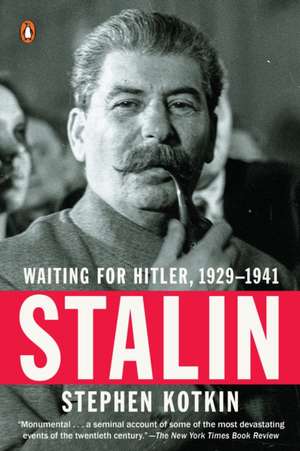
Stalin
Autor Stephen Kotkinen Limba Engleză Paperback – 20 noi 2018
În acest al doilea volum al monumentalei biografii dedicate dictatorului sovietic, remarcăm o structură riguroasă care împletește biografia politică cu istoria geopolitică globală. Metodologia lui Stephen Kotkin se bazează pe o analiză exhaustivă a modului în care puterea dictatorială a modelat personalitatea lui Stalin și cum, la rândul său, obsesiile acestuia au reconfigurat statul sovietic. Descoperim aici o examinare detaliată a perioadei 1929–1941, un interval definit de colectivizarea brutală a celor 120 de milioane de țărani și de consolidarea unei noi elite loiale prin epurări sângeroase. Cartea acoperă aceeași arie tematică precum Joseph Stalin de David R. Egan, dar cu o abordare mult mai narativă și analitică, trecând dincolo de simpla bibliografie pentru a oferi o perspectivă asupra mecanismelor puterii absolute. Reținem modul în care Kotkin poziționează Uniunea Sovietică pe scena mondială: o putere industrializată, dar izolată, a cărei căutare disperată de securitate a condus la pactul paradoxal cu Germania nazistă. Față de Stalin: Volume I: Paradoxes of Power, 1878-1928, unde accentul cădea pe ascensiunea către putere, acest volum (cunoscut și ca Stalin, Vol. II) se concentrează pe exercitarea ei fără limite și pe pregătirile pentru cel mai mare conflict militar din istorie. Tonul este unul sobru și documentat, reflectând rigoarea academică a autorului de la Princeton, oferind o viziune clară asupra modului în care sistemul sovietic a fost forjat prin teroare și ambiție geopolitică.
Preț: 212.21 lei
Carte disponibilă
Livrare economică 07-21 noiembrie
Specificații
ISBN-10: 0143132156
Pagini: 1184
Dimensiuni: 151 x 226 x 68 mm
Greutate: 1.09 kg
Editura: Penguin Publishing Group
V-ar putea interesa

De ce să citești această carte
Această lucrare este esențială pentru cei care doresc să înțeleagă rădăcinile totalitarismului sovietic și dinamica celui de-al Doilea Război Mondial dintr-o perspectivă de la Kremlin. Cititorul câștigă o înțelegere profundă a modului în care deciziile unui singur om au influențat destinele a sute de milioane de oameni, totul într-un format academic dar accesibil, bazat pe cercetări de arhivă recente.
Despre autor
Stephen Kotkin este un istoric american de prestigiu, deținând funcții în cadrul Departamentului de Istorie și la Școala Woodrow Wilson de Afaceri Publice și Internaționale de la Universitatea Princeton. A condus Programul de Studii Ruse și Eurasiatice al universității și este fondatorul inițiativei Global History. Expertiza sa vastă în istoria Rusiei și a Uniunii Sovietice este dublată de activitatea sa editorială la reviste de referință precum World Politics. Opera sa, centrată pe figura lui Stalin, este considerată un reper în istoriografia modernă datorită accesului la surse primare și analizei geopolitice profunde.