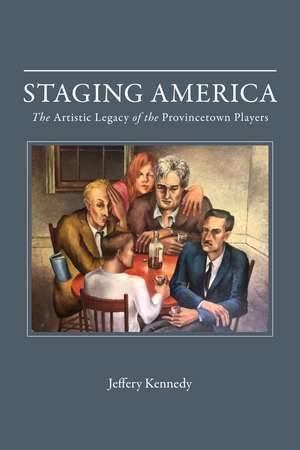
Staging America: The Artistic Legacy of the Provincetown Players
Autor Jeffery Kennedyen Limba Engleză Hardback – 24 ian 2023
The Provincetown Players created a revolution in American theatre, making room for truly modern approaches to playwriting, stage production, and performance unlike anything that characterized the commercial theatre of the early twentieth century. In Staging America: The Artistic Legacy of the Provincetown Players, Jeffery Kennedy gives readers the unabridged story in a meticulously researched and comprehensive narrative that sheds new light on the history of the Provincetown Players. This study draws on many new sources that have only become available in the last three decades; this new material modifies, refutes, and enhances many aspects of previous studies.
At the center of the study is an extensive account of the career of George Cram Cook, the Players’ leader and artistic conscience, as well as one of the most significant facilitators of modernist writing in early twentieth-century American literature and theatre. It traces Cook’s mission of “cultural patriotism,” which drove him toward creating a uniquely American identity in theatre. Kennedy also focuses on the group of friends he calls the “Regulars,” perhaps the most radical collection of minds in America at the time; they encouraged Cook to launch the Players in Provincetown in the summer of 1915 and instigated the move to New York City in fall 1916.
Kennedy has paid particular attention to the many legends connected to the group (such as the “discovery” of Eugene O’Neill), and also adds to the biographical record of the Players’ forty-seven playwrights, including Susan Glaspell, Neith Boyce, Edna St. Vincent Millay, Floyd Dell, Rita Wellman, Mike Gold, Djuna Barnes, and John Reed. Kennedy also examines other fascinating artistic, literary, and historical personalities who crossed the Players’ paths, including Emma Goldman, Charles Demuth, Berenice Abbott, Sophie Treadwell, Theodore Dreiser, Claudette Colbert, and Charlie Chaplin. Kennedy highlights the revolutionary nature of those living in bohemian Greenwich Village who were at the heart of the Players and the America they were responding to in their plays.
Preț: 354.30 lei
Puncte Express: 531
Carte indisponibilă temporar
Doresc să fiu notificat când acest titlu va fi disponibil:
Se trimite...
Specificații
ISBN-13: 9780817321406
ISBN-10: 0817321403
Pagini: 640
Ilustrații: 31 B&W FIGURES
Dimensiuni: 152 x 229 x 56 mm
Greutate: 1.02 kg
Editura: University Of Alabama Press
Colecția University Alabama Press
ISBN-10: 0817321403
Pagini: 640
Ilustrații: 31 B&W FIGURES
Dimensiuni: 152 x 229 x 56 mm
Greutate: 1.02 kg
Editura: University Of Alabama Press
Colecția University Alabama Press
Notă biografică
Jeffery Kennedy is associate professor of interdisciplinary arts and performance at Arizona State University. He is author of numerous journal articles and book chapters on American theater history, with a strong focus on Eugene O’Neill, Susan Glaspell, and the Provincetown Players.
Cuprins
List of Figures
Acknowledgments
Introduction
Chapter 1. The Staging of America
Chapter 2. The Provincetown “Regulars”
Chapter 3. Lulu and Susie
Chapter 4. Jig
Chapter 5. “The Pendulum of His Spirit”
Chapter 6. Joining the “Third Wave”
Chapter 7. Gathering at Land’s End
Chapter 8. Evangelizing for a “Native Stage”
Chapter 9. “The Great Provincetown Summer”
Chapter 10. “We Knew What We Were For”
Chapter 11. Organizing “Revolutionists”
Chapter 12. “The Greenwich Villagest Part of Greenwich Village”
Chapter 13. What Is Experimental?
Chapter 14. A Sense of Direction
Chapter 15. War and The People
Chapter 16. “The Clash of Ideology and Practicality”
Chapter 17. “The Poetry of Revolt”
Chapter 18. “A Bright Ripple on a Black Wave”
Chapter 19. “Unorganized, Amateur, Purely Experimental,” but Still Standing
Chapter 20. “Here Pegasus Was Hitched”
Chapter 21. “The Greatest Moral Show on Earth”
Chapter 22. “The Cause Lives On”
Chapter 23. “Season of Youth”
Chapter 24. The Need for Exorcism
Chapter 25. The Emperor Reigns
Chapter 26. The Fallout from “Success”
Chapter 27. On The Verge
Chapter 28. “Giving a Good Death”
Chapter 29. “Poet of Life, Priest of the Ideal”
Notes
Bibliography
Index
Acknowledgments
Introduction
Chapter 1. The Staging of America
Chapter 2. The Provincetown “Regulars”
Chapter 3. Lulu and Susie
Chapter 4. Jig
Chapter 5. “The Pendulum of His Spirit”
Chapter 6. Joining the “Third Wave”
Chapter 7. Gathering at Land’s End
Chapter 8. Evangelizing for a “Native Stage”
Chapter 9. “The Great Provincetown Summer”
Chapter 10. “We Knew What We Were For”
Chapter 11. Organizing “Revolutionists”
Chapter 12. “The Greenwich Villagest Part of Greenwich Village”
Chapter 13. What Is Experimental?
Chapter 14. A Sense of Direction
Chapter 15. War and The People
Chapter 16. “The Clash of Ideology and Practicality”
Chapter 17. “The Poetry of Revolt”
Chapter 18. “A Bright Ripple on a Black Wave”
Chapter 19. “Unorganized, Amateur, Purely Experimental,” but Still Standing
Chapter 20. “Here Pegasus Was Hitched”
Chapter 21. “The Greatest Moral Show on Earth”
Chapter 22. “The Cause Lives On”
Chapter 23. “Season of Youth”
Chapter 24. The Need for Exorcism
Chapter 25. The Emperor Reigns
Chapter 26. The Fallout from “Success”
Chapter 27. On The Verge
Chapter 28. “Giving a Good Death”
Chapter 29. “Poet of Life, Priest of the Ideal”
Notes
Bibliography
Index
Recenzii
“In Staging America, Jeffery Kennedy skillfully interweaves firsthand accounts, contemporary reviews, plot summaries (often of lost or unpublished plays), and critical and biographical accounts to produce the fullest account we are ever likely to have of the frequently turbulent history of this group, which, in its seven years, permanently changed the direction of the American theatre. Literature students and scholars and theatre practitioners will be mining Kennedy’s highly readable authoritative account for years to come.”—Jackson R. Bryer, coeditor of Selected Letters of Eugene O'Neill
“Staging America: The Artistic Legacy of the Provincetown Players, Jeffery Kennedy tells the unabridged story of the innovative theatre group, from their roots in colonial American traditions to the tragic division of the O’Neill and Cook factions in 1924. In a meticulously researched and comprehensive narrative drawing on many new sources that have only become available in the last three decades, Kennedy modifies, refutes, and enhances previous studies, while shining new light at every turn on the history of the Provincetown Players.”—The International Susan Glaspell Society
“With his meticulously researched Staging America, Jeff Kennedy has established himself as the leading authority on the Provincetown Players. This book offers considerable new information and insights regarding the individuals involved with the company, influences on the company, the plays they produced, and the critical response to those plays, including Kennedy’s discovery of a number of “lost” plays. I expect that Staging America is going to generate significant new scholarship on the Players, plays, and playwrights as well as other individuals and events that surface within this remarkable account of a remarkable moment in America’s social and cultural life.”—Cheryl Black, author of The Women of Provincetown, 1915–1922
“Staging America is not simply theater history: it is a kind of transdisciplinary bio-historiography of the many creative artists who worked together to bring the Provincetown Players—to apply a phrase that Bryer offered in conversation—‘out of the shadows.’ Availing himself of an instinct for sleuthing, years of archival work in the United States and Europe, and a harvest of digital resources not previously accessible to scholars, Kennedy creates not just a history but a panorama of the lives that created the modern American theater.”—Eugene O'Neill Review
“Jeffery Kennedy’s Staging America, a major event for theatre studies worldwide, is a magisterial chronical of George Cram Cook’s leadership of the Provincetown Players—‘a little theater group’ orchestrated by the uniquely inspiring Cook, a Midwestern dreamer who was, without question, directly responsible for the birth of modern American drama.”—Robert M. Dowling, author of Eugene O’Neill: A Life in Four Acts
“Staging America: The Artistic Legacy of the Provincetown Players, Jeffery Kennedy tells the unabridged story of the innovative theatre group, from their roots in colonial American traditions to the tragic division of the O’Neill and Cook factions in 1924. In a meticulously researched and comprehensive narrative drawing on many new sources that have only become available in the last three decades, Kennedy modifies, refutes, and enhances previous studies, while shining new light at every turn on the history of the Provincetown Players.”—The International Susan Glaspell Society
“With his meticulously researched Staging America, Jeff Kennedy has established himself as the leading authority on the Provincetown Players. This book offers considerable new information and insights regarding the individuals involved with the company, influences on the company, the plays they produced, and the critical response to those plays, including Kennedy’s discovery of a number of “lost” plays. I expect that Staging America is going to generate significant new scholarship on the Players, plays, and playwrights as well as other individuals and events that surface within this remarkable account of a remarkable moment in America’s social and cultural life.”—Cheryl Black, author of The Women of Provincetown, 1915–1922
“Staging America is not simply theater history: it is a kind of transdisciplinary bio-historiography of the many creative artists who worked together to bring the Provincetown Players—to apply a phrase that Bryer offered in conversation—‘out of the shadows.’ Availing himself of an instinct for sleuthing, years of archival work in the United States and Europe, and a harvest of digital resources not previously accessible to scholars, Kennedy creates not just a history but a panorama of the lives that created the modern American theater.”—Eugene O'Neill Review
“Jeffery Kennedy’s Staging America, a major event for theatre studies worldwide, is a magisterial chronical of George Cram Cook’s leadership of the Provincetown Players—‘a little theater group’ orchestrated by the uniquely inspiring Cook, a Midwestern dreamer who was, without question, directly responsible for the birth of modern American drama.”—Robert M. Dowling, author of Eugene O’Neill: A Life in Four Acts
Descriere
In Staging America, Jeffery Kennedy offers the most comprehensive history to date of the Provincetown Players, the influential collective that transformed American theater in the early twentieth century. Drawing on newly available archival sources, Kennedy traces how this group of writers, artists, and performers—working from Provincetown to bohemian Greenwich Village—redefined playwriting, performance, and stage production in pursuit of a distinctly American theatrical identity. Central to the narrative is George Cram Cook, whose vision of “cultural patriotism” helped nurture groundbreaking voices including Eugene O’Neill, Susan Glaspell, and Edna St. Vincent Millay. By disentangling myth from history and situating the Players within broader artistic and social networks, Staging America reveals how experimental theater helped shape American modernism and left a lasting mark on the nation’s cultural life.