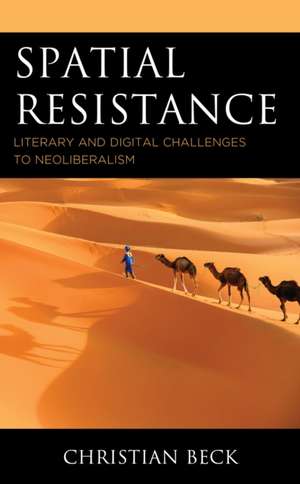
Spatial Resistance
Autor Christian Becken Limba Engleză Hardback – 11 ian 2019
Preț: 582.62 lei
Preț vechi: 863.65 lei
-33%
Puncte Express: 874
Carte tipărită la comandă
Livrare economică 21 noiembrie-05 decembrie
Livrare prin curier în România Termenul estimat este afișat lângă disponibilitate.
Transport gratuit pentru acest produs Plată online sau ramburs, în funcție de opțiunile comenzii.
Retur gratuit în 14 zile Comandă securizată și suport în română.
Specificații
ISBN-13: 9781498552417
ISBN-10: 1498552412
Pagini: 216
Dimensiuni: 157 x 235 x 17 mm
Greutate: 0.49 kg
Editura: Lexington Books
Locul publicării:New York, United States
ISBN-10: 1498552412
Pagini: 216
Dimensiuni: 157 x 235 x 17 mm
Greutate: 0.49 kg
Editura: Lexington Books
Locul publicării:New York, United States
Cuprins
Acknowledgements
Introduction: The Nomad in the Desert
Chapter 1: Post-Modern Theory, Pre-Modern Tactics: Using the Past to Resist the Present
Chapter 2: The Tempest and the Coming Storm
Chapter 3: Dietland: The Spatial, Revolutionary Body
Chapter 4: Remapping the Story
Chapter 5: Digital Spaces and the Rise of Hacktivism
Chapter 6: #Tagging Social Space: Graffiti and Resistance
Chapter 7: De-Aerialization: Drones and Volumizing Space
Chapter 8: Digital Resistance
Conclusion: Nationalism is Not the Answer
Bibliography
Index
About the Author
Introduction: The Nomad in the Desert
Chapter 1: Post-Modern Theory, Pre-Modern Tactics: Using the Past to Resist the Present
Chapter 2: The Tempest and the Coming Storm
Chapter 3: Dietland: The Spatial, Revolutionary Body
Chapter 4: Remapping the Story
Chapter 5: Digital Spaces and the Rise of Hacktivism
Chapter 6: #Tagging Social Space: Graffiti and Resistance
Chapter 7: De-Aerialization: Drones and Volumizing Space
Chapter 8: Digital Resistance
Conclusion: Nationalism is Not the Answer
Bibliography
Index
About the Author
Recenzii
Neoliberalism is not only an economic project but a particular configuration of social space, based on control, regulation, and surveillance. In this brilliant book, Beck shows how the hegemony of the neoliberal project can be challenged by the mapping of alternative and more autonomous spaces emerging in the interstices of everyday life. Drawing on literature, cultural studies, graffiti art, and hacking, the author highlights the importance of spatiality to any politics of resistance.
Written by a scholar of medieval literature who exhibits remarkable intellectual versatility, this book contains novel ideas that will travel well to disciplines such as international relations and comparative politics. Beck's conceptualization of alternate spaces for resistance in the context of the digital realm and the air will be of keen interest to students of social movements and democratization, while his discussion of drones and alternate modes of governance in liberated areas of Syria challenge dominant ways of thinking about the nation-state and sovereignty. A truly remarkable journey through time, space, and alternate spaces.
In Spatial Resistance, Christian Beck outlines the ways that contemporary "societies of control" have organized and delimited the spaces we inhabit. Beck then reveals the ways that fiction may open up alternative spaces for liberty within which can emerge a radical politics suited to our historical moment.
Written by a scholar of medieval literature who exhibits remarkable intellectual versatility, this book contains novel ideas that will travel well to disciplines such as international relations and comparative politics. Beck's conceptualization of alternate spaces for resistance in the context of the digital realm and the air will be of keen interest to students of social movements and democratization, while his discussion of drones and alternate modes of governance in liberated areas of Syria challenge dominant ways of thinking about the nation-state and sovereignty. A truly remarkable journey through time, space, and alternate spaces.
In Spatial Resistance, Christian Beck outlines the ways that contemporary "societies of control" have organized and delimited the spaces we inhabit. Beck then reveals the ways that fiction may open up alternative spaces for liberty within which can emerge a radical politics suited to our historical moment.