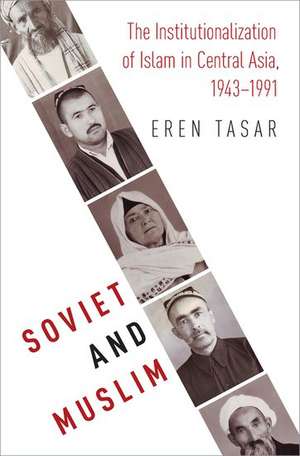
Soviet and Muslim: The Institutionalization of Islam in Central Asia, 1943-1991: Religion and Global Politics
Autor Eren Tasaren Limba Engleză Hardback – 28 dec 2017
Subliniem, prin intermediul volumului Soviet and Muslim, o schimbare de paradigmă în istoriografia Asiei Centrale, propusă de Eren Tasar. Structura lucrării este organizată cronologic și tematic, pornind de la decizia strategică a lui Stalin din 1943 de a înființa un muftiat centralizat la Tașkent și continuând până la colapsul Uniunii Sovietice în 1991. Metodologia autorului se bazează pe exploatarea unor arhive recent declasificate, oferind o perspectivă documentată asupra modului în care o instituție religioasă aparent fragilă a devenit un instrument politic și simbolic esențial.
Apreciem rigoarea cu care Eren Tasar analizează nu doar supraviețuirea credinței, ci și evoluția activă a practicilor islamice sub presiunea ateismului de stat. Această lucrare completează perspectiva oferită de To Moscow, Not Mecca de Shoshana Keller, care se concentrează pe primele decenii de conflict ideologic (1917-1941), adăugând analiza perioadei de maturitate și instituționalizare a Islamului sovietic, pe care Keller o abordează tangențial. Totodată, volumul se distinge de Islam After Communism – Religion and Politics in Central Asia de Adeeb Khalid prin accentul pus pe mecanismele interne de putere ale muftiatului și pe adaptarea dogmei, dincolo de identitatea etnonațională.
În contextul operei sale, Soviet and Muslim rafinează temele explorate în From the Khan's Oven, unde Eren Tasar a investigat sursele indigene ale istoriei religioase. Dacă lucrarea anterioară punea bazele înțelegerii tradițiilor locale, prezentul volum integrează aceste observații într-un cadru politic vast, demonstrând cum Islamul a influențat realitatea socială a regimului comunist, de la propaganda externă până la controlul moscheilor locale.
Din seria Religion and Global Politics
- 16%
 Preț: 219.90 lei
 - 29%
 Preț: 416.96 lei
 - 29%
 Preț: 445.05 lei
 - 29%
 Preț: 476.15 lei
 - 25%
 Preț: 169.14 lei
 - 30%
 Preț: 945.03 lei
 - 18%
 Preț: 381.43 lei
 - 10%
 Preț: 365.40 lei
 - 27%
 Preț: 509.33 lei
 - 30%
 Preț: 623.45 lei
 - 10%
 Preț: 379.43 lei
 - 9%
 Preț: 377.13 lei
 - 30%
 Preț: 650.87 lei
 - 27%
 Preț: 521.80 lei
 - 31%
 Preț: 533.59 lei
 - 11%
 Preț: 298.50 lei
 - 11%
 Preț: 282.77 lei
 - 19%
 Preț: 291.43 lei
 - 19%
 Preț: 267.08 lei
 - 19%
 Preț: 385.41 lei
 - 15%
 Preț: 423.15 lei
 - 30%
 Preț: 686.31 lei
 - 26%
 Preț: 178.69 lei
 - 30%
 Preț: 684.51 lei
 - 31%
 Preț: 712.08 lei
 - 31%
 Preț: 566.39 lei
 - 31%
 Preț: 663.05 lei
 - 21%
 Preț: 203.73 lei
Preț: 769.67 lei
Preț vechi: 1144.87 lei
-33%
Carte tipărită la comandă
Livrare economică 10-15 decembrie
Specificații
ISBN-10: 0190652101
Pagini: 432
Dimensiuni: 155 x 239 x 36 mm
Greutate: 0.7 kg
Editura: Oxford University Press
Colecția OUP USA
Seria Religion and Global Politics
Locul publicării:New York, United States
De ce să citești această carte
Recomandăm această carte cercetătorilor și studenților interesați de istoria URSS și de sociologia religiei. Cititorul câștigă o înțelegere profundă a modului în care instituțiile religioase pot negocia puterea într-un stat totalitar. Este un instrument esențial pentru a înțelege rădăcinile instituționale ale Islamului contemporan în state precum Uzbekistan sau Kazahstan, bazat pe dovezi arhivistice care au fost inaccesibile timp de decenii.
Despre autor
Eren Tasar este un istoric specializat în studiul Asiei Centrale și al Islamului în spațiul post-sovietic. Opera sa se remarcă prin utilizarea surselor primare în limbi regionale și prin interesul constant pentru modul în care tradițiile religioase interacționează cu structurile politice moderne. Prin contribuțiile sale în volume precum From the Khan's Oven, și-a stabilit reputația de cercetător care valorifică moștenirea istorică a popoarelor musulmane din Asia Interioară, aducând la lumină documente și perspective ignorate anterior de istoriografia occidentală. Lucrarea sa de față, publicată de Oxford University Press, reprezintă apogeul cercetărilor sale asupra perioadei sovietice târzii.
Descriere
Recenzii
Soviet and Muslim is a splendid work, vivid in documentation, compelling in analysis and argumentation, and transformative in the vision of Soviet Muslim religious life it draws from the rich archival data. In challenging assumptions that essentialize and juxtapose the 'Soviet' vs. the 'Islamic,' it reshapes the conceptual framework underlying scholarship on Soviet Islam, and offers a dramatically revisionist understanding of the history of Islam in twentieth-century Central Asia.
Eren Tasar has written an extraordinary study of religions institutions in post-war Central Asiaone that breaks new ground on almost every page. Soviet and Muslim illuminates how these organizations interacted and paradoxically grew, sometimes despite themselves. Using a rich trove of archival materials, Tasar eloquently shows how state and non-state actors convergedand even established an 'alliance'-shaped by the bureaucratic, political, and cultural logics in which they operated.
Eren Tasar tells the story of how the Soviet state, formally committed to eradicating religion and spreading atheism, shaped Islam in Central Asia in surprising ways. Based on a treasure trove of newly declassified documents in multiple languages, Soviet and Muslim transforms our understanding of the complexities of governing Muslim life and institutions. It will be read with great profit by scholars interested in Soviet history, Central Asia, and the global dimensions of Islam.