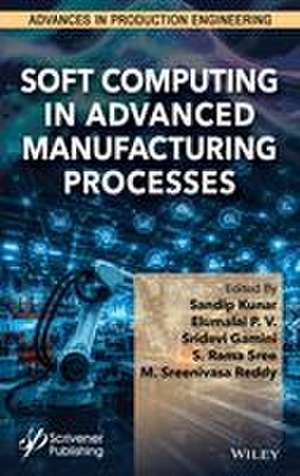
Soft Computing in Advanced Manufacturing Processes
Editat de Elumalai P. V., M. Sreenivasa Reddy, S. Rama Sree, Sandip Kunar, Sridevi Gaminien Limba Engleză Hardback – 12 oct 2026
The advancement of manufacturing technologies has consistently been linked to progress in modern computational methods. In recent years, the integration of soft computing techniques has emerged as an essential factor in improving the adaptability, intelligence, and efficiency of manufacturing processes. Unlike traditional deterministic approaches, soft computing methods are capable of managing complexity, uncertainty, and imprecision that are integral in current manufacturing systems, enabling more effective optimization, decision-making, and process control. This book provides an in-depth exploration of how soft computing techniques are transforming the landscape of modern manufacturing. Integrating intelligent computation with engineering principles, the book demonstrates how these methods enhance decision-making, optimize complex processes, and enable adaptive control across diverse manufacturing operations. Covering applications in machining, process planning, scheduling, quality assurance, and fault diagnosis, it bridges the gap between traditional manufacturing and the new era of Industry 4.0. It emphasizes the role of artificial intelligence, machine learning, and data-driven technologies in achieving precision, flexibility, and sustainability. Through detailed case studies, comparative analyses, and practical insights, the book provides readers with both theoretical foundations and implementation strategies. Ideal for engineers, researchers, and professionals in academia and industry, this book serves as a comprehensive guide to leveraging soft computing for smarter, more efficient, and resilient manufacturing systems, paving the way toward a future of intelligent and sustainable production.
Readers will find the volume:
- Integrates cutting-edge soft computing methods such as fuzzy logic, neural networks, and genetic algorithms for intelligent manufacturing solutions;
- Demonstrates real-world applications in process optimization, quality control, and predictive maintenance;
- Bridges the gap between traditional manufacturing and Industry 4.0 through adaptive and data-driven approaches.
Mechanical, industrial, and manufacturing engineers, materials scientists, and automation specialists across both academia and industry working in areas such as smart manufacturing, artificial intelligence in production, and Industry 4.0 technologies.
Preț: 1291.40 lei
Preț vechi: 1677.13 lei
-23% Precomandă
Puncte Express: 1937
Carte nepublicată încă
Livrare prin curier în România Precomanda se expediază când titlul devine disponibil.
Transport gratuit pentru acest produs Plată online sau ramburs, în funcție de opțiunile comenzii.
Retur gratuit în 14 zile Comandă securizată și suport în română.
Doresc să fiu notificat când acest titlu va fi disponibil:
Se trimite...
Specificații
Notă biografică
Sandip Kunar, PhD is an Assistant Professor in the Department of Mechanical Engineering at the Aditya Engineering College, Andhra Pradesh, India. He has published more than 40 research papers in various reputed international journals, more than 25 research papers in national and international conference proceedings, 70 book chapters, 24 books, and two patents.
Elumalai P. V., PhD is a Professor in the Department of Mechanical Engineering at Aditya University, Andhra Pradesh, India with more than 12 years of experience. He has published more than 135 research papers in peer-reviewed journals and several book chapters.
Sridevi Gamini, PhD is an Associate Professor in the Department of Electronics and Communication Engineering at Aditya University, Andhra Pradesh, India. She has published 13 research papers in national and international journals and 10 research papers in reputed international conference proceedings.
S. Rama Sree, PhD is a Professor in the Computer Science and Engineering Department and Pro Vice-Chancellor of Academics at Aditya University, Andhra Pradesh, India. She has published 35 papers in international journals, 15 papers in national and international conferences, and four patents, and has co-authored one book.
M. Sreenivasa Reddy, PhD is the Director of the Aditya Group of Educational Institutions and the Deputy Pro Chancellor of Aditya University, Andhra Pradesh, India. He has published more than 50 research papers in various reputed international journals, national and international conference proceedings, 20 book chapters, three books, and eleven patents.
Elumalai P. V., PhD is a Professor in the Department of Mechanical Engineering at Aditya University, Andhra Pradesh, India with more than 12 years of experience. He has published more than 135 research papers in peer-reviewed journals and several book chapters.
Sridevi Gamini, PhD is an Associate Professor in the Department of Electronics and Communication Engineering at Aditya University, Andhra Pradesh, India. She has published 13 research papers in national and international journals and 10 research papers in reputed international conference proceedings.
S. Rama Sree, PhD is a Professor in the Computer Science and Engineering Department and Pro Vice-Chancellor of Academics at Aditya University, Andhra Pradesh, India. She has published 35 papers in international journals, 15 papers in national and international conferences, and four patents, and has co-authored one book.
M. Sreenivasa Reddy, PhD is the Director of the Aditya Group of Educational Institutions and the Deputy Pro Chancellor of Aditya University, Andhra Pradesh, India. He has published more than 50 research papers in various reputed international journals, national and international conference proceedings, 20 book chapters, three books, and eleven patents.
Cuprins
Preface xix
Acknowledgement xxiii
1 Introduction to Smart Soft Computing in Advanced Manufacturing Processes 1
Sarthak Prasad Sahoo
1.1 Introduction 2
1.2 Motivation for Integrating Smart Technologies 3
1.3 Soft Computing and Its Role in Modern Manufacturing 4
1.4 An Overview of Advanced Manufacturing Processes (AMPs) 7
1.5 Smart Soft Computing in Manufacturing 11
1.6 Challenges and Limitations 15
1.7 Conclusion 16
2 Soft Computing Techniques in Smart Manufacturing 21
Sandip Kunar, Jagadeesha T., Anusha Mylavarapu, Ajithkumar Sitharaj, Gurudas Mandal and Preeti Singh Bahadur
2.1 Introduction 22
2.2 Key Technologies 23
2.3 Intelligent Production Methods for Superior Materials 31
2.4 Difficulties with Intelligent Production of High-Performance Materials 35
2.5 Case Studies and Applications 38
2.6 Opportunities, Challenges, and Future Directions 40
2.7 Conclusions 44
3 Soft Computing in Computer-Integrated Manufacturing (CIM) 55
Dillip Kumar Mohanta, Surya Narayan Panda and Mahendra Kumar Rath
3.1 Introduction 56
3.2 Soft Computing 62
3.3 Benefits of Soft Computing in CIM 64
3.4 Core Components of Soft Computing 64Contents ix
3.5 Soft Computing in Bridging Industry 4.0 and 5.0 65
3.6 Case Studies and Industrial Applications 68
3.7 Challenges, Trends, and Future Directions 68
3.8 Conclusion 72
4 Soft Computing Applications in Sustainable Manufacturing 79
Rudra Narayan Mohapatro, Sunita Routray and Ranjita Swain
4.1 Introduction 80
4.2 Overview of Soft Computing Techniques 84
4.3 Sustainable Manufacturing: Challenges and Goals 89
4.4 Applications of Soft Computing in Sustainable Manufacturing 90
4.5 Case Studies 95
4.6 Benefits and Limitations 100
4.7 Future Directions and Research Opportunities 101
4.8 Conclusions 104
5 Sustainable Manufacturing of Agro-Waste Reinforced Aluminum Composites: Machining Optimization and Prediction by Artificial Neural Network 115
V. Veeranaath and Arun Nallathambi
5.1 Introduction 116
5.2 Materials and Methods 118
5.3 Results and Discussion 122
5.4 Conclusion 137
6 Leveraging Convolutional Neural Networks for Vision-Based Control in Intelligent Robotic Systems 141
Sameeha Khan, Syed Faraz Haider Naqvi and Faisal Talib
6.1 Introduction 142
6.2 Fundamentals of Robotic Visual Control 150xii Contents
6.3 Comparative Analysis of CNN Approaches in Vision-Based Robotic Control 157
6.4 Application of CNN in Vision-Based Robotic Control 160
6.5 Review of Related Work 163
6.6 Proposed Approach: Lightweight CNN for Visual Control 167
6.7 Discussion 173
6.8 Future Directions in CNN-Based Visual Control 174
6.9 Conclusion 176
7 Soft Computing in Testing and Analysis Correlation 183
Alok Kumar
7.1 Introduction 183
7.2 Details of Soft Computing Approaches 184
7.3 Soft Computing Testing of Advanced Machining Processes 188
7.4 Conclusion 217
8 Life Cycle Assessment: From the Viewpoint of Intelligent Computing 223
Sarthak Prasad Sahoo
8.1 Introduction 224
8.2 Need for Accessing Environmental Impacts 225
8.3 Objectives 226
8.4 Fundamentals of Product Life Cycle Assessment 227
8.5 Soft Computing and Its Role in LCA 232
8.6 Future Scopes for LCA 240
8.7 Conclusion 243
9 Smart Manufacturing Systems: Challenges, Innovation, and Opportunities 249
Hamid Raza, Mohd Saquib Shamim, Adnan Meraj and Faisal Talib
9.1 Introduction 250
9.2 Digital Threads in Smart Manufacturing System 252
9.3 Conclusion 271
10 Assessing the Enablers of IIoT Adoption in Manufacturing Environments: An Integration of BWM and VIKOR Approaches 275
Shahzeb Adil and Faisal Talib
10.1 Introduction 276
10.2 Literature Review 281
10.3 Enablers and Criteria 286
10.4 Research Methodology 291
10.5 Results and Discussion 296
10.6 Conclusion 309
11 Soft Computing in Intelligent Welding Manufacturing System and Robotic Welding 317
Sandip Kunar, Jagadeesha T., Ajithkumar Sitharaj, Sridevi Gamini, Gurudas Mandal and S. D. V. V. S. Bhimeshwar Reddy
11.1 Introduction 318
11.2 Technical Composition of IWMS 321
11.3 The Multi-Agent Collaboration Mechanism of IWMS 324
11.4 Unit Design and Functional Execution of Multi-Agents in the IWMS 326
11.5 An IWMS Experimental System Using MAS and IoT Patterns 328
11.6 Robotic Welding 329
11.7 Conclusions 336
References 337
Index 341
Acknowledgement xxiii
1 Introduction to Smart Soft Computing in Advanced Manufacturing Processes 1
Sarthak Prasad Sahoo
1.1 Introduction 2
1.2 Motivation for Integrating Smart Technologies 3
1.3 Soft Computing and Its Role in Modern Manufacturing 4
1.4 An Overview of Advanced Manufacturing Processes (AMPs) 7
1.5 Smart Soft Computing in Manufacturing 11
1.6 Challenges and Limitations 15
1.7 Conclusion 16
2 Soft Computing Techniques in Smart Manufacturing 21
Sandip Kunar, Jagadeesha T., Anusha Mylavarapu, Ajithkumar Sitharaj, Gurudas Mandal and Preeti Singh Bahadur
2.1 Introduction 22
2.2 Key Technologies 23
2.3 Intelligent Production Methods for Superior Materials 31
2.4 Difficulties with Intelligent Production of High-Performance Materials 35
2.5 Case Studies and Applications 38
2.6 Opportunities, Challenges, and Future Directions 40
2.7 Conclusions 44
3 Soft Computing in Computer-Integrated Manufacturing (CIM) 55
Dillip Kumar Mohanta, Surya Narayan Panda and Mahendra Kumar Rath
3.1 Introduction 56
3.2 Soft Computing 62
3.3 Benefits of Soft Computing in CIM 64
3.4 Core Components of Soft Computing 64Contents ix
3.5 Soft Computing in Bridging Industry 4.0 and 5.0 65
3.6 Case Studies and Industrial Applications 68
3.7 Challenges, Trends, and Future Directions 68
3.8 Conclusion 72
4 Soft Computing Applications in Sustainable Manufacturing 79
Rudra Narayan Mohapatro, Sunita Routray and Ranjita Swain
4.1 Introduction 80
4.2 Overview of Soft Computing Techniques 84
4.3 Sustainable Manufacturing: Challenges and Goals 89
4.4 Applications of Soft Computing in Sustainable Manufacturing 90
4.5 Case Studies 95
4.6 Benefits and Limitations 100
4.7 Future Directions and Research Opportunities 101
4.8 Conclusions 104
5 Sustainable Manufacturing of Agro-Waste Reinforced Aluminum Composites: Machining Optimization and Prediction by Artificial Neural Network 115
V. Veeranaath and Arun Nallathambi
5.1 Introduction 116
5.2 Materials and Methods 118
5.3 Results and Discussion 122
5.4 Conclusion 137
6 Leveraging Convolutional Neural Networks for Vision-Based Control in Intelligent Robotic Systems 141
Sameeha Khan, Syed Faraz Haider Naqvi and Faisal Talib
6.1 Introduction 142
6.2 Fundamentals of Robotic Visual Control 150xii Contents
6.3 Comparative Analysis of CNN Approaches in Vision-Based Robotic Control 157
6.4 Application of CNN in Vision-Based Robotic Control 160
6.5 Review of Related Work 163
6.6 Proposed Approach: Lightweight CNN for Visual Control 167
6.7 Discussion 173
6.8 Future Directions in CNN-Based Visual Control 174
6.9 Conclusion 176
7 Soft Computing in Testing and Analysis Correlation 183
Alok Kumar
7.1 Introduction 183
7.2 Details of Soft Computing Approaches 184
7.3 Soft Computing Testing of Advanced Machining Processes 188
7.4 Conclusion 217
8 Life Cycle Assessment: From the Viewpoint of Intelligent Computing 223
Sarthak Prasad Sahoo
8.1 Introduction 224
8.2 Need for Accessing Environmental Impacts 225
8.3 Objectives 226
8.4 Fundamentals of Product Life Cycle Assessment 227
8.5 Soft Computing and Its Role in LCA 232
8.6 Future Scopes for LCA 240
8.7 Conclusion 243
9 Smart Manufacturing Systems: Challenges, Innovation, and Opportunities 249
Hamid Raza, Mohd Saquib Shamim, Adnan Meraj and Faisal Talib
9.1 Introduction 250
9.2 Digital Threads in Smart Manufacturing System 252
9.3 Conclusion 271
10 Assessing the Enablers of IIoT Adoption in Manufacturing Environments: An Integration of BWM and VIKOR Approaches 275
Shahzeb Adil and Faisal Talib
10.1 Introduction 276
10.2 Literature Review 281
10.3 Enablers and Criteria 286
10.4 Research Methodology 291
10.5 Results and Discussion 296
10.6 Conclusion 309
11 Soft Computing in Intelligent Welding Manufacturing System and Robotic Welding 317
Sandip Kunar, Jagadeesha T., Ajithkumar Sitharaj, Sridevi Gamini, Gurudas Mandal and S. D. V. V. S. Bhimeshwar Reddy
11.1 Introduction 318
11.2 Technical Composition of IWMS 321
11.3 The Multi-Agent Collaboration Mechanism of IWMS 324
11.4 Unit Design and Functional Execution of Multi-Agents in the IWMS 326
11.5 An IWMS Experimental System Using MAS and IoT Patterns 328
11.6 Robotic Welding 329
11.7 Conclusions 336
References 337
Index 341