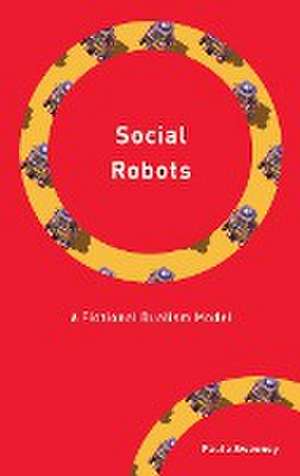
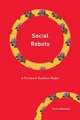
Social Robots: A Fictional Dualism Model: Philosophy, Technology and Society
Autor Paula Sweeneyen Limba Engleză Hardback – 6 dec 2023
Social robots elicit an emotional and social response in humans that some have taken to be evidence that robots deserve moral consideration. Others have argued that, as robots are only machines, we should avoid designing robots that encourage emotional engagement. The fictional dualism model provides a new way for us to view social robots and a new route for our continued relationship with them. When we engage with a social robot, we create a fictional overlay that has wants, needs and desires. Our emotional attachment to social robots is a natural continuation of our relationship to fiction: a life-enhancing and important connection, but not one that prompts moral consideration for the fictional entity.
In this book, Paula Sweeney shows how the fictional dualism model of social robots differs from other popular models. In addition to providing a distinctive and ethically appropriate framework for emotional engagement without moral consideration, the model provides conditions for trusting social robots and, uniquely, allows us to individuate social robots as distinct persons, even in contexts in which they share a collective mind.




Preț: 501.55 lei
Preț vechi: 733.00 lei
-32%
Puncte Express: 752
Carte tipărită la comandă
Livrare economică 30 noiembrie-14 decembrie
Livrare prin curier în România Termenul estimat este afișat lângă disponibilitate.
Transport gratuit pentru acest produs Plată online sau ramburs, în funcție de opțiunile comenzii.
Retur gratuit în 14 zile Comandă securizată și suport în română.
Specificații
ISBN-13: 9781538185025
ISBN-10: 1538185024
Pagini: 152
Dimensiuni: 150 x 230 x 16 mm
Greutate: 0.38 kg
Editura: Bloomsbury Publishing
Colecția Rowman & Littlefield
Seria Philosophy, Technology and Society
Locul publicării:New York, United States
ISBN-10: 1538185024
Pagini: 152
Dimensiuni: 150 x 230 x 16 mm
Greutate: 0.38 kg
Editura: Bloomsbury Publishing
Colecția Rowman & Littlefield
Seria Philosophy, Technology and Society
Locul publicării:New York, United States
Cuprins
Introduction
Chapter 1. What Can Philosophy Teach Us About Social Robots?
Chapter 2. Humans and Robots
Chapter 3. Social Robots and Moral Consideration
Chapter 4. The Fictional Dualism Model of Social Robots
Chapter 5. Robots and Identity
Chapter 6. Trusting Social Robots
Chapter 7. Robot Right and Indirect Harms
Conclusion
Bibliography
Index
About the Author
Chapter 1. What Can Philosophy Teach Us About Social Robots?
Chapter 2. Humans and Robots
Chapter 3. Social Robots and Moral Consideration
Chapter 4. The Fictional Dualism Model of Social Robots
Chapter 5. Robots and Identity
Chapter 6. Trusting Social Robots
Chapter 7. Robot Right and Indirect Harms
Conclusion
Bibliography
Index
About the Author
Recenzii
Whether social robots merit full moral consideration is a major question. Sweeney argues for a model of fictional dualism to better analyze and deal with social robots, to whom people may respond in social and emotional ways but without the demand for moral consideration. She proposes seeing social robots as embodied fictional characters with mental lives that humans create by engaging with them. She claims this model can explain a range of feelings people might develop by interacting with these entities without justifying their full moral consideration. This model, she argues, legitimates human trust in these entities, but not a trust based entirely on appearance. Sweeney believes this obligates developers to be abundantly clear about these robots' capabilities and any changes to them. People must develop a background awareness that robots are not capable of having feelings for them. Recommended. All readership levels.
Paula Sweeney presents a compelling new theory of social robots: the fictional dualism model. Strikingly, Sweeney thinks it makes sense to respond emotionally to social robots, but that it is a category mistake to treat them with moral consideration. Why? Sweeney's intriguing suggestion is that social robots are embodied fictional characters.
In times when social robots invite emotional and social responses, it is important to reflect on the ethical questions this raises. With her fictional dualism model, Paula Sweeney distinguishes between robots as technological objects and their fictional overlays. In this way, she aims to seriously analyze our tendency to anthropomorphize with robots and the role of fiction in this, without arguing that we should grant such robots moral consideration. Recommended for everyone interested in the ethics of robotics and artificial intelligence.
Paula Sweeney presents a compelling new theory of social robots: the fictional dualism model. Strikingly, Sweeney thinks it makes sense to respond emotionally to social robots, but that it is a category mistake to treat them with moral consideration. Why? Sweeney's intriguing suggestion is that social robots are embodied fictional characters.
In times when social robots invite emotional and social responses, it is important to reflect on the ethical questions this raises. With her fictional dualism model, Paula Sweeney distinguishes between robots as technological objects and their fictional overlays. In this way, she aims to seriously analyze our tendency to anthropomorphize with robots and the role of fiction in this, without arguing that we should grant such robots moral consideration. Recommended for everyone interested in the ethics of robotics and artificial intelligence.