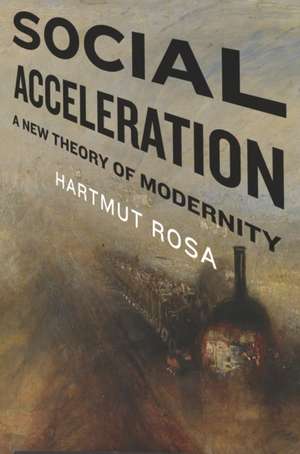
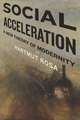
Social Acceleration - A New Theory of Modernity: New Directions in Critical Theory
Autor Hartmut Rosa, Jonathan Trejo-Mathysen Limba Engleză Paperback – 9 iun 2015
Din seria New Directions in Critical Theory
- 23%
 Preț: 430.75 lei
 -
 Preț: 325.83 lei
 -
 Preț: 255.24 lei
 -
 Preț: 315.93 lei
 - 27%
 Preț: 743.41 lei
 -
 Preț: 189.27 lei
 - 27%
 Preț: 852.84 lei
 -
 Preț: 486.31 lei
 -
 Preț: 240.75 lei
 - 23%
 Preț: 427.93 lei
 -
 Preț: 280.20 lei
 - 23%
 Preț: 730.15 lei
 -
 Preț: 221.32 lei
 -
 Preț: 266.06 lei
 -
 Preț: 239.82 lei
 -
 Preț: 261.08 lei
 - 23%
 Preț: 559.41 lei
 -
 Preț: 251.25 lei
 -
 Preț: 277.09 lei
 -
 Preț: 266.63 lei
 -
 Preț: 168.17 lei
 -
 Preț: 242.59 lei
 -
 Preț: 255.21 lei
 - 27%
 Preț: 746.24 lei
 - 23%
 Preț: 707.29 lei
 -
 Preț: 277.31 lei
 -
 Preț: 148.26 lei
 -
 Preț: 262.93 lei
 -
 Preț: 287.91 lei
 - 27%
 Preț: 756.62 lei
 - 27%
 Preț: 856.34 lei
 -
 Preț: 251.88 lei
 -
 Preț: 157.34 lei
 - 27%
 Preț: 744.09 lei
 - 27%
 Preț: 773.19 lei
 - 27%
 Preț: 746.12 lei
 -
 Preț: 242.59 lei
 -
 Preț: 210.12 lei
 - 27%
 Preț: 744.97 lei
 - 27%
 Preț: 744.09 lei
 -
 Preț: 268.26 lei
 -
 Preț: 238.68 lei
 -
 Preț: 213.69 lei
Preț: 255.72 lei
Puncte Express: 384
Carte disponibilă
Livrare economică 29 octombrie-12 noiembrie
Livrare express 14-20 octombrie pentru 44.49 lei
Livrare prin curier în România Termenul estimat este afișat lângă disponibilitate.
Transport gratuit de la 400.00 lei Plată online sau ramburs, în funcție de opțiunile comenzii.
Retur gratuit în 14 zile Comandă securizată și suport în română.
Specificații
ISBN-13: 9780231148351
ISBN-10: 0231148356
Pagini: 512
Dimensiuni: 149 x 226 x 30 mm
Greutate: 0.7 kg
Editura: Columbia University Press
Colecția New Directions in Critical Theory
Seria New Directions in Critical Theory
ISBN-10: 0231148356
Pagini: 512
Dimensiuni: 149 x 226 x 30 mm
Greutate: 0.7 kg
Editura: Columbia University Press
Colecția New Directions in Critical Theory
Seria New Directions in Critical Theory
V-ar putea interesa
-
 Preț: 130.06 lei
 -
 The Individualized SocietyZygmunt BaumanPreț: 217.14 lei
 -
 Collateral DamageZygmunt BaumanPreț: 130.89 lei
 -
 Debt: The First 5,000 Years, Updated and ExpandedDavid GraeberPreț: 138.56 lei
 -
 The Denial of DeathErnest Becker-19%Preț: 69.74 lei86.24 lei
 -
 The Decline and Fall of CivilisationsKerry BoltonPreț: 174.76 lei
Descriere
Hartmut Rosa advances an account of the temporal structure of society from the perspective of critical theory. He identifies three categories of change in the tempo of modern social life: technological acceleration, evident in transportation, communication, and production; the acceleration of social change, reflected in cultural knowledge, social institutions, and personal relationships; and acceleration in the pace of life, which happens despite the expectation that technological change should increase an individual's free time. According to Rosa, both the structural and cultural aspects of our institutions and practices are marked by the "shrinking of the present," a decreasing time period during which expectations based on past experience reliably match the future. When this phenomenon combines with technological acceleration and the increasing pace of life, time seems to flow ever faster, making our relationships to each other and the world fluid and problematic. It is as if we are standing on "slipping slopes," a steep social terrain that is itself in motion and in turn demands faster lives and technology. As Rosa deftly shows, this self-reinforcing feedback loop fundamentally determines the character of modern life.
Cuprins
Translator's Introduction
In Place of a Preface
Introduction
Part 1. The Categorial Framework of a Systematic Theory of Social Acceleration
1. From the Love of Movement to the Law of Acceleration: Observations of Modernity
2. What Is Social Acceleration?
Part 2. Mechanisms and Manifestations: A Phenomenology of Social Acceleration
3. Technical Acceleration and the Revolutionizing of the Space-Time Regime
4. Slipping Slopes: The Acceleration of Social Change and the Increase of Contingency
5. The Acceleration of the "Pace of Life" and Paradoxes in the Experience of Time
Part 3. Causes
6. The Speeding Up of Society as a Self-Propelling Process: The Circle of Acceleration
7. Acceleration and Growth: External Drivers of Social Acceleration
8. Power
Part 4. Consequences
9. Acceleration
10. Situational Identity: Of Drifters and Players
11. Situational Politics: Paradoxical Time Horizons Between Desynchronization and Disintegration
12. Acceleration and Rigidity: Attempt at a Redefinition of Modernity
Conclusion: Frenetic Standstill? The End of History
Bibliography
Index
In Place of a Preface
Introduction
Part 1. The Categorial Framework of a Systematic Theory of Social Acceleration
1. From the Love of Movement to the Law of Acceleration: Observations of Modernity
2. What Is Social Acceleration?
Part 2. Mechanisms and Manifestations: A Phenomenology of Social Acceleration
3. Technical Acceleration and the Revolutionizing of the Space-Time Regime
4. Slipping Slopes: The Acceleration of Social Change and the Increase of Contingency
5. The Acceleration of the "Pace of Life" and Paradoxes in the Experience of Time
Part 3. Causes
6. The Speeding Up of Society as a Self-Propelling Process: The Circle of Acceleration
7. Acceleration and Growth: External Drivers of Social Acceleration
8. Power
Part 4. Consequences
9. Acceleration
10. Situational Identity: Of Drifters and Players
11. Situational Politics: Paradoxical Time Horizons Between Desynchronization and Disintegration
12. Acceleration and Rigidity: Attempt at a Redefinition of Modernity
Conclusion: Frenetic Standstill? The End of History
Bibliography
Index