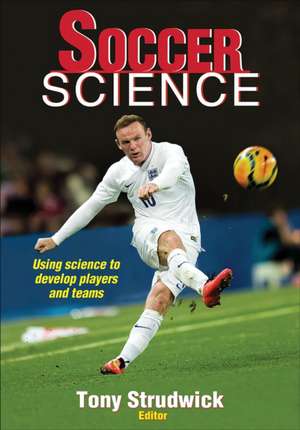
Soccer Science
Autor Tony Strudwicken Limba Engleză Paperback – 6 iul 2016
Ne-a atras atenția modul în care un capitol dedicat biomecanicii încălțămintei de fotbal și suprafețelor de joc poate schimba radical percepția asupra performanței și prevenirii accidentărilor. Suntem de părere că Soccer Science reprezintă puntea necesară între cercetarea academică de laborator și realitatea de pe gazon, oferind antrenorilor și analiștilor acces la date care, până recent, erau rezervate doar cluburilor de elită. Volumul nu se rezumă la teorie pură, ci explorează modul în care influențele culturale și naționale modelează stilurile de joc, oferind un context sociologic rar întâlnit în manualele tehnice. Structura cărții este una progresivă, pornind de la fundamentele istorice și culturale, trecând prin procesul complex de identificare a talentelor și dezvoltarea tinerilor jucători, pentru a culmina cu analize biomecanice detaliate. Cele peste 130 de ilustrații și diagrame facilitează înțelegerea unor concepte dificile precum vectorii de forță în timpul șutului sau dinamica recuperării fiziologice. Complementar lui Science and Soccer, de A. Mark Williams: unde acela se concentrează pe o introducere accesibilă în fiziologie și psihologie, Soccer Science de Tony Strudwick explorează în profunzime aplicațiile tehnologice avansate și analiza tactică de ultimă oră. Putem afirma că această lucrare este cel mai cuprinzător efort editorial de a sistematiza cunoștințele despre fotbalul modern. De la rafinarea tehnicilor prin analiză științifică până la selecția optimă a echipamentului, fiecare pagină este concepută pentru a oferi un avantaj competitiv bazat pe dovezi, nu pe intuiție.
Preț: 183.49 lei
Carte disponibilă
Livrare economică 16-30 noiembrie
Livrare express 31 octombrie-06 noiembrie pentru 64.21 lei
Specificații
ISBN-10: 1450496792
Pagini: 664
Ilustrații: 60 photographs, 132 illustrations
Dimensiuni: 177 x 254 x 32 mm
Greutate: 1.16 kg
Ediția:New
Editura: HUMAN KINETICS
De ce să citești această carte
Această carte se adresează antrenorilor, preparatorilor fizici și studenților la educație fizică ce doresc să înțeleagă mecanismele din spatele succesului pe teren. Cititorul câștigă o viziune de ansamblu asupra fotbalului ca disciplină științifică, primind instrumente concrete pentru optimizarea antrenamentelor și reducerea riscului de accidentare prin aplicarea principiilor biomecanicii și psihologiei sportului.
Despre autor
Tony Strudwick este un nume de referință în pregătirea fizică la cel mai înalt nivel, având o experiență vastă în Premier League, inclusiv ca șef al departamentului de performanță la Manchester United. Expertiza sa practică în gestionarea sportivilor de elită este dublată de o rigoare academică deosebită, Strudwick fiind recunoscut internațional pentru capacitatea de a integra datele științifice în regimul zilnic de antrenament al cluburilor de top. În Soccer Science, el coordonează contribuțiile unora dintre cei mai respectați cercetători din lumea fotbalului.
Descriere
Through the years a wealth of information has been accumulated in soccer. Experiential and science-based knowledge abounds in the sport. Yet the scientific information has not been sufficiently disseminated to those who would benefit most from it.
Soccer Science fills the void with the best and most up-to-date research in the sport.
With editor Tony Strudwick and a who’s-who list of international experts on the sport, Soccer Science offers you an unprecedented wealth of advanced yet accessible information on biomechanics, physiology, psychology, skill acquisition and coaching, tactical approaches and performance and match analysis. It is simply the most significant and comprehensive published work on the sport.
Cuprins
Foreword
Introduction: The Application of Soccer Science (Tony Strudwick)
Part I. Foundations of Soccer Science
Chapter 1. Evolution of Soccer Science (Neil Carter)
Chapter 2. National and Cultural Influences (Craig Duncan and Tony Strudwick)
Part II. Talent Identification and Player Development
Chapter 3. Practical Aspects of Player Selection and Development (Iñigo Mujika and Carlo Castagna)
Chapter 4. Development of the Young Soccer Player (Viswanath Unnithan and Jon Iga)
Chapter 5. Skill Acquisition and Learning Through Practice and Other Activities (Paul Ford)
Part III. Biomechanical and Technological Applications
Chapter 6. Biomechanical Principles of Soccer (Anthony Blazevich and Sophia Nimphius)
Chapter 7. Refining Techniques and Skills Through Scientific Analysis (Neal Smith)
Chapter 8. Biomechanics for Optimal Performance and Injury Prevention (Martin Haines and Daniel Cohen)
Chapter 9. Soccer Boots and Playing Surface (Thorsten Sterzing)
Chapter 10. Soccer Ball Dynamics (Andy Harland and Henry Hanson)
Part IV. Physiological Demands in Training and Competition
Chapter 11. Targeted Systems of the Body for Training (Greg Dupont and Alan McCall)
Chapter 12. Conditioning Programmes for Competitive Levels (Tony Strudwick and Gary Walker)
Chapter 13. Environmental Stressors (Donald T. Kirkendall)
Chapter 14. Nutritional Needs (Mayur Ranchordas)
Chapter 15. Injury Frequency and Prevention (Dr. Mario Bizzini and Dr. Astrid Junge)
Part V. Psychology and Mental Demands
Chapter 16. Psychology and Elite Soccer Performance (Geir Jordet)
Chapter 17. Mental Interventions (Matt Pain)
Chapter 18 Performance Mindset (Mark Nesti)
Part VI. Tactics and Strategies
Chapter 19. Popular Systems and Styles of Play (Jens Bangsbo and Birger Peitersen)
Chapter 20. Defensive Pressure and Goal Prevention (Sam Erith and Gary Curneen)
Chapter 21. Key Transitions and Midfield Maneuvers (Dave Tenney and Sigi Schmidt)
Chapter 22. Essential Elements of Attacking Soccer (Richard Hawkins and Darren Robinson)
Part VII. Match Performance and Analysis
Chapter 23. Player and Team Assessments (Rob Mackenzie and Chris Cushion)
Chapter 24. Match Evaluations: Systems and Tools (Chris Carling)
Chapter 25. Statistical Evaluations in Soccer (Ron Smith)
Epilogue: The Future of Soccer Science (Tony Strudwick)
References
Index
About the Editor
About the Contributors
Notă biografică
Recruited by Sir Alex Ferguson, Strudwick developed a research branch of the scientific support strategy intended to further the science department at Manchester United. He helped to shape a state-of-the-art sport science laboratory at the AON Training Complex.
Since 2006, Strudwick has been part of a FIFA Club World Cup championship along with Premiership, UEFA Champions League, Carling Cup, and Charity Shield winning teams. He was selected as part of the backroom team of the English F.A. to support the England national team at the 2014 FIFA World Cup. He has an extensive background in player development structures from elite youth to senior level in both England and the United States. He has completed consultancy work with Nike, Red Bull, Google, AON, and GlaxoSmithKline.
Strudwick completed his post-graduate doctoral thesis at Liverpool John Moores University in 2006. In addition, he has a comprehensive background in teaching and lecturing at the graduate level, such as being an F.A. staff teacher for the F.A. Fitness Trainer¿s course, while also earning a UEFA pro licence, an A licence, and a Youth Coaches Award. Strudwick has held positions with Blackburn Rovers F.C., West Ham United F.C., English F.A., Coventry City F.C., and United Soccer Academy.