So We Died: A Memoir of Life and Death in the Ghetto of Šiauliai, Lithuania: Jews and Judaism: History and Culture
Autor Levi Shalit Traducere de Veronica Belling, Ellen Cassedy, Andrew Cassel Cuvânt după de Justin Cammyen Limba Engleză Paperback – 24 dec 2024
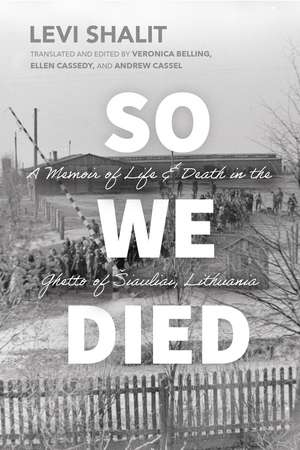
So We Died: A Memoir of Life and Death in the Ghetto of Šiauliai, Lithuania (Azoy zaynen mir geshtorbn) is a powerful eyewitness account of the Shavl ghetto during the Nazi occupation of Lithuania. Written in Yiddish by Levi Shalit and available now for the first time in English, the work fills a stark void in historical records.
Shalit divided his work into four sections. In the first, he describes the German invasion of Šiauliai, the murder of thousands of Jews in the city and surrounding countryside, and the forced relocation of the surviving Jews into the Shavl ghetto. In the second, he describes daily life in the ghetto in engrossing detail. In the third, titled “The Masada Book,” Shalit describes ghetto residents’ attempt to organize a resistance group of which he himself was a member. In the fourth, he narrates the transformation of the ghetto into a concentration camp and the seizure and deportation of the community’s children.
Few accounts of the Shavl ghetto survived the war. Shalit’s work offers English-language readers a rare insight into a vital chapter of history. The translators artfully reveal Shalit’s literary prowess and the ways he illuminated the Shavl ghetto’s daily struggles, false hopes, and atrocities.
More than an account of a previously overlooked episode in Holocaust history, So We Died is a testament to the enduring power of the human spirit in the face of unspeakable tragedy. It offers keen insight into a time of war, fascism, and resistance. A must-read for anyone seeking understanding and remembrance.
Din seria Jews and Judaism: History and Culture
-
 Preț: 451.31 lei
 -
 Preț: 242.30 lei
 -
 Preț: 233.89 lei
 -
 Preț: 222.08 lei
 -
 Preț: 233.69 lei
 -
 Preț: 169.80 lei
 - 15%
 Preț: 493.00 lei
 -
 Preț: 231.80 lei
 -
 Preț: 273.55 lei
 -
 Preț: 381.27 lei
 -
 Preț: 235.76 lei
Preț: 258.29 lei
Puncte Express: 387
Carte disponibilă
Livrare economică 09-23 noiembrie
Livrare prin curier în România Termenul estimat este afișat lângă disponibilitate.
Transport gratuit de la 400.00 lei Plată online sau ramburs, în funcție de opțiunile comenzii.
Retur gratuit în 14 zile Comandă securizată și suport în română.
Specificații
ISBN-13: 9780817361747
ISBN-10: 081736174X
Pagini: 292
Ilustrații: 1 B&W PHOTO - 4 MAPS
Dimensiuni: 152 x 229 x 23 mm
Greutate: 0.4 kg
Editura: University Of Alabama Press
Colecția University Alabama Press
Seria Jews and Judaism: History and Culture
ISBN-10: 081736174X
Pagini: 292
Ilustrații: 1 B&W PHOTO - 4 MAPS
Dimensiuni: 152 x 229 x 23 mm
Greutate: 0.4 kg
Editura: University Of Alabama Press
Colecția University Alabama Press
Seria Jews and Judaism: History and Culture
Notă biografică
Levi Shalit (1916–1994) was born in Kuybyshev (now Samara), Russia, and raised in Lithuania. During World War II, he was confined in the ghetto in Šiauliai, Lithuania, then transported to the Dachau concentration camp in Germany. After the war, he lived in Munich, where the original Yiddish-language edition of this book, Azoy zaynen mir geshtorbn, was published.
Veronica Belling is author of Bibliography of South African Jewry and Yiddish Theatre in South Africa: A History from the Late Nineteenth Century to 1960. She is translator of Leibl Feldman’s Jews in Johannesburg and author of many scholarly articles.
Justin Cammy is a professor of Jewish studies and world literatures at Smith College.
Ellen Cassedy is translator of On the Landing: Stories by Yenta Mash, the cotranslator (with Yermiyahu Ahron Taub) of Oedipus in Brooklyn and Other Stories by Blume Lempel, and author of We Are Here: Memories of the Lithuanian Holocaust.
Andrew Cassel is a former newspaper editor and reporter. He is cotranslator (with Gabriel Laufer) of Notes from the Valley of Slaughter: A Memoir from the Ghetto of Šiauliai, Lithuania by Aharon Pick.
Veronica Belling is author of Bibliography of South African Jewry and Yiddish Theatre in South Africa: A History from the Late Nineteenth Century to 1960. She is translator of Leibl Feldman’s Jews in Johannesburg and author of many scholarly articles.
Justin Cammy is a professor of Jewish studies and world literatures at Smith College.
Ellen Cassedy is translator of On the Landing: Stories by Yenta Mash, the cotranslator (with Yermiyahu Ahron Taub) of Oedipus in Brooklyn and Other Stories by Blume Lempel, and author of We Are Here: Memories of the Lithuanian Holocaust.
Andrew Cassel is a former newspaper editor and reporter. He is cotranslator (with Gabriel Laufer) of Notes from the Valley of Slaughter: A Memoir from the Ghetto of Šiauliai, Lithuania by Aharon Pick.
Cuprins
Maps
Acknowledgments
Abbreviations
Introduction: Veronica Belling
Translators’ Note
Part I. O, Israel, People of Faith
Chapter 1. May One? Must One?
Chapter 2. Introductory Remarks
Chapter 3. And So It Was . . .
Chapter 4. O, Israel, People of Faith
Chapter 5. He Remained on His Land
Chapter 6. Tamara (The Mother of the Ghetto)
Part II. So We Lived
Chapter 7. Life in the Ghetto
Chapter 8. What We Ate in the Ghetto
Chapter 9. Apartments
Chapter 10. Heating and Lighting
Chapter 11. Production, Crafts, and Trade
Chapter 12. Health Matters
Chapter 13. Schools and Houses of Study
Chapter 14. Management and Administration
Chapter 15. So We Lived
Chapter 16. Hunted by Predators
Chapter 17. Black Asphalt on Warm Bodies
Chapter 18. “If Not Still Higher”
Chapter 19. Out of the Depths
Chapter 20. A Fight for the Unborn
Chapter 21. Flowers
Chapter 22. A Mortal Exchange
Chapter 23. So Rules the Rambam
Chapter 24. Smugglers
Chapter 25. The Unfortunate People of the Book
Chapter 26. The Brass Mortar
Chapter 27. Telz without Jews
Chapter 28. News
Chapter 29. Court
Chapter 30. Play, Fiddle, Play
Chapter 31. A Living Greeting
Chapter 32. Vilna Jews in a Transport
Chapter 33. Together
Chapter 34. Ghetto Women on Trial
Chapter 35. A Hanging
Part III. The Masada Book
Chapter 36. The Masada Book
Chapter 37. Gold Diggers
Chapter 38. Vengeance
Chapter 39. He Brought Medicines: A Portrait
Chapter 40. A Greeting from the Land of Israel
Chapter 41. The Cellar
Part IV. The Community Dies
Chapter 42. Quartered in Barracks
Chapter 43. The Traitor
Chapter 44. Black Friday
Chapter 45. Rise Up, Little Table
Chapter 46. Where Is Moyshele?
Chapter 47. The Fate of a Jewish Child
Chapter 48. After the Storm
Chapter 49. Ingathering of the Exiles
Chapter 50. The Community Dies
Chapter 51. Twenty-Four Hours in Stutthof and One Year in Dachau
Afterword: Justin Cammy
Glossary
Yiddish and Lithuanian Forms of Place Names
Notes
Bibliography
Contributors
Index
Acknowledgments
Abbreviations
Introduction: Veronica Belling
Translators’ Note
Part I. O, Israel, People of Faith
Chapter 1. May One? Must One?
Chapter 2. Introductory Remarks
Chapter 3. And So It Was . . .
Chapter 4. O, Israel, People of Faith
Chapter 5. He Remained on His Land
Chapter 6. Tamara (The Mother of the Ghetto)
Part II. So We Lived
Chapter 7. Life in the Ghetto
Chapter 8. What We Ate in the Ghetto
Chapter 9. Apartments
Chapter 10. Heating and Lighting
Chapter 11. Production, Crafts, and Trade
Chapter 12. Health Matters
Chapter 13. Schools and Houses of Study
Chapter 14. Management and Administration
Chapter 15. So We Lived
Chapter 16. Hunted by Predators
Chapter 17. Black Asphalt on Warm Bodies
Chapter 18. “If Not Still Higher”
Chapter 19. Out of the Depths
Chapter 20. A Fight for the Unborn
Chapter 21. Flowers
Chapter 22. A Mortal Exchange
Chapter 23. So Rules the Rambam
Chapter 24. Smugglers
Chapter 25. The Unfortunate People of the Book
Chapter 26. The Brass Mortar
Chapter 27. Telz without Jews
Chapter 28. News
Chapter 29. Court
Chapter 30. Play, Fiddle, Play
Chapter 31. A Living Greeting
Chapter 32. Vilna Jews in a Transport
Chapter 33. Together
Chapter 34. Ghetto Women on Trial
Chapter 35. A Hanging
Part III. The Masada Book
Chapter 36. The Masada Book
Chapter 37. Gold Diggers
Chapter 38. Vengeance
Chapter 39. He Brought Medicines: A Portrait
Chapter 40. A Greeting from the Land of Israel
Chapter 41. The Cellar
Part IV. The Community Dies
Chapter 42. Quartered in Barracks
Chapter 43. The Traitor
Chapter 44. Black Friday
Chapter 45. Rise Up, Little Table
Chapter 46. Where Is Moyshele?
Chapter 47. The Fate of a Jewish Child
Chapter 48. After the Storm
Chapter 49. Ingathering of the Exiles
Chapter 50. The Community Dies
Chapter 51. Twenty-Four Hours in Stutthof and One Year in Dachau
Afterword: Justin Cammy
Glossary
Yiddish and Lithuanian Forms of Place Names
Notes
Bibliography
Contributors
Index
Recenzii
“Levi Shalit's memoir, written in the immediate aftermath of the war when he was still living in Germany as a displaced person, offers readers a penetrating portrait of Jewish life in the Shavel (Siauliai) ghetto in Lithuania. Full of historical details, psychological insights, and sociological analyses, this compilation of vignettes is unlike other memoirs. I recommend most highly.” —Alexandra Garbarini, author of Numbered Days: Diary Writing and the Holocaust
"Shalit estimates that of the town’s 10,000-person Jewish community, only about 600 individuals survived, meaning a staggering 94% of their town’s Jews were killed. In So We Died, Shalit and his translators make sure that their voices, names, and experiences are not forgotten." —Jewish Book Council
“Skillfully translated into English for the first time as So We Died, Shalit’s text reads less like a memoir than a mosaic of memory—a composite of voices that traces the lost world of Shavl Jewry and its fate during the Holocaust.” —In Geveb: A Journal of Yiddish Studies
"Shalit estimates that of the town’s 10,000-person Jewish community, only about 600 individuals survived, meaning a staggering 94% of their town’s Jews were killed. In So We Died, Shalit and his translators make sure that their voices, names, and experiences are not forgotten." —Jewish Book Council
“Skillfully translated into English for the first time as So We Died, Shalit’s text reads less like a memoir than a mosaic of memory—a composite of voices that traces the lost world of Shavl Jewry and its fate during the Holocaust.” —In Geveb: A Journal of Yiddish Studies
Descriere
So We Died is a haunting and essential eyewitness account of the Shavl ghetto in Nazi-occupied Lithuania, written in Yiddish by journalist Levi Shalit and now available in English for the first time. Blending reportage, character sketches, and thematic reflections, Shalit documents the brutal realities of ghetto life, the agony of uncertainty, and the courageous acts of resistance—both large and small—that defined a community facing annihilation. With literary precision and moral clarity, this memoir preserves the voices of those lost and insists on remembrance in the face of historical silence.