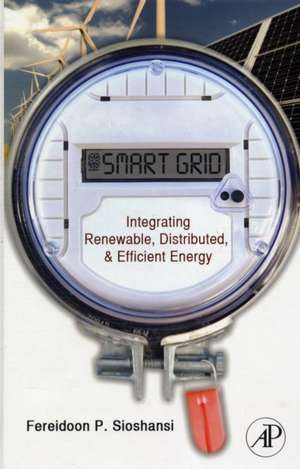
Smart Grid: Integrating Renewable, Distributed and Efficient Energy
Editat de Fereidoon Sioshansien Limba Engleză Hardback – 12 dec 2011
În volumul Smart Grid, editorul Fereidoon Sioshansi reunește o echipă internațională de experți pentru a analiza tranziția sistemelor energetice către un model digitalizat și rezilient. Recomandăm această lucrare pentru abordarea sa integrată, care nu se limitează la tehnologie, ci explorează și mecanismele de reglementare necesare pentru succesul implementării. Subliniem importanța acoperirii tehnice a soluțiilor de stocare și a micro-rețelelor, elemente critice pentru gestionarea intermitenței specifice energiei eoliene și solare.
Structura volumului facilitează o înțelegere progresivă. Prima parte stabilește contextul politic și etic, analizând impactul prețurilor dinamice și al reglementărilor inteligente asupra consumatorului. Partea a doua trece la soluții de inginerie aplicată, de la controlul direct al sarcinii până la integrarea vehiculelor electrice în rețea. Merită menționat că, spre deosebire de Smart Energy Grid Engineering de Hossam Gabbar, care se concentrează masiv pe proiectarea componentelor și metode avansate de inginerie, volumul de față oferă o perspectivă mai largă, incluzând dimensiunea economică și de politici publice esențială pentru investitori. Complementar lui Renewable Energy Integration, care se axează pe operarea piețelor de electricitate, lucrarea editată de Sioshansi pune un accent deosebit pe 'prosumager' și pe rolul rețelelor de distribuție descentralizate.
Această abordare este coerentă cu restul operei lui Fereidoon Sioshansi. Dacă în Energy Communities acesta analiza beneficiile sistemice ale implicării consumatorilor, în Smart Grid el oferă infrastructura tehnică necesară pentru ca aceste comunități să devină viabile. Este un instrument de lucru esențial pentru inginerii care au nevoie de șabloane de succes din proiecte reale de smart metering, precum cele implementate în California sau în diverse comunități off-grid.
Preț: 520.77 lei
Preț vechi: 686.78 lei
-24%
Carte tipărită la comandă
Livrare economică 20 noiembrie-04 decembrie
Specificații
ISBN-10: 0123864526
Pagini: 568
Ilustrații: 50 illustrations
Dimensiuni: 152 x 229 x 25 mm
Greutate: 0.82 kg
Editura: ELSEVIER SCIENCE
V-ar putea interesa
-
 Power Electronics HandbookMuhammad H. Rashid-29%Preț: 1300.73 lei1839.96 lei
 -
 -9%Preț: 872.74 lei959.05 lei
 -
 Smart GridJanaka B Ekanayake-23%Preț: 604.30 lei784.80 lei
 -
 Smart Grids for Smart Cities, Volume 1O V Gnana Swathika-23%Preț: 1165.37 lei1513.46 lei
 -
 -23%Preț: 1294.93 lei1681.72 lei
 -
 -27%Preț: 1217.16 lei1659.29 lei
 -
 Energy and Environmental Aspects of Emerging Technologies for Smart GridSurender Reddy Salkuti-18%Preț: 1256.59 lei1532.42 lei
 -
 Recent Advances in Energy Systems, Power and Related Smart TechnologiesKyandoghere Kyamakya-18%Preț: 1681.44 lei2050.54 lei
 -
 Smart Grid Planning and ImplementationP.E. Gellings-15%Preț: 464.68 lei546.69 lei
 -
 Advances in Smart Grid TechnologyPierluigi Siano-24%Preț: 1701.26 lei2238.50 lei
 -
 -18%Preț: 913.32 lei1113.81 lei
 -
 Renewable Energy Systems in Smart GridMohan Lal Kolhe-18%Preț: 1314.35 lei1602.86 lei
 -
 Advances in Green Energy TechnologiesShelly Vadhera-18%Preț: 1346.45 lei1642.01 lei
 -
 Recent Advances in Power SystemsJitendra Kumar-18%Preț: 1068.73 lei1303.33 lei
 -
 Intelligent Solutions for Smart Grids and Smart CitiesPierluigi Siano-20%Preț: 1989.99 lei2487.48 lei
 -
 Advances in Renewable Energy and Its Grid IntegrationSuryanarayana Doolla-24%Preț: 1229.39 lei1617.61 lei
 -
 Decarbonisation and Digitization of the Energy SystemAshwani Kumar-18%Preț: 1170.53 lei1427.47 lei
Public țintă
Primary: Electrical, Power, Mechanical & Civil Engineers and professionals working within the renewable energy industry, at electric utilities, and on power systems.Secondary: Policy makers; economists; investors; graduate students & post-grad researchers in engineering programs studying energy production.
De ce să citești această carte
Recomandăm această carte inginerilor energetici și factorilor de decizie care doresc să înțeleagă nu doar 'cum', ci și 'în ce condiții' funcționează o rețea inteligentă. Cititorul câștigă o viziune clară asupra integrării resurselor regenerabile prin studii de caz internaționale, învățând strategii concrete pentru gestionarea stocării și a cererii flexibile. Este o resursă tehnică solidă pentru oricine proiectează infrastructura energetică a viitorului.
Descriere scurtă
- Provides critical information on the technological, design and policy issues that must be taken into account to ensure that the smart grid is implemented successfully
- Demonstrates how smart grids can help utilities adhere to increased renewable portfolio standards
- Provides examples of successful microgrid/smart metering projects from around the world that can act as templates for developers, operators and investors embarking upon similar projects
Cuprins
Chapter 1: Smart grid is a lot more than just “technology
Chapter 2: Smart regulation for the smart grid
Chapter 3: From smart grid to smart energy usage: Reengaging customer demand
Chapter 4: Efficiency and ethics of dynamic pricing
Chapter 5: The equity implications of smart grid
Part II: Smart supply: Integrating renewable and distributed generation
Chapter 6: Prospects for renewable energy: meeting the challenges of integration with storage
Chapter 7: The smart grid vision and roadmap for California
Chapter 8: Realizing the potential of distributed generation
Chapter 9: What role for micro-grids?
Chapter 10: Renewable integration through direct load control and demand response
Chapter 11: Riding the wave: The potential of the smart grid for integrating wind resources
Part III: Smart infrastructure, smart prices, smart devices, smart customers, smart demand
Chapter 12: Software infrastructure and the smart grid
Chapter 13: The evolution of demand response in RTO markets
Chapter 14: Smart pricing in organized electricity markets
Chapter 15: How large C&I customers respond to dynamic prices – the California experience
Chapter 16: Smart pricing to reduce network investment in smart grids – the international experience
Chapter 17: Where do customers fit into the smart grid puzzle?
Chapter 18: Customer view of smart grid – Set and forget?
Chapter 19: Customer side of the meter
Part VI: Case studies and applications
Chapter 20: Demand response participation in PJM’s energy and capacity markets
Chapter 21: Ausgrid’s smart grid vision
Chapter 22: Perfect partners: Wind power and Electric Vehicles – A New Zealand case study
Chapter 23: Impact of EVs on day-ahead prices: The French connection
Recenzii
"A brisk and wide-ranging introduction by Sioshansi sets the scene. The 19 chapters that follow, despite being by 19 different groups of authors, are readable and stylistically consistent, a tribute to Shioshansi’s editorship. All of the chapters also include copious references, valuable resources for anyone seeking deeper immersion in the topics." --Modern Power Systems
"This is an excellent coverage of a sometimes misunderstood subject matter area – the so called ‘smart grid’. The approach in this book is to invite 54 co-authors- subject matter experts in various power systems fields – and create a definitive and practical reference. This is a book about the grid itself, and the transformations needed to deliver energy to customers in today’s world and tomorrow. It is not just a book for power engineers; it is for all types of practitioners and policy makers who are involved in this industry revolution." --EnergyNews, March 2012