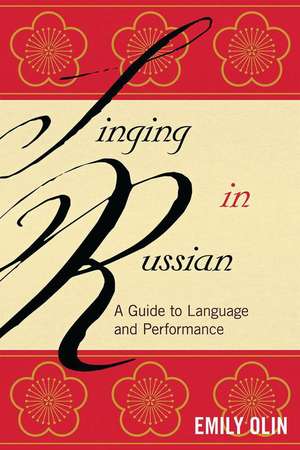
Singing in Russian: A Guide to Language and Performance
Autor Emily Olinen Limba Engleză Hardback – 4 oct 2012
Founded on the underlying principle that sung language differs dramatically from spoken language, Singing in Russian offers a comprehensive and accessible approach to understanding, mastering, and performing Russian vocal music. After covering the basics of the Cyrillic alphabet and Russian grammar and diction, author Emily Olin encourages readers to take the innovative step of using the music itself to guide the singer's pronunciation and interpretation. English sound comparisons, linguistic and musical examples, and multifaceted exercises complement textual explanations, reinforcing the techniques Olin has employed for over three decades. The addition of repertoire lists and practical recommendations further equip singers to confidently go from start to stage. Furthermore, the online audio examples contain exercises that demonstrate and reinforce the correct sound and interpretation of everything from the alphabet to the presentation of vowels, consonants, words, and phrases. They can be found at https://soundcloud.com/user-869634200/sets/singing-in-russian-a-guide-to-language-and-performance.
Singing in Russian is an invaluable resource for students, performers, teachers, directors, conductors, and coaches seeking to increase their access to Russian opera and art song, master the challenges they present to performance, and expand their personal, professional, and institutional repertoire on stage.
Preț: 573.99 lei
Preț vechi: 825.74 lei
-30%
Puncte Express: 861
Carte tipărită la comandă
Livrare economică 21 noiembrie-05 decembrie
Livrare prin curier în România Termenul estimat este afișat lângă disponibilitate.
Transport gratuit pentru acest produs Plată online sau ramburs, în funcție de opțiunile comenzii.
Retur gratuit în 14 zile Comandă securizată și suport în română.
Specificații
ISBN-13: 9780810881167
ISBN-10: 0810881160
Pagini: 256
Ilustrații: 95 b/w illustrations; 84 tables
Dimensiuni: 154 x 232 x 20 mm
Greutate: 0.52 kg
Ediția:New.
Editura: Bloomsbury Publishing
Colecția Scarecrow Press
Locul publicării:New York, United States
ISBN-10: 0810881160
Pagini: 256
Ilustrații: 95 b/w illustrations; 84 tables
Dimensiuni: 154 x 232 x 20 mm
Greutate: 0.52 kg
Ediția:New.
Editura: Bloomsbury Publishing
Colecția Scarecrow Press
Locul publicării:New York, United States
Cuprins
Preface
Acknowledgments
List of Abbreviations
List of Recordings
Part One: From Start To Stage
Chapter 1: Russian Alphabet
History of the Alphabet
The Alphabet
Chapter 2: Russian Vowels
Hard Vowels-Stressed
Hard Vowels-Unstressed: Vowel Reduction
Soft Vowels-Stressed
Soft Vowels-Unstressed: Vowel Reduction
? (ee-kratkoye)
Vowel Clusters
Stress in Russian Words
Music Analysis Example
Summary
Chapter 3: Russian Consonants
Hard Consonants
Soft Consonants
Hissing Consonants ?, ?, ?, ?, and ?
Russian Consonant ?
Hard and Soft Signs
Voiced and Voiceless Consonants
Consonant Clusters
Double Consonants
Consonants from the Same Pair
Different Consonants
Exceptions
Pronunciation of Unstressed Syllables
Music Analysis Example
Summary
Chapter 4: A Little Bit of Grammar
The Parts of a Word
Basic Parts of Speech
Short Words
Interrogative Words
Word Order in Russian Sentences
Russian Punctuation
Summary
Chapter 5: Pillars of Creative Performance
Demands of the Genre
Articulation and Pronunciation
Phrase
Interpretation
Text
"Invisible Inspiration"
Music Analysis Example
In Summation
Chapter 6: Difficulties and Delights of Singing in Russian: Essays by Non-Russian Singers
Russian for American Singers: a First-Hand Experience, by Peter Clark
Singing in Russian, by Phyllis Farmer
"I Feel Personal Connection to the Russian Repertoire", by Mary Phillips
The Challenges and Joys of Singing in Russian, by Patrick Carfizzi
"Russian Music-Part of My Heart", by Sasha Lazard
Chapter 7:Russian Style in Performance: Essays by Russian Musicians
Russian Romance: Pronunciation, Style and Interpretation, by Valery Aliev
Some Advice for Singing Russian Music by Ruben P. Lisitsian
Russian Music Is Still Undiscovered, by Vera Tariverdieva
Part Two: Music of the Russian Soul
Chapter 8: Russian Composers and World Music
Historical Comparison
A Brief History
Selected Russian Classical Composers
Chapter 9: Russian Opera
The Development of Russian Opera
Selected Operas
Chapter 10: Recommended Russian Operatic Repertoire - Arias
Soprano
Mezzo-soprano
Tenor
Baritone
Bass
Chapter 11: Recommended Russian Art Song Repertoire - Romances
Russian Folk Songs, Traditionally Performed by Classical Singers
"Old Russian Romances"
From 19th Century to Beginning of the Soviet Period
Works of the Soviet and Post-Soviet Composers
Chapter 12: Literary Inspiration
Operas
Romances
Cross Currents
Selected Russian Poets and Writers
Selected Non-Russian Poets and Writers
Appendix 1: Working with the dictionary
Appendix 2: Compilation of Sung Exercises
Bibliography
Index
About the Author
Acknowledgments
List of Abbreviations
List of Recordings
Part One: From Start To Stage
Chapter 1: Russian Alphabet
History of the Alphabet
The Alphabet
Chapter 2: Russian Vowels
Hard Vowels-Stressed
Hard Vowels-Unstressed: Vowel Reduction
Soft Vowels-Stressed
Soft Vowels-Unstressed: Vowel Reduction
? (ee-kratkoye)
Vowel Clusters
Stress in Russian Words
Music Analysis Example
Summary
Chapter 3: Russian Consonants
Hard Consonants
Soft Consonants
Hissing Consonants ?, ?, ?, ?, and ?
Russian Consonant ?
Hard and Soft Signs
Voiced and Voiceless Consonants
Consonant Clusters
Double Consonants
Consonants from the Same Pair
Different Consonants
Exceptions
Pronunciation of Unstressed Syllables
Music Analysis Example
Summary
Chapter 4: A Little Bit of Grammar
The Parts of a Word
Basic Parts of Speech
Short Words
Interrogative Words
Word Order in Russian Sentences
Russian Punctuation
Summary
Chapter 5: Pillars of Creative Performance
Demands of the Genre
Articulation and Pronunciation
Phrase
Interpretation
Text
"Invisible Inspiration"
Music Analysis Example
In Summation
Chapter 6: Difficulties and Delights of Singing in Russian: Essays by Non-Russian Singers
Russian for American Singers: a First-Hand Experience, by Peter Clark
Singing in Russian, by Phyllis Farmer
"I Feel Personal Connection to the Russian Repertoire", by Mary Phillips
The Challenges and Joys of Singing in Russian, by Patrick Carfizzi
"Russian Music-Part of My Heart", by Sasha Lazard
Chapter 7:Russian Style in Performance: Essays by Russian Musicians
Russian Romance: Pronunciation, Style and Interpretation, by Valery Aliev
Some Advice for Singing Russian Music by Ruben P. Lisitsian
Russian Music Is Still Undiscovered, by Vera Tariverdieva
Part Two: Music of the Russian Soul
Chapter 8: Russian Composers and World Music
Historical Comparison
A Brief History
Selected Russian Classical Composers
Chapter 9: Russian Opera
The Development of Russian Opera
Selected Operas
Chapter 10: Recommended Russian Operatic Repertoire - Arias
Soprano
Mezzo-soprano
Tenor
Baritone
Bass
Chapter 11: Recommended Russian Art Song Repertoire - Romances
Russian Folk Songs, Traditionally Performed by Classical Singers
"Old Russian Romances"
From 19th Century to Beginning of the Soviet Period
Works of the Soviet and Post-Soviet Composers
Chapter 12: Literary Inspiration
Operas
Romances
Cross Currents
Selected Russian Poets and Writers
Selected Non-Russian Poets and Writers
Appendix 1: Working with the dictionary
Appendix 2: Compilation of Sung Exercises
Bibliography
Index
About the Author
Recenzii
Singing in Russian focuses specifically on helping voice students understand, master, and perform Russian vocal music. It begins by giving an overview of the Cyrillic alphabet and the basics of Russian grammar and diction, and then goes on to explain how singers can use the music to guide their pronunciation of this language. The author provides many linguistic and musical examples to explain techniques, provides exercises, uses English sounds to compare their Russian alternatives, and recommends songs. The book includes a CD that gives concrete examples of how to sing vowels, words, and phrases.
This volume is an outstanding guidebook for anyone who is interested in Russian lyric diction. Before the publication of this volume, the resources for learning to sing in Russian have been sparse, and Olin points out inaccuracies in the books that are available. While some singers may lament the lack of IPA transcriptions in the volume, this book is intended as a tool to singing Russian both intelligibly and intelligently-that is, with accurate pronunciation and an understanding of the text. Additionally, the suggestions for repertoire, and the historical perspectives on literary and musical figures are invaluable. For the student of lyric diction, Singing in Russian is highly recommended.
This volume is an outstanding guidebook for anyone who is interested in Russian lyric diction. Before the publication of this volume, the resources for learning to sing in Russian have been sparse, and Olin points out inaccuracies in the books that are available. While some singers may lament the lack of IPA transcriptions in the volume, this book is intended as a tool to singing Russian both intelligibly and intelligently-that is, with accurate pronunciation and an understanding of the text. Additionally, the suggestions for repertoire, and the historical perspectives on literary and musical figures are invaluable. For the student of lyric diction, Singing in Russian is highly recommended.