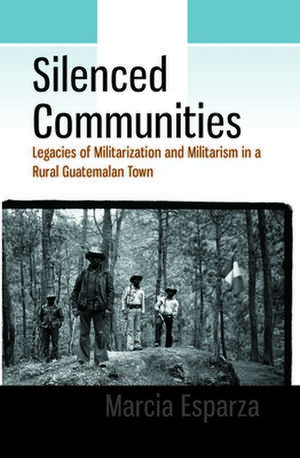
Silenced Communities
Autor Marcia Esparzaen Limba Engleză Hardback – oct 2017
Preț: 759.55 lei
Preț vechi: 986.43 lei
-23%
Puncte Express: 1139
Carte tipărită la comandă
Livrare economică 27 noiembrie-11 decembrie
Livrare prin curier în România Termenul estimat este afișat lângă disponibilitate.
Transport gratuit pentru acest produs Plată online sau ramburs, în funcție de opțiunile comenzii.
Retur gratuit în 14 zile Comandă securizată și suport în română.
Specificații
ISBN-13: 9781785336874
ISBN-10: 1785336878
Pagini: 296
Ilustrații: 17 illustrations, 2 figures, 2 maps, 4 tables
Dimensiuni: 157 x 235 x 21 mm
Greutate: 0.58 kg
Editura: BERGHAHN BOOKS
ISBN-10: 1785336878
Pagini: 296
Ilustrații: 17 illustrations, 2 figures, 2 maps, 4 tables
Dimensiuni: 157 x 235 x 21 mm
Greutate: 0.58 kg
Editura: BERGHAHN BOOKS
Notă biografică
Marcia Esparza is an Associate Professor at John Jay College of Criminal Justice, City University of New York. She has co-edited the books State Violence and Genocide in Latin America (2009), Legacies of State Violence and Transitional Justice in Latin America (2015), and Remembering the Rescuers of Victims of Human Rights Crimes in Latin America (2016).
Cuprins
Illustrations
Acknowledgments
Introduction: "My Soul is a Military Soul"
Chapter 1. The Methodological Crisis Revisited
Chapter 2. A Postcolonial Reenactment:The Cold War Civil Self-Defense Patrol System
Chapter 3. A Chameleonlike Army: Civic Action, a Postcolonial Strategy
Chapter 4. The Beheading of a Popular Maya Uprising in a "Red Community"
Chapter 5. Early Disbanding, Postwar Resistance and Na'tab'al (Memory)
Chapter 6. "Inverted Discourse:" Collaboration in "White Communities"
Chapter 7. Nationalistic Mythology Revival: Failure to Dismantle the Internal Enemy Myth
Chapter 8. A "Silence That Hurts:" Garrison Communities
Chapter 9. Militaristic Legacies: Lynching and La Cadena
Chapter 10. A Foreseen Aftermath: Decree 3-2014
Appendix
Bibliography
Index
Acknowledgments
Introduction: "My Soul is a Military Soul"
Chapter 1. The Methodological Crisis Revisited
Chapter 2. A Postcolonial Reenactment:The Cold War Civil Self-Defense Patrol System
Chapter 3. A Chameleonlike Army: Civic Action, a Postcolonial Strategy
Chapter 4. The Beheading of a Popular Maya Uprising in a "Red Community"
Chapter 5. Early Disbanding, Postwar Resistance and Na'tab'al (Memory)
Chapter 6. "Inverted Discourse:" Collaboration in "White Communities"
Chapter 7. Nationalistic Mythology Revival: Failure to Dismantle the Internal Enemy Myth
Chapter 8. A "Silence That Hurts:" Garrison Communities
Chapter 9. Militaristic Legacies: Lynching and La Cadena
Chapter 10. A Foreseen Aftermath: Decree 3-2014
Appendix
Bibliography
Index