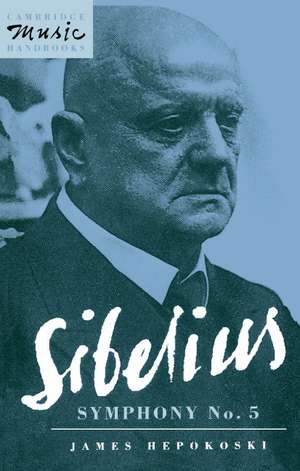
Sibelius
Editat de James A. Hepokoski, Julian Rushtonen Limba Engleză Paperback – 21 mar 2003
Preț: 103.95 lei
Puncte Express: 156
Carte disponibilă
Livrare economică 05-19 noiembrie
Livrare prin curier în România Termenul estimat este afișat lângă disponibilitate.
Transport gratuit de la 400.00 lei Plată online sau ramburs, în funcție de opțiunile comenzii.
Retur gratuit în 14 zile Comandă securizată și suport în română.
Specificații
ISBN-13: 9780521409582
ISBN-10: 0521409586
Pagini: 124
Ilustrații: 2 tables
Dimensiuni: 140 x 216 x 8 mm
Greutate: 0.17 kg
Ediția:New.
Editura: Cambridge University Press
Locul publicării:Cambridge, United Kingdom
ISBN-10: 0521409586
Pagini: 124
Ilustrații: 2 tables
Dimensiuni: 140 x 216 x 8 mm
Greutate: 0.17 kg
Ediția:New.
Editura: Cambridge University Press
Locul publicării:Cambridge, United Kingdom
V-ar putea interesa
-
 -23%Preț: 551.55 lei718.69 lei
 -
 The Cambridge Companion to MozartSimon P. KeefePreț: 272.51 lei
 -
 The Life of ElgarMichael KennedyPreț: 209.98 lei
 -
 The Cambridge Companion to Benjamin BrittenMervyn CookePreț: 222.68 lei
 -
 Elvis is King: Costello's My Aim Is True: Pop Classics #4Richard Crouse-31%Preț: 71.85 lei104.36 lei
 -
 Under the IvyGraeme Thomson-18%Preț: 98.93 lei120.15 lei
Cuprins
1. Introduction: Sibelius and the problem of 'Modernism'; 2. The crisis, 1909-1914: 'Let's let the world go its own way'; 3. Reassessed compositional principles, 1912-1915: the five key concepts; 4. Of Heaven's door and migrating swans: composing a confession of faith; 5. Musical process and architecture: a proposed overview; 6. Editions and performance tempos: a brief note.
Descriere
A fresh look at the work and its composer with implications beyond Sibelius himself into the entire repertory of Post-Wagnerian symphonic composition.