Cantitate/Preț
Produs

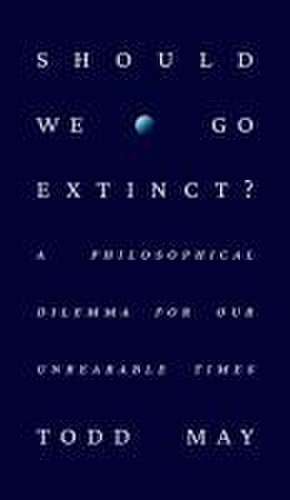
Should We Go Extinct?

Autor Todd May
en Limba Engleză Hardback – 6 aug 2024

În peisajul academic actual, întrebările despre viitorul umanității au încetat să fie simple exerciții ipotetice, devenind piloni centrali în dezbaterile de etică aplicată și prognoză socială. Considerăm că Should We Go Extinct? de Todd May reprezintă o resursă esențială pentru studenții și profesioniștii din științele sociale care explorează responsabilitatea speciei umane în fața colapsului ecologic. Autorul, cunoscut pentru rolul său de consultant filozofic al serialului „The Good Place”, reușește să traducă dileme ontologice complexe într-un limbaj accesibil, fără a sacrifica rigoarea analitică.

Textul este construit pe o structură de bilanț etic: pe de o parte, valoarea intrinsecă a creației umane — arta, muzica și capacitatea de empatie — iar pe de altă parte, amprenta distructivă lăsată asupra lumii non-umane prin sisteme precum fermele industriale sau testările științifice invazive. Todd May nu se limitează la o critică de tip manifest, ci propune un cadru logic prin care putem evalua dacă suferința provocată de umanitate poate fi justificată de meritele sale culturale. Această abordare echilibrată oferă cititorului instrumentele necesare pentru a naviga între pesimismul radical și optimismul nefondat.

Acoperă aceeași arie tematică a supraviețuirii speciei ca The Darwinian Trap de Kristian Rönn, dar cu o abordare mult mai axată pe moralitate și etică individuală, spre deosebire de analiza lui Rönn care se concentrează pe mecanismele evoluționiste și sistemele de stimulare economică. În timp ce alte lucrări din categoria futurologiei se pierd în detalii tehnice, Should We Go Extinct? rămâne ancorată în experiența umană subiectivă, chestionând însăși legitimitatea prezenței noastre pe planetă în formatul Hardback oferit de Crown Publishing Group (NY).

Citește tot Restrânge

Preț: 10950 lei

Preț vechi: 13965 lei
-22%

Puncte Express: 164

Carte disponibilă

Livrare economică 25 august-01 septembrie
Livrare express 11-15 august pentru 5121 lei

Livrare prin curier în România Termenul estimat este afișat lângă disponibilitate.
Transport gratuit de la 40000 lei Plată online sau ramburs, în funcție de opțiunile comenzii.
Retur gratuit în 14 zile Comandă securizată și suport în română.

Specificații

ISBN-13: 9780593798720
ISBN-10: 0593798724
Pagini: 176
Dimensiuni: 124 x 189 x 20 mm
Greutate: 0.24 kg
Ediția:1
Editura: Crown Publishing Group (NY)

De ce să citești această carte

Recomandăm această carte oricui se simte copleșit de știrile despre criza climatică sau conflicte globale. Todd May oferă o perspectivă filozofică lucidă care transformă anxietatea existențială într-o analiză structurată a responsabilității. Veți câștiga o înțelegere mai profundă a impactului uman asupra ecosistemului și, mai important, un argument argumentat pentru speranță, bazat pe schimbări concrete de comportament colectiv și empatie față de toate ființele.


Descriere

Should we bring new humans into the world? Or would it be better off without us? A renowned philosopher and advisor to NBC’s The Good Place offers a thoughtful exploration of humanity’s future—or lack thereof. “For more than five years, Todd May was my philosophical advisor. I heartily recommend that he be yours as well. (It helps that he’s quite funny.)”—Michael Schur, from the Introduction These days it’s harder than ever to watch TV, scroll social media, or even just sit at home looking out of the window without contemplating the question at the heart of philosopher Todd May’s Should We Go Extinct? Facing climate destruction and the revived specter of nuclear annihilation even as humans continue to cause untold suffering to our fellow creatures on planet Earth, we are forced each day to contemplate whether the world would be better off in our absence. In this timely, fascinating examination, May, a renowned philosopher and advisor to the acclaimed TV show The Good Place, reasons both for and against the continuation of our species, trying to help us understand how and whether, the positive and negative tallies of the human ledger are comparable, and what conclusions we might draw about ourselves and our future from doing so. He discusses the value that only humans can bring to the world and to one another as well as the goods, like art and music, that would be lost were we no longer here. On the other side of the ledger, he walks us through the suffering we cause to nature and the non-human world, seeking to understand whether it’s possible to justify such suffering against our merits and if not, what changes we could make to reduce the harm we cause. In this moment of rising pessimism about the future, and as many people wonder whether they should bring children into such a dark and difficult world, the questions May tackles in Should We Go Extinct? are hardly theoretical. As he explores the complexities involved with changes such as an end to factory farming, curbing scientific testing of animals, reducing the human population, and seeking to develop empathy with our fellow creatures, May sketches a powerful framework for establishing our responsibilities as a species and gives hope that we might one day find universal agreement that the answer to his title question should be No.