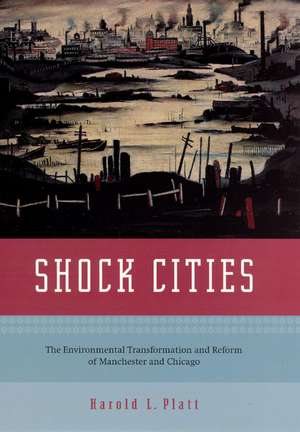
Shock Cities: The Environmental Transformation and Reform of Manchester and Chicago
Autor Harold L. Platten Limba Engleză Hardback – 22 mai 2005
Această a doua ediție a lucrării Shock Cities aduce o perspectivă proaspătă asupra istoriei mediului, fiind prima cercetare trans-atlantică ce analizează orașul industrial ca un tot unitar, prin prisma transformărilor radicale ale resurselor de bază. Considerăm că valoarea acestui volum rezidă în capacitatea autorului de a demonstra cum interesele financiare ale claselor conducătoare au modelat geografia socială, ducând la apariția ghetourilor centrale și a zonelor rezidențiale periferice, adesea în detrimentul ecosistemelor locale. Cartea acoperă aceeași arie tematică precum Environmental and Social Justice in the City de Genevieve Massard-Guilbaud, dar propune o abordare mai aplicată pe dinamica puterii politice și pe modul în care instituțiile transformă deciziile administrative în forme fizice vizibile în teren. Structura lucrării este riguros organizată în două părți mari: prima analizează crearea ecologiilor industriale prin prisma pământului, apei și aerului, în timp ce a doua parte se concentrează pe mișcările de reformă și politicile de sănătate publică. Apreciem în mod deosebit modul în care Harold L. Platt integrează datele tehnice despre canalizare și poluarea aerului cu eforturile activiștilor sociali. În contextul operei sale, Shock Cities extinde temele explorate în Building the Urban Environment, rafinând conceptul de „construcție socială a tehnologiei” și oferind o bază istorică solidă pentru problemele de mediu contemporane tratate în Sinking Chicago. Este o resursă esențială care documentează tranziția de la haosul industrial la primele forme de planificare regională și conservare.
Preț: 428.28 lei
Preț vechi: 465.52 lei
-8%
Carte disponibilă
Livrare economică 09-23 noiembrie
Livrare express 23-29 octombrie pentru 53.10 lei
Specificații
ISBN-10: 0226670767
Pagini: 592
Ilustrații: 7 halftones, 20 line drawings, 27 maps, 13 tables
Dimensiuni: 152 x 229 x 43 mm
Greutate: 0.99 kg
Ediția:1
Editura: University of Chicago Press
Colecția University of Chicago Press
De ce să citești această carte
Recomandăm această carte specialiștilor în urbanism și istorie socială care doresc să înțeleagă rădăcinile inegalităților de mediu. Cititorul va câștiga o perspectivă detaliată asupra modului în care crizele sanitare și dezastrele ecologice din secolul al XIX-lea au forțat apariția reglementărilor moderne. Este un studiu de caz fundamental despre cum politica și genul au influențat lupta împotriva poluării în două dintre cele mai influente orașe ale epocii industriale.
Despre autor
Harold L. Platt este profesor de istorie la Loyola University din Chicago, fiind o autoritate recunoscută în domeniul istoriei urbane și de mediu. Opera sa se concentrează pe intersecția dintre tehnologie, politici publice și transformarea spațiului urban. Prin lucrări precum Building the Urban Environment și Sinking Chicago, Platt a explorat modul în care comunitățile răspund la schimbările climatice și presiunile industriale, fiind premiat pentru rigoarea cercetărilor sale de arhivă și capacitatea de a sintetiza date complexe în narațiuni istorice coerente.
Descriere scurtă
Shock Cities also recasts the age of industry within a larger frame of nature. Frightening epidemics and unnatural "natural disasters" forced the city dwellers onto the path of environmental reform. Crusaders for social justice such as Chicago's Jane Addams and Manchester's Charles Rowley led class-bridging campaigns to clean up the slums. Women activists and other "municipal housekeepers" promoted regulations to reduce air pollution. Public health experts directed efforts to improve sanitation.
Out of these reform movements, the Progressives formulated new concepts of environmental conservation and regional planning. Comparing the two cities, Platt highlights the ways in which political culture and institutions act to turn social geography into physical shapes on the ground. This focus on the political formation of urban space helps illuminate questions of social and environmental justice. Shock Cities will be of enormous value to students of ecology, technology, urban planning, and public health in the Western world.
Notă biografică
Cuprins
Preface
Part One - Creating Industrial Ecologies
1. Introduction: The Industrial City and the Paradox of Progress
LAND
2. "They Are All Little Manchesters"
3. Mudhole in the Prairie
WATER
4. "A Fountain Inexhaustible": Chicago and Environmental Profligacy
5. "The Hardest Worked River": Manchester and Environmental Catastrophe
AIR
6. The Technological Construction of Industrial Ecologies
7. The Social Construction of Industrial Technology
Part Two - Reforming Industrial Cities
8. Introduction: Public Health and the Politics of Environmental Reform
LAND
9. The Environmental Justice Movement in Manchester
10. The Environmental Justice Movement in Chicago
WATER
11. "Monstrous Waste": Water Supply in Chicago and Manchester
12. "Clever Microbes": Sanitation Science in Manchester and Chicago
AIR
13. "Invisible Evil": Pollution and Class Politics in Manchester
14. Visible Smoke: Pollution and Gender Politics in Chicago
15. Conclusion: Machine Age Cities
Notes
Index