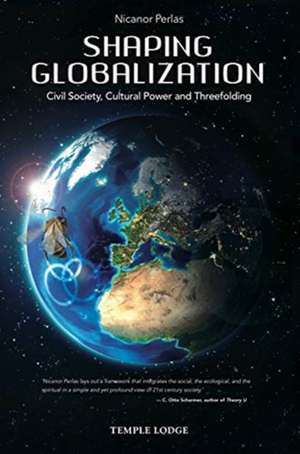
Shaping Globalization
Autor Nicanor Perlasen Limba Engleză Paperback – 25 mar 2019
Analizăm în Shaping Globalization eficiența modelului Philippine Agenda 21, un studiu de caz esențial care demonstrează cum colaborarea între agențiile guvernamentale, liderii de afaceri și organizațiile cetățenești poate genera o dezvoltare sustenabilă. Nicanor Perlas propune o structură practică bazată pe conceptul de „threefolding”, argumentând că societatea civilă a devenit a treia forță majoră în modelarea proceselor globale, alături de stat și piață. Notăm cu interes modul în care autorul definește societatea civilă drept o instituție eminamente culturală, a cărei putere rezidă în capacitatea de a infuza valorile umane în sferele politice și economice fără a-și sacrifica identitatea. Această ediție în limba engleză, publicată de Temple Lodge Publishing, include o postfață nouă care integrează lecțiile învățate din evenimente precum Primăvara Arabă sau campaniile anti-fracking. Volumul acoperă o arie tematică similară cu The Revival of Civil Society de Michael G Schechter, însă abordarea lui Perlas este mult mai axată pe soluții de parteneriat tri-sectorial și pe dimensiunea spiritual-culturală a angajamentului civic, spre deosebire de analizele teoretice sau politice convenționale. În contextul operei sale, Shaping Globalization servește drept fundament sociologic pentru ideile explorate ulterior în Humanity's Last Stand. Dacă în lucrarea mai recentă autorul examinează pericolele inteligenței artificiale dintr-o perspectivă spirituală, aici el stabilește infrastructura socială necesară pentru ca umanitatea să poată naviga crizele modernității. Stilul este riguros, ancorat în cifre — amintind de trilionul de dolari vehiculat în sectorul neguvernamental — dar rămâne accesibil celor care doresc să înțeleagă dinamica puterii în secolul XXI.
Preț: 153.40 lei
Carte disponibilă
Livrare economică 10-24 noiembrie
Livrare express 27-31 octombrie pentru 33.96 lei
Specificații
ISBN-10: 1912230291
Pagini: 318
Dimensiuni: 157 x 233 x 27 mm
Greutate: 0.52 kg
Editura: Temple Lodge Publishing
De ce să citești această carte
Recomandăm această carte cititorilor interesați de sociologie și politici publice care caută o alternativă la globalizarea corporatistă. Veți descoperi un model concret de colaborare între guverne și cetățeni, bazat pe experiența reală din Filipine. Este o lectură esențială pentru a înțelege cum societatea civilă poate deveni un partener egal la masa deciziilor globale, oferind instrumente practice pentru o schimbare socială conștientă.
Descriere scurtă
Shaping Globalization asserts that global civil society is a cultural institution wielding cultural power, and shows how--through the use of this distinct power--it can advance its agenda in the political and economic realms of society without compromising its identity. Nicanor Perlas outlines the strategic implications for civil society, both locally and globally, and explains that civil society's key task is to inaugurate "threefolding" the forging of strategic partnerships between civil society, government, and business. Such authentic tri-sector partnerships are essential for advancing new ways for nations to develop, and for charting a different, sustainable type of globalization. Using the model of the Philippine Agenda 21, we are shown how civil society and progressive individuals and agencies in government and business are demonstrating the effectiveness of this new understanding to ensure that globalization benefits the environment, the poor and society as a whole.
This edition includes a new afterword.