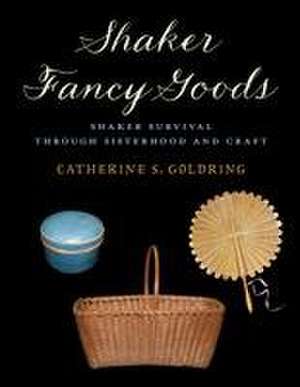
Shaker Fancy Goods
Autor Catherine S Goldringen Limba Engleză Hardback – 15 noi 2022
Remarcăm în acest volum o perspectivă proaspătă asupra moștenirii comunităților Shaker, focalizată nu pe mobilierul auster deja consacrat, ci pe așa-numitele „fancy goods” create de femei. Shaker Fancy Goods demonstrează cum pragmatismul comercial și creativitatea Surorilor Shaker au transformat un simplu schimb de mărfuri într-un motor economic vital pentru supraviețuirea stilului lor de viață comunal. Această ediție extinde cadrul propus de Shaker Textile Arts de Beverly Gordon cu date noi din sfera antreprenoriatului feminin și a adaptabilității economice. Analiza Catherine S Goldring pune accent pe modul în care aceste obiecte artizanale, adesea subestimate, au asigurat stabilitatea financiară a sectei în secolul al XIX-lea. Spre deosebire de Inspired Innovations de M. Stephen Miller, care oferă o privire de ansamblu asupra spiritului inovator Shaker, lucrarea de față se concentrează strict pe economia domestică și pe impactul direct al muncii feminine în structura religioasă. Stilul narativ este documentat, oferind o înțelegere profundă a modului în care etica muncii protestante s-a împletit cu designul funcțional. Credem că această cercetare este esențială pentru cei care doresc să înțeleagă nu doar estetica, ci și mecanismele de subzistență ale uneia dintre cele mai longevive utopii americane.
Preț: 246.13 lei
Carte disponibilă
Livrare economică 09-23 noiembrie
Specificații
ISBN-10: 1684750237
Pagini: 192
Dimensiuni: 221 x 282 x 15 mm
Greutate: 0.88 kg
Editura: DOWN EAST BOOKS
De ce să citești această carte
Recomandăm această carte cititorilor interesați de istoria socială a femeilor și de artizanatul american. Câștigați o perspectivă rară asupra modului în care o comunitate religioasă s-a auto-susținut prin design și comerț ingenios. Este o lectură fundamentală pentru a înțelege cum creativitatea feminină a devenit o forță economică într-un context istoric restrictiv, oferind detalii despre obiecte care depășesc simpla utilitate decorativă.
Descriere scurtă
Notă biografică
Cuprins
- Pen Wipes
A practical invention, meant to keep a nib pen clean and functional, took many shapes (chickens, pigs, pond lilies, pansies, maple leaves, dolls) and sold briskly until the invention of the fountain pen.
- Emeries, Pincushions, and Needle Books
During the heyday of needle making, as British factories were churning out more than 50 million needles a week, Shaker Sisters invented a profitable line of fancy accessories for sewing at home.
- Cora Helena Sarle—Botanical Artist and Fancy Goods Painter
Sarle began composing botanical drawings as a 19 year old, a testament to the encouragement among the Shakers to follow your own talent and spirit. That turned into a lifetime painting scenes—on plates, buttons, tin boxes, and pincushions—for use in the Community and for sale.
- Raccoon Fur and Silk Gloves
As revenues from the Shaker seed business waned, income from the coonskin fur and glove trade flourished, with Brothers and Sisters working side by side in a far-reaching enterprise that betrayed a surprising instinct for contemporary fashion among the Shakers.
- Shaker Dolls
The Sisters created a thriving business in Shaker dolls for practical reasons: they wanted to make use of the fabric scraps left over from the Shaker cloak trade. Thanks to this thrifty impulse, generations of mothers and daughters cherished their own demure porcelain dolls, dressed in meticulous facsimiles of modest Shaker dress, complete with bonnets, cloaks, and lace collars and undergarments.
- The Shaker Cloak
The Sisters made gray cloaks for decades for their own use, but in the late 1800s began to make versions in a stunning range of colors, with painstaking details, for fashionable women of the world, who called them opera cloaks. Separate villages ran their own concerns, each headed by an Eldress, or pair of Eldresses, who each ran her own brisk business year round.
- Shaker Fans
From the 1820s through the early twentieth century, the Sisters made fans in a variety of fashionable styles and colors, using palm leaves, paper, poplar, feathers, and ribbons, with handles of maple, black ash, cherry wood, and other ingenious materials. These seasonal items were highly salable, made of local materials, and could be made quickly, year round, and so provided the Sisters with an outlet when other seasonal items were unavailable.
- Poplarware Boxes
The Shakers began making small boxes, first with cardboard and wallpaper samples, sometimes with fragrant orange peels, and this practice developed into ingeniously woven poplar boxes. Each village developed its own signature styles, and the perennial best sellers were crafted in a dizzying array of shapes and forms. Despite the signature styles, the production of boxes was a cooperative venture, with raw material and equipment shared from one village to the next as need arose.
- Shaker Fancy Baskets
Shaker baskets began as a utility, made by men, for practical chores. As the Villages lost men to industrial employment, the Sisters began making fancy woven basket versions of the utility baskets in a great range of styles—string baskets, button baskets, cat-head baskets, knife baskets—and individual weaving styles, like quadrifoil, hexagonal, sawtooth.
- Fancy Brushes and Dusters
The Sisters made fancy brushes and dusters out of horsehair and velvet, with elegant handles lathed out of a variety of woods, such as maple, cherry, and walnut. In an era when men wore expensive beaver top hats that needed constant brushing, the trade proved to be a valuable one, and the goods were easy to make.
- Shaker Sweaters
Like the Shaker cloak, the trade in Shaker sweaters had its origin in the practical wear that the Sisters knitted for themselves. With the advent of knitting by machine, the Sisters capitalized on the chance to produce high-quality sweaters of the best wool, at high volume.
- Later Twentieth Century Shaker Fancy Goods
In an afterword by Michael Graham, the director of the Sabbathday Lake Shaker Museum gives a brief catalogue of contemporary Shaker crafts over the past fifty years.