
Self-Portrait in Black and White
Autor Thomas Chatterton Williamsen Limba Engleză Paperback – 15 sep 2020
Observăm în Self-Portrait in Black and White o dramatizare intelectuală a unui moment de criză identitară profundă: cel în care un tată, crescut cu certitudinea propriei identități de culoare, își privește copiii cu pielea albă și ochi albaștri și realizează că vechile categorii rasiale americane s-au prăbușit sub greutatea realității biologice. Thomas Chatterton Williams nu ne oferă un simplu manifest, ci o investigație personală riguroasă despre modul în care ne lăsăm definiți de etichete rigide care nu mai corespund complexității umane actuale. Găsim în acest eseu o voce curajoasă care îndrăznește să chestioneze fundamentul pe care a fost construită percepția rasială în Statele Unite. Apreciem modul în care Williams deconstruiește mitul „unei singure picături de sânge”, o moștenire a segregării pe care el însuși a acceptat-o necondiționat până la experiența paternității. Această lucrare se află pe același raft cu 'They Always Said I Would Marry a White Girl' de Robert M. Moore, dar cu un accent pe refuzul categoric de a mai accepta dihotomia alb-negru ca fiind singura realitate posibilă, spre deosebire de explorarea asimilării din opera lui Moore. Raportată la restul operei sale, cartea marchează o maturizare evidentă. Dacă în Losing My Cool autorul analiza atracția culturii hip-hop și a identității urbane, iar în Summer of Our Discontent investiga schimbările de paradigmă în justiția socială, Self-Portrait in Black and White reprezintă punctul culminant al filozofiei sale: o pledoarie pentru un umanism care transcende culoarea pielii. Stilul este unul reflexiv și provocator, evitând concluziile facile în favoarea unei onestități brutale care, deși poate deranja, invită la un dialog necesar despre viitorul identității multiculturale.
Preț: 83.66 lei
Carte disponibilă
Livrare economică 27 octombrie-10 noiembrie
Specificații
ISBN-10: 0393358542
Pagini: 208
Dimensiuni: 141 x 207 x 15 mm
Greutate: 0.17 kg
Editura: W. W. Norton & Company
V-ar putea interesa
-
 Losing My CoolThomas Chatterton WilliamsPreț: 146.12 lei
 -
 The New SnobberyDavid SkeltonPreț: 69.05 lei
 -
 Violence and Social Transformation in LibyaVirginie Collombier-24%Preț: 159.71 lei209.28 lei
 -
 Preț: 198.72 lei
 -
 Zukunftsfähiges WirtschaftenAndreas NovyPreț: 161.11 lei
 -
 Entmietet und verdrängtMiriam MeuthPreț: 288.57 lei
 -
 Nonbinär ist die RettungMichael EbmeyerPreț: 94.64 lei
 -
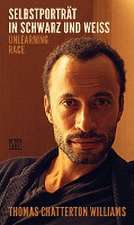 Selbstporträt in Schwarz und WeißThomas Chatterton WilliamsPreț: 161.84 lei
 -
 RUSSLAND: Ende einer WeltmachtFelix JaitnerPreț: 217.08 lei
De ce să citești această carte
Recomandăm această carte cititorilor interesați de sociologie și memorii introspective care nu se tem de idei controversate. Thomas Chatterton Williams oferă o perspectivă rară asupra modului în care familiile multirasiale navighează într-o lume încă obsedată de clasificări. Veți câștiga o nouă înțelegere asupra fluidității identității moderne și o critică pertinentă a binarismului rasial, totul într-o proză elegantă și profund umană.
Descriere scurtă
Descriere
A SUNDAY TIMES BOOK OF THE YEAR
A TIME 'MUST-READ'
'An extraordinarily thought-provoking memoir that makes a controversial contribution to the fraught debate on race and racism . . . intellectually stimulating and compelling' SUNDAY TIMES
A reckoning with the way we choose to see and define ourselves, Self-Portrait in Black and White is the searching story of one American family's multi-generational transformation from what is called black to what is assumed to be white. Thomas Chatterton Williams, the son of a 'black' father from the segregated South and a 'white' mother from the West, spent his whole life believing the dictum that a single drop of 'black blood' makes a person black. This was so fundamental to his self-conception that he'd never rigorously reflected on its foundations - but the shock of his experience as the black father of two extremely white-looking children led him to question these long-held convictions.
It is not that he has come to believe that he is no longer black or that his daughter is white, Williams notes. It is that these categories cannot adequately capture either of them - or anyone else, for that matter. Beautifully written and bound to upset received opinions on race, Self-Portrait in Black and White is an urgent work for our time.
Recenzii
There have been a slew of books this year about racism and white privilege, pretty much saying the same thing at different volumes of indignation. This slim book is different. A mixed-race American, Thomas Chatterton Williams had to rethink what being black meant when he held his baby daughter for the first time: she was blonde, blue-eyed and pale-skinned. This humane essay is an attempt to move beyond our obsession with race and skin colour
[Williams] is so honest and fresh in his observations, so skillful at blending his own story with larger principles, that it is hard not to admire him. At a time of increasing division, his philosophizing evinces an underlying generosity. He reaches both ways across the aisle of racism, arguing above all for reciprocity, and in doing so begins to theorize the temperate peace of which all humanity is sorely in need
An elegantly rendered and trenchantly critical reflection on 'race' and identity: one that is perfectly suited to our time. This is a subtle, unsettling, and brave book
An energizing book by one of the greatest writers of our time
A standout memoir that digs into vital contemporary questions of race and self-image . . . succeeds spectacularly for three main reasons: the author's relentlessly investigative thought process, consistent candor, and superb writing style. Almost every page contains at least one sentence so resonant that it bears rereading for its impact . . . An insightful, indispensable memoir
A provocative philosophical argument about the role of race in human identity . . . intellectually rigorous, written in fluid prose, and frequently exhilarating
An elegant and sharp-eyed writer . . . In a publishing environment where analyses of race tend to call out white fragilities and catalogue historical injustices, Self-Portrait in Black and White is a counterintuitive, courageous addition
A fluent, captivating, if often disquieting story . . . We witness Williams on a journey of both self-discovery and self-creation, and his memoir is most valuable as a way deeper into, as opposed to a way out of, race talk
An extraordinarily thought-provoking memoir that makes a controversial contribution to the fraught debate on race and racism . . . This book certainly takes the reader on an intellectually stimulating journey and makes a compelling case for a postracial future
This humane essay is an attempt to move beyond our obsession with race and skin colour