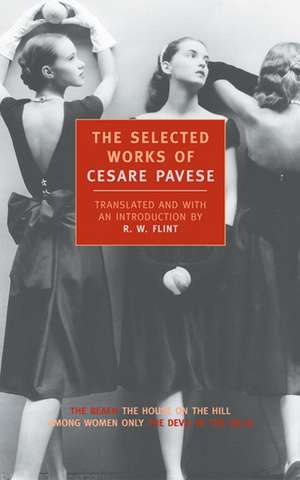
Selected Works
Autor Cesare Paveseen Limba Engleză Paperback – 31 oct 2001
Observăm în Selected Works o încercare profundă de a cartografia sufletul italian într-o perioadă de transformări radicale. Volumul nu este doar o antologie, ci o călătorie prin geografia sentimentală și politică a lui Cesare Pavese, de la dealurile piemonteze la saloanele de modă din Torino. Premisa care leagă aceste scrieri este tensiunea constantă dintre dorința de izolare și necesitatea angajamentului, fie el politic sau emoțional, într-o lume care se destramă sub presiunea istoriei. Ne-a atras atenția modul în care autorul alternează tonul între comedia amară a neînțelegerilor romantice din „The Beach” și atmosfera sufocantă, încărcată de dileme morale, din „The House on the Hill”. Apreciem finețea cu care Pavese surprinde contrastul dintre frumusețea peisajului rural și brutalitatea războiului, oferind o viziune panoramică ce refuză rezolvările ușoare. Cei care au parcurs The Moon and the Bonfires de Cesare Pavese vor fi pregătiți pentru aceleași peisaje bântuite de secrete și pentru lirismul dens care definește întreaga sa operă. Această ediție publicată de NEW YORK REVIEW OF BOOKS reușește să pună în lumină „blazonul pavesian” — acel amestec de melancolie, observație socială ascuțită și o căutare permanentă a unui sens în „meseria de a trăi”. Dacă în This Business of Living descoperim intimitatea dureroasă a jurnalului său, în aceste romane scurte vedem cum aceleași obsesii — singurătatea, eșecul comunicării și fascismul — sunt transformate în literatură de o precizie chirurgicală. Este o lectură care cere un ritm lent, reflectând natura contemplativă a unui autor care a văzut în viață singura plăcere reală, în ciuda suferinței omniprezente.
Preț: 142.65 lei
Carte disponibilă
Livrare economică 11-25 noiembrie
Specificații
ISBN-10: 0940322854
Pagini: 424
Dimensiuni: 127 x 204 x 28 mm
Greutate: 0.42 kg
Editura: NEW YORK REVIEW OF BOOKS
V-ar putea interesa
-
 Lolly WillowesSylvia Townsend WarnerPreț: 101.13 lei
 -
 To Each His OwnLeonardo SciasciaPreț: 102.01 lei
 -
 The Wine Dark SeaLeonardo SciasciaPreț: 103.94 lei
 -
 This Business of Living: Diaries 1935-1950Cesare PavesePreț: 440.65 lei
 -
 American Literature: Essays and OpinionsCesare PavesePreț: 467.04 lei
 -
 Siren SpiritElizabeth M. HurstPreț: 75.14 lei
 -
 MoravagineBlaise CendrarsPreț: 104.97 lei
 -
 Kolyma StoriesVarlam ShalamovPreț: 127.37 lei
De ce să citești această carte
Recomandăm această colecție celor care doresc să descopere esența literaturii italiene moderne prin vocea unuia dintre cei mai importanți scriitori ai secolului XX. Cititorul câștigă acces la patru perspective diferite asupra condiției umane în timp de criză, beneficiind de traduceri fluente care păstrează intensitatea originală. Este volumul ideal pentru a înțelege de ce Italo Calvino considera proza lui Pavese ca având o profunzime inepuizabilă.
Despre autor
Cesare Pavese (1908–1950) a fost o figură centrală a literaturii italiene, activând ca romancier, poet, traducător și critic literar. Marcat de experiența exilului sub regimul fascist și de activitatea sa la editura Einaudi, Pavese a reușit să creeze un ciclu narativ omogen care documentează cronica socială și umană a Italiei. Deși a atins apogeul recunoașterii prin câștigarea Premiului Strega în 1950, viața sa a fost marcată de o profundă neliniște existențială, culminând cu decizia tragică de a-și pune capăt zilelor în același an.
Notă biografică
R.W. Flint translated, edited, and introduced The Selected Works of Cesare Pavese in 1968 and Marinetti: Selected Writings in 1971. He has contributed interviews, essays, translations, and reviews on Italian writers to various journals includingParnassus, Canto, and The Italian Quarterly. He lives in Cambridge, Massachusetts.
Descriere scurtă
Recenzii
— Time
Pavese’s nine short novels make up the most dense, dramatic and homogeneous narrative cycle of modern Italy, and are also…the richest in representing social ambiances, the human comedy, the chronicle of a society. But above all they are works of an extraordinary depth where one never stops finding new levels, new meanings…Each one of Pavese’s novels revolves around a hidden theme, something unsaid which is the real thing he wants to say.
— Italo Calvino
Now there can be no excuse for not reading Pavese, one of the few essential novelists of the mid-twentieth century. The new translations and the introduction by R.W. Flint are admirable.
— Susan Sontag