Cantitate/Preț
Produs

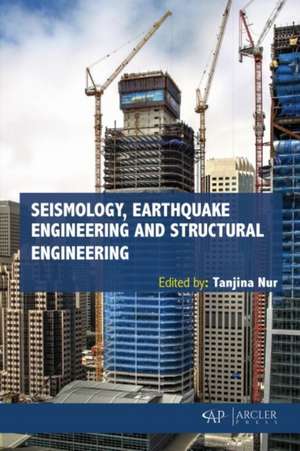
Seismology, Earthquake Engineering and Structural Engineering

Editat de Tanjina Nur
en Limba Engleză Hardback – dec 2018

Recomandăm volumul Seismology, Earthquake Engineering and Structural Engineering profesioniștilor din domeniul construcțiilor, inginerilor structuraliști și cercetătorilor care vizează optimizarea rezistenței seismice a clădirilor. Observăm că această lucrare, editată de Tanjina Nur, nu se rezumă la o simplă trecere în revistă a fenomenelor geologice, ci pune un accent deosebit pe tranziția de la teorie la practica inginerească. Apreciem modul în care textul abordează cauza principală a fatalităților în caz de cutremur — rezistența inadecvată a structurilor — oferind soluții tehnice concrete pentru atenuarea acestor riscuri.

Structura volumului este riguroasă, acoperind parametrii mișcării solului, scalarea acestora și evaluarea performanței seismice. Un element distinctiv îl reprezintă introducerea noilor dispozitive de amortizare pentru disiparea energiei, esențiale în proiectarea modernă. Complementar lucrării Engineering Seismology, Geotechnical & Structural Earthquake Engineering de Hubert O'Kelly, care se concentrează pe studiul undelor seismice și al efectelor de mediu precum tsunami-urile, volumul de față aprofundează latura de inginerie structurală și mecanismele interne de protecție a clădirilor. De asemenea, în timp ce Earthquake Science and Engineering de Ömer Aydan încearcă să creeze o punte de comunicare între seismologi și ingineri, textul de la Arcler Press se concentrează pe strategii de design aplicabile imediat, susținute de studii de caz reale.

În paginile sale, găsim o analiză critică a practicilor structurale existente și o viziune clară asupra viitoarelor coduri de proiectare. Ritmul este unul tehnic, axat pe rezultate bazate pe valori, oferind instrumente pentru analiza și proiectarea structurilor capabile să reziste solicitărilor dinamice extreme.

Citește tot Restrânge

Preț: 113752 lei

Preț vechi: 147730 lei
-23%

Puncte Express: 1706

Carte indisponibilă temporar

Doresc să fiu notificat când acest titlu va fi disponibil:

Specificații

ISBN-13: 9781773613772
ISBN-10: 1773613774
Pagini: 279
Dimensiuni: 160 x 231 x 23 mm
Greutate: 0.59 kg
Editura: Arcler Press

De ce să citești această carte

Această carte este esențială pentru inginerii care doresc să stăpânească tehnicile moderne de proiectare seismică. Cititorul câștigă acces la metode avansate de evaluare a performanței și soluții de amortizare a energiei, trecând dincolo de teoria pură. Este un instrument practic pentru cei care proiectează infrastructură sigură, oferind o perspectivă tehnică asupra viitorului normativelor în ingineria structurală.


Descriere

Our planet's seemingly constant surface is made up of massive pieces of rock that are in motion though gradually but constantly. Those pieces repeatedly strike and rub against one another, which suddenly releases huge amounts of energy. These disturbing events are called as earthquakes, and many small ones occur across our planet every day, without any notice of people. During the commencement of 21st century total number of deaths was about half a million. This is an undesirable result because earthquakes are no longer considered as natural disasters, as the main reason of this huge figure of fatalities is inadequate seismic resistance of building, which can be avoided easily. In recent years, advances have taken place in earthquake engineering when applied to different building structures. Achieving this aim is best helped by a detailed look through a scientific approach to manage the mitigation of earthquakes. The earthquakes are commonly occurring events nowadays, with nearly 50,000 tremors occurring each year in the globe primarily over plate margins. The earthquake is the outcome of magmas who force its way in plates that lead to trembling of earth. Though the prediction of earthquake is highly difficult, there are various warning signs that can be inferred for indicating both the venue and time of an imminent event. This book will trace how the term seismology, earthquake engineering, and structural engineering was coined and its evolution from a theoretical concept to a practical one. This book majorly emphasis on advancement of procedures for seismic performance assessment, improvements in structural design listing, introduction of new damping devices for supplementary energy dissipation, and expansion of new design techniques to reduce the structural damage of building. The existing structural practices can at best give clues on what improvements can be made, but it is the thorough study of earthquake engineering patterns that can give rise to proper design of strategies that can work in real life. Therefore, this day and age is the right moment to identify the challenges for future research works and for the next code generation. That is precisely what the book will be identifying. As it is defined in this book, an earthquake is the sudden, rapid shaking of the earth, caused by the breaking and shifting of subterranean rock as it releases strain that has accumulated over a longtime. Several factors behind the design of seismology and earthquake engineering gives a clear picture of how the differences in perspective can be made use of. At the same time, the book will offer very clear insights on the perceptions that can be worked upon for change which will reduce the risk of earthquakes, a brief history about seismoscopes and structural engineering introduction with its critical concerns. The education of this approach will contribute to widen the understanding on improving the ways to resist earthquakes and protective structural designing of buildings. This would be supported by real-life case studies and to enable the reader for achieving direct results. Next focus would be a list of topics on ground motions and structures; and how the concept of earthquake management and mitigations is applied in earthquake engineering. This section would also present the existing areas of improvement and challenges included under the various segments aimed at improving the utilization of seismic design strategies. Towards the end, a comprehensive detail of the vision for the future of structural engineering, its design, and analysis of structures is covered intuitively. The earth has been suffering a lot due to earthquake since ages. The large-scale impact of this disaster has been taken into consideration by various organizations and efforts have been made by several researchers to make relevant contribution towards this ailment. This book provides a deep insight on ground motions, Its parameters, scaling, and other important factors or components to understand the structural perspective of an earthquake. The study also records the characteristics of ground motion at the site and the evaluation of ground motion for engineering design. Above is a very simple anecdote of the utilization of term seismology, earthquake engineering and structural engineering and a complete study has much more to offer. I look forward to the reader for achieving value-based results by using the methodologies prescribed in the book. The constructive criticism and the feedback would be most welcome. Book jacket.