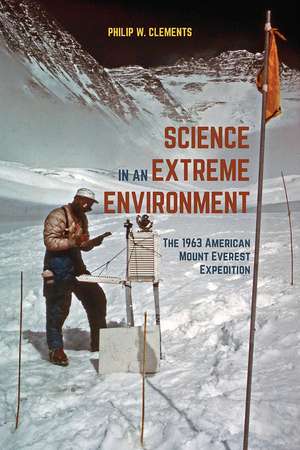
Science in an Extreme Environment: The 1963 American Mount Everest Expedition
Autor Philip W. Clementsen Limba Engleză Hardback – 7 feb 2018
Recomandăm acest volum ca o lucrare de referință profesională pentru istoricii științei și cercetătorii interesați de intersecția dintre geopolitică și explorarea umană. Science in an Extreme Environment nu este doar o cronică a unei ascensiuni montane, ci o analiză riguroasă a modului în care laboratorul științific a fost mutat la 29.029 de picioare altitudine, în condiții care au sfidat orice protocol experimental standard. Apreciem modul în care Philip W. Clements reconstruiește contextul Războiului Rece, în care finanțarea militară a dictat obiectivele celor șase cercetători din echipa de nouăsprezece americani. Găsim în text o critică fascinantă a modului în care „eroismul american” și conceptele de masculinitate ale epocii s-au împletit cu dorința de dominație științifică pe frontierele teritoriale. Cartea completează perspectiva oferită de Higher and Colder de Vanessa Heggie, adăugând o analiză specifică asupra modului în care contextul politic american a modelat o singură expediție emblematică, în timp ce Heggie oferă o istorie mai largă a fiziologiei extreme. De asemenea, spre deosebire de relatările clasice precum High Adventure de Edmund Hillary, care se concentrează pe experiența umană și triumful voinței, Clements pune practica științifică în centrul narațiunii, demonstrând că mediul extrem a făcut ca rezultatele obținute să fie prea excepționale pentru a fi aplicate în alte contexte. Este o lectură esențială pentru a înțelege cum spațiile contestate politic devin laboratoare imprevizibile.
Preț: 393.63 lei
Carte disponibilă
Livrare economică 02-16 noiembrie
Specificații
ISBN-10: 0822945118
Pagini: 296
Ilustrații: 16 b&w
Dimensiuni: 152 x 229 x 28 mm
Greutate: 0.51 kg
Ediția:1
Editura: University of Pittsburgh Press
Colecția University of Pittsburgh Press
De ce să citești această carte
Această carte este ideală pentru cititorii interesați de istoria științei și a explorărilor montane dintr-o perspectivă academică. Veți câștiga o înțelegere profundă a modului în care Războiul Rece a influențat cercetarea fiziologică și psihologică. Este un motiv concret pentru a explora cum limitele umane, testate la altitudine extremă, au fost folosite ca instrumente de propagandă politică și validare națională în anii '60.
Despre autor
Philip W. Clements este un istoric al științei a cărui activitate se concentrează pe intersecția dintre mediile extreme, tehnologie și societate. În Science in an Extreme Environment, el valorifică expertiza sa pentru a deconstrui miturile din jurul expedițiilor montane, transformându-le în studii de caz despre producția de cunoaștere sub presiune. Stilul său analitic este susținut de o cercetare documentară meticuloasă, oferind o perspectivă critică asupra modului în care știința americană a secolului XX a încercat să cucerească nu doar înălțimile geografice, ci și limitele biologice ale omului.
Descriere scurtă
Recenzii
—Michael S. Reidy, Montana State University
—Stewart Weaver, University of Rochester