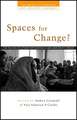
Science and Citizens: Globalization and the Challenge of Engagement: Claiming Citizenship
Editat de Melissa Leach, Ian Scoones, Brian Wynneen Limba Engleză Paperback – 20 ian 2005
· Do new perspectives on science, expertise and citizenship emerge from comparing cases across different issues and settings?
· What difference does globalisation make?
· What does this tell us about approaches to risk, regulation and public participation?
· How might the notion of 'cognitive justice' help to further debate and practice?




Preț: 245.22 lei
Preț vechi: 295.44 lei
-17%
Puncte Express: 368
Preț estimativ în valută:
43.35€ • 51.12$ • 37.90£
43.35€ • 51.12$ • 37.90£
Carte tipărită la comandă
Livrare economică 04-18 aprilie
Specificații
ISBN-13: 9781842775516
ISBN-10: 1842775510
Pagini: 304
Dimensiuni: 138 x 216 x 23 mm
Greutate: 0.39 kg
Editura: Bloomsbury Publishing
Colecția Zed Books
Seria Claiming Citizenship
Locul publicării:London, United Kingdom
ISBN-10: 1842775510
Pagini: 304
Dimensiuni: 138 x 216 x 23 mm
Greutate: 0.39 kg
Editura: Bloomsbury Publishing
Colecția Zed Books
Seria Claiming Citizenship
Locul publicării:London, United Kingdom
V-ar putea interesa
-
 The Third Industrial RevolutionJeremy RifkinPreț: 114.49 lei
 -
 Theories of GlobalizationBarrie AxfordPreț: 253.72 lei
 -
 The Refractive Thinker: Ethics, Leadership, and GlobalizationThe Lentz Leadership InstitutePreț: 101.21 lei
 -
 Preț: 351.28 lei
 -
 Imperial Subjects: Citizenship in an Age of Crisis and EmpireDr. Colin Mooers-27%Preț: 196.49 lei269.09 lei
 -
 Justice Globalism: Ideology, Crises, PolicyManfred B. StegerPreț: 394.94 lei
 -
 The Newfoundland DiasporaJennifer Bowering DelislePreț: 334.19 lei
 -
 Changing Global Economic Landscape: Trends & U.S.-Centric AnalysesStephanie J Palmer-31%Preț: 911.58 lei1315.36 lei
 -
 International Economic Cooperation: Institutions, Funds & BanksHolden J Murray-31%Preț: 1111.72 lei1603.11 lei
 -
 Developing Countries: Political, Economic & Social IssuesArthur Ramazzotti-31%Preț: 1214.55 lei1751.03 lei
 -
 Reclaiming DevelopmentHa-Joon Chang-22%Preț: 92.63 lei118.07 lei
 -
 The Making Of Global CapitalismSam GindinPreț: 208.87 lei
 -
 The Future as Cultural FactArjun AppaduraiPreț: 185.44 lei
 -
 Global Sports PolicyCatherine PalmerPreț: 422.20 lei
Cuprins
Foreword - John Gaventa
Part I: Science and Citizenship
1. Introduction: Science, citizenship and globalization - Melissa Leach, Ian Scoones and Brian Wynne
2. Science and citizenship in a global context - Melissa Leach and Ian Scoones
Part II: Beyond risk: defining the terrain
Commentary - Melissa Leach, Ian Scoones and Brian Wynne
3. The post-normal science of safety - Jerry Ravetz
4. Are scientists irrational? Risk assessment in practical reason - Frank Fischer
5. Risk as globalizing 'democratic' discourse? Framing subjects and citizens - Brian Wynne
6. Knowledge, justice and democracy -Shiv Visvanathan
Part III: Citizens engaging with science
Commentary - Melissa Leach, Ian Scoones, Brian Wynne
7. Myriad stories: Constructing expertise and citizenship in discussions of the new genetics - Richard Tutton, Anne Kerr and Sarah Cunningham-Burley
8. AIDS, science and citizenship after apartheid - Steven Robins
9. Demystifying occupational and environmental health: Experiences from India- Murlidhar V.
10. Absentee expertise: Science advice for biotechnology regulation in developing countries - Kees Jansen and Esther Roquas
11. Interrogating China's biotechnology revolution: Contesting dominant science policy cultures in the risk society - James Keeley
12. Environmental perception and political mobilization in Rio de Janeiro and São Paulo: A comparative analysis - Angela Alonso and Valeriano Costa
13. 'Let Them Eat Cake': GM Foods and the Democratic Imagination - Sheila Jasanoff
14. Plant biotechnology and the rights of the poor: A technographic approach - Paul Richards
Part IV: Participation and the politics of engagement
Commentary - Melissa Leach, Ian Scoones, Brian Wynne
15. Opening up or closing down? Analysis, participation and power in the social appraisal of technology - Andy Stirling
16. Geographic information systems for participation - John Forrester and Steve Cinderby
17. Democratizing science in the UK: The case of radioactive waste management - Jason Chilvers
18. Genetic engineering in Aotearoa New Zealand: A case of opening up or closing down debate? - Audley Genus and Tee Rogers-Hayden
19. Exploring food and farming futures in Zimbabwe: A citizens' jury and scenario workshop experiment - Elijah Rusik
Part I: Science and Citizenship
1. Introduction: Science, citizenship and globalization - Melissa Leach, Ian Scoones and Brian Wynne
2. Science and citizenship in a global context - Melissa Leach and Ian Scoones
Part II: Beyond risk: defining the terrain
Commentary - Melissa Leach, Ian Scoones and Brian Wynne
3. The post-normal science of safety - Jerry Ravetz
4. Are scientists irrational? Risk assessment in practical reason - Frank Fischer
5. Risk as globalizing 'democratic' discourse? Framing subjects and citizens - Brian Wynne
6. Knowledge, justice and democracy -Shiv Visvanathan
Part III: Citizens engaging with science
Commentary - Melissa Leach, Ian Scoones, Brian Wynne
7. Myriad stories: Constructing expertise and citizenship in discussions of the new genetics - Richard Tutton, Anne Kerr and Sarah Cunningham-Burley
8. AIDS, science and citizenship after apartheid - Steven Robins
9. Demystifying occupational and environmental health: Experiences from India- Murlidhar V.
10. Absentee expertise: Science advice for biotechnology regulation in developing countries - Kees Jansen and Esther Roquas
11. Interrogating China's biotechnology revolution: Contesting dominant science policy cultures in the risk society - James Keeley
12. Environmental perception and political mobilization in Rio de Janeiro and São Paulo: A comparative analysis - Angela Alonso and Valeriano Costa
13. 'Let Them Eat Cake': GM Foods and the Democratic Imagination - Sheila Jasanoff
14. Plant biotechnology and the rights of the poor: A technographic approach - Paul Richards
Part IV: Participation and the politics of engagement
Commentary - Melissa Leach, Ian Scoones, Brian Wynne
15. Opening up or closing down? Analysis, participation and power in the social appraisal of technology - Andy Stirling
16. Geographic information systems for participation - John Forrester and Steve Cinderby
17. Democratizing science in the UK: The case of radioactive waste management - Jason Chilvers
18. Genetic engineering in Aotearoa New Zealand: A case of opening up or closing down debate? - Audley Genus and Tee Rogers-Hayden
19. Exploring food and farming futures in Zimbabwe: A citizens' jury and scenario workshop experiment - Elijah Rusik
Recenzii
The overall admirable aim of the book, consisting of provocative and well-written essays, is to bring together modern work in science studies and disciplines devoted to investigating global and national development.
Makes a major contribution to debates about the relationship between science and society.
[Highlighting] the politics in science and how science has in the past been used by the establishment to consolidate its power...the book is an example of what a genuine ideological and intellectual commitment to the philosophy of participation can produce.
This volume is a unique blend of two, hitherto separate, streams of work - science and technology studies and development studies.
The global scope of the case-studies, and of its theoretical and normative perspectives is particularly novel and a uniquely valuable contribution to some of the world's most pressing issues.
Makes a major contribution to debates about the relationship between science and society.
[Highlighting] the politics in science and how science has in the past been used by the establishment to consolidate its power...the book is an example of what a genuine ideological and intellectual commitment to the philosophy of participation can produce.
This volume is a unique blend of two, hitherto separate, streams of work - science and technology studies and development studies.
The global scope of the case-studies, and of its theoretical and normative perspectives is particularly novel and a uniquely valuable contribution to some of the world's most pressing issues.