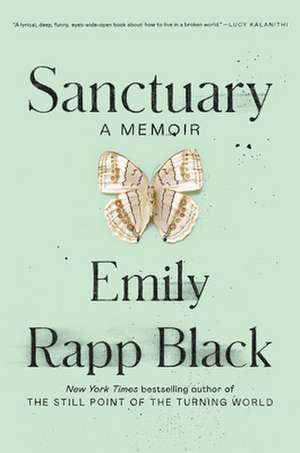
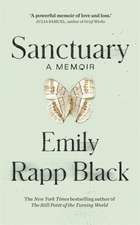
Sanctuary
Autor Emily Rapp Blacken Limba Engleză Hardback – 1900
La începutul anilor 2010, viața lui Emily Rapp Black a fost marcată de o tragedie care ar îngenunchea orice părinte: pierderea fiului său, Ronan, în fața unei boli necruțătoare. În acea perioadă de doliu profund, autoarea a început să documenteze nu doar durerea, ci și presiunea socială de a fi „puternică”. Remarcăm în Sanctuary un moment dramatic de introspecție declanșat de o felicitare primită la nașterea celui de-al doilea copil, care îi ura bun venit la „reînvierea vieții sale”. Această frază devine punctul de plecare pentru o analiză tăioasă a modului în care cultura noastră privește trauma.
Apreciem modul în care Emily Rapp Black refuză narațiunea simplistă a vindecării totale. Spre deosebire de alte memorii care celebrează lăsarea trecutului în urmă, ea argumentează că adevărata reziliență nu înseamnă să arzi vechea poveste pentru a construi una nouă, ci să porți cenușa cu tine, integrând-o în noua identitate. Cartea se situează pe același raft cu What Doesn't Kill Us Makes Us de Mike Mariani, dar cu un accent pe refuzul categoric de a vedea catastrofa ca pe o simplă oportunitate de reinventare.
Această lucrare reprezintă o evoluție intelectuală firească față de The Still Point of the Turning World, unde autoarea explora sensul vieții în umbra morții iminente. Dacă în Frida Kahlo And My Left Leg ea folosea arta pentru a înțelege propria dizabilitate, în Sanctuary apelează la neurologie, etimologie și poezie pentru a deconstrui un clișeu lingvistic. Tonul este unul confesional, dar riguros, transformând experiența subiectivă într-o hartă complexă a supraviețuirii umane.
Preț: 151.27 lei
Carte disponibilă
Livrare economică 09-23 noiembrie
Livrare express 24-30 octombrie pentru 27.78 lei
Specificații
ISBN-10: 052551094X
Pagini: 240
Dimensiuni: 141 x 212 x 23 mm
Greutate: 0.36 kg
Editura: Random House
V-ar putea interesa
-
 ResilienceBoris CyrulnikPreț: 93.15 lei
 -
 Option BSheryl Sandberg-20%Preț: 72.41 lei90.78 lei
 -
 Dear DrewMelissa Hull-22%Preț: 73.89 lei94.21 lei
 -
 Preț: 123.32 lei
 -
 -26%Preț: 106.06 lei143.86 lei
 -
 The Still Point of the Turning WorldEmily Rapp-27%Preț: 51.64 lei70.54 lei
 -
 Identity Theft, Second Edition: Rediscovering Ourselves After StrokeDebra E. Meyerson-17%Preț: 98.85 lei118.48 leiRecomandat
 -
 The Archaeology of LossSarah Tarlow-32%Preț: 54.01 lei79.42 lei
 -
 SanctuaryEmily Rapp-47%Preț: 88.38 lei165.35 lei
 -
 Stories From a Stranger: Every person has a story.Hunter Prosper-21%Preț: 156.59 lei198.36 leiRecomandat
 -
 Told You SoMayci Neeley-18%Preț: 118.36 lei144.67 leiRecomandat
 -
 -22%Preț: 73.18 lei94.07 lei
 -
 To Exist As I Am: Longlisted for the Women's Prize for Non-Fiction 2026Grace Spence Green-23%Preț: 93.83 lei122.14 lei
 -
 Winter StoriesIngvild RishøiPreț: 91.64 lei
 -
 -20%Preț: 110.67 lei138.01 lei
 -
 Run Towards The DangerSarah Polley-18%Preț: 70.56 lei86.51 lei
 -
 -18%Preț: 59.56 lei72.56 leiRecomandat
 -
 -19%Preț: 86.26 lei106.99 leiRecomandat
 -
 Out of the AshesCourtney Peppernell-19%Preț: 86.26 lei106.99 leiRecomandat
De ce să citești această carte
Recomandăm această carte celor care au trecut prin pierderi majore și se simt sufocați de imperativele optimiste ale literaturii de self-help. Cititorul va câștiga o perspectivă onestă asupra doliului, înțelegând că a fi rezilient nu înseamnă a uita, ci a învăța să trăiești cu cicatricile tale. Este o lectură esențială pentru oricine caută o abordare profundă, aproape chirurgicală, a procesului de vindecare psihologică.
Despre autor
Emily Rapp Black este o scriitoare americană de succes, ale cărei lucrări au ajuns frecvent pe lista de bestselleruri New York Times. Absolventă a Harvard Divinity School, ea îmbină rigoarea academică cu o sensibilitate literară rară. Opera sa este profund marcată de experiențele personale legate de corpul uman și vulnerabilitatea acestuia, fiind ea însăși o persoană cu amputație de la o vârstă fragedă. Prin volume precum The Still Point of the Turning World, ea a devenit o voce autoritară în literatura despre traumele familiale și etica îngrijirii, fiind apreciată pentru onestitatea sa tranșantă.
Descriere scurtă
From the New York Times bestselling author of The Still Point of the Turning World comes an incisive memoir about how she came to question and redefine the concept of resilience after the trauma of her first child's death. "Congratulations on the resurrection of your life," a colleague wrote to Emily Rapp Black when she announced the birth of her second child. The line made Rapp Black pause. Her first child, a boy named Ronan, had died from Tay-Sachs disease before he turned three years old, an experience she wrote about in her second book, The Still Point of the Turning World. Since that time, her life had changed utterly: She left the marriage that fractured under the terrible weight of her son's illness, got remarried to a man who she fell in love with while her son was dying, had a flourishing career, and gave birth to a healthy baby girl. But she rejected the idea that she was leaving her old life behind--that she had, in the manner of the mythical phoenix, risen from the ashes and been reborn into a new story, when she still carried so much of her old story with her. More to the point, she wanted to carry it with her. Everyone she met told her she was resilient, strong, courageous in ways they didn't think they could be. But what did those words mean, really? This book is an attempt to unpack the various notions of resilience that we carry as a culture. Drawing on contemporary psychology, neurology, etymology, literature, art, and self-help, Emily Rapp Black shows how we need a more complex understanding of this concept when applied to stories of loss and healing and overcoming the odds, knowing that we may be asked to rebuild and reimagine our lives at any moment, and often when we least expect it. Interwoven with lyrical, unforgettable personal vignettes from her life as a mother, wife, daughter, friend, and teacher, Rapp Black creates a stunning tapestry that is full of wisdom and insight.