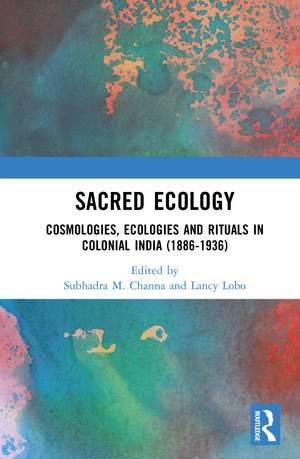
Sacred Ecology: Cosmologies, Ecologies and Rituals in Colonial India (1886-1936)
Editat de Subhadra M. Channa, Lancy Loboen Limba Engleză Hardback – 17 oct 2025
Preț: 1110.62 lei
Preț vechi: 1354.42 lei
-18%
Puncte Express: 1666
Carte tipărită la comandă
Livrare economică 23 noiembrie-07 decembrie
Livrare prin curier în România Termenul estimat este afișat lângă disponibilitate.
Transport gratuit pentru acest produs Plată online sau ramburs, în funcție de opțiunile comenzii.
Retur gratuit în 14 zile Comandă securizată și suport în română.
Specificații
ISBN-13: 9781041029694
ISBN-10: 1041029691
Pagini: 128
Dimensiuni: 156 x 234 mm
Greutate: 0.4 kg
Ediția:1
Editura: Taylor & Francis
Colecția Routledge
Locul publicării:Oxford, United Kingdom
ISBN-10: 1041029691
Pagini: 128
Dimensiuni: 156 x 234 mm
Greutate: 0.4 kg
Ediția:1
Editura: Taylor & Francis
Colecția Routledge
Locul publicării:Oxford, United Kingdom
V-ar putea interesa
-
 The Sacred and ProfaneMircea EliadePreț: 100.24 lei
 -
 Preț: 223.68 lei
 -
 Firstborn of the SunMarvellous Michael AnsonPreț: 127.74 lei
 -
 Speaking with Nature: The Origins of Indian EnvironmentalismRamachandra GuhaPreț: 261.85 lei
 -
 This Sacred Earth: Religion, Nature, EnvironmentRoger S. Gottlieb-23%Preț: 534.51 lei694.17 lei
 -
 ShamanismManvir SinghPreț: 184.79 lei
 -
 -8%Preț: 487.00 lei529.35 lei
 -
 The Burning EarthSunil AmrithPreț: 103.56 lei
 -
 Forms of the VisiblePhilippe DescolaPreț: 290.51 lei
 -
 We, the DecolonizedH. BéjiPreț: 138.11 lei
 -
 Wild FictionsAmitav Ghosh-24%Preț: 105.78 lei139.60 lei
 -
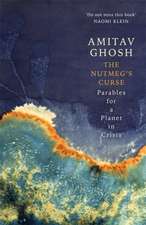 The Nutmeg's Curse: Parables for a Planet in CrisisAmitav Ghosh-26%Preț: 68.72 lei93.36 lei
 -
 Natural ConnectionJoycelyn LongdonPreț: 137.51 lei
 -
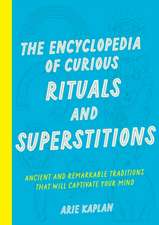 -16%Preț: 92.73 lei110.87 lei
 -
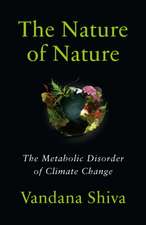 The Nature of NatureVandana ShivaPreț: 105.71 lei
 -
 The ServiceberryRobin Wall KimmererPreț: 108.03 lei
 -
 We Are Green and TremblingGabriela Cabezón CámaraPreț: 135.73 lei
 -
 Called by the HillsAnuradha RoyPreț: 92.91 lei
 -
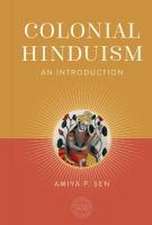 Colonial HinduismAmiya P Sen-9%Preț: 156.00 lei170.63 lei
 -
 Theory of WaterLeanne Betasamosake SimpsonPreț: 111.73 lei
Public țintă
General and PostgraduateCuprins
Introduction: Sacred Ecology: Cosmological Connections Between Humans, the Non-Humans and the Super-Human 1. The Theology of Primitive Religion 2. Water Worship in India and the Western Countries 3. Folk Lore of Bombay Wells 4. The Cult of the Lake Goddess of Orissa 5. Sacred Trees of the Hindus 6. A Note on the Worship of the Pipal Tree 7. On the Tulsi Plant 8. A Note on the Dhatri Puja as performed by the Hindustani residents in Calcutta 9. A note on Fire-Worship among the Ancient Arabs 10. Dream Plants 11. The Thunder Myths of the Primitive Races 12. Sun Worship in Chittagong Nursery Rhymes 13. The Full Moon Festival of the Tripuris 14. On a Tibetan Weather Superstition 15. The Crocodile in Bengali Folklore 16. On Some Superstitious Beliefs about the Lizard 17. A Note on Dakshina Raya 18. Notes on the Ominous Birds 19. The Cosmological Myths of the Birhors and its Santali and American Indian parallels 20. Some Curious Folklore about Precious Stones
Notă biografică
Subhadra M. Channa is a retired professor of anthropology from Delhi University. She has twelve books and more than eighty papers to her credit. Her awards include two Fulbright teaching fellowships,Charles Wallace and several visiting professorships, as well as the Distinguished Teacher Award from Delhi University. Presently she is the Co-editor of the journal Reviews in Anthropology.
Lancy Lobo was Director of the Centre for Social Studies, based in Surat. He was the founder and director of the Centre for Culture and Development, Vadodara, for 20 years. He was an International Visiting Fellow at the Georgetown University, Washington, DC. He has authored, co-authored, and co-edited 30 books and scores of mimeographs and articles. Currently, Research Director at the Indian Social Institute, Delhi.
Lancy Lobo was Director of the Centre for Social Studies, based in Surat. He was the founder and director of the Centre for Culture and Development, Vadodara, for 20 years. He was an International Visiting Fellow at the Georgetown University, Washington, DC. He has authored, co-authored, and co-edited 30 books and scores of mimeographs and articles. Currently, Research Director at the Indian Social Institute, Delhi.
Recenzii
‘This collection of essays about South Asian nature-related folklore provides an unusually multi-faceted overview of folk wisdom on humanity’s connection with nature. As most of the essays were written in the nineteenth and early twentieth centuries by authors with condescending and positivist points of view, the introduction provides important social and political background for the reader. The collection, however, offers a unique opportunity to understand – and perhaps reclaim – the necessity of water, plants, birds and other animals, and even inanimate parts of nature to human survival.’
Suzanne Hanchett, Ph.D., Planning Alternatives for Change, LLC & International Women’s Anthropology Conference/IWAC; Author of Water Culture in South Asia: Bangladesh Perspectives
‘The vital connection in the Science-Religion-Society triad to build/destroy all in our ‘Earth Home’ significantly permeates this set of purposefully selected and relevant research articles, published nearly a century ago, and hard to come by today. True! They are coloured by a ‘Colonial mindset’ and ‘Western Science’ influence; nevertheless, through narratives (focussed on flora and fauna, precious stones, omens and superstitions, figurative stories and myths), and reflections and analysis on them, they present us with the vision, wisdom and world view of a bygone era in which there was resonance and integration between humans and nature. The creative critique in the Introduction to the book enlightens us about the roots of the devastation that the triad continues to inflict today on our ecology. ‘Sacred Ecology in India’ points the way for a better tomorrow.’
Vincent Braganza, S.J., Ph. D, Scientist (Emeritus) and Ex. Chairman, Xavier Research Foundation, Ahmedabad, India
‘This is a timely book to remind us of a historical process whereby unsustainable modernist-capitalist modes of living actively established their hegemonic status. An important element of this process was the systematic marginalization of the more sustainable ways of life of traditional peoples. A collection of essays from this period illustrates how pervasive disparaging discourses about non-modern societies and their cultures served to legitimize a more alienated but technologically dominant culture originating in western countries. The collection also shows how western-inspired modernist agendas were adopted by post-colonial ‘development states’ such as India, in their efforts to catch up with the colonial powers and thus become genuinely independent. This triggered a kind of internal colonialization process, directed at tribal minority groups. I recommend this volume for providing valuable insights into the astonishing process that established a global culture which has now led us to the brink of environmental disaster and yet was hardly questioned regarding its basic assumptions at the time.’
Prof Thomas Reuter, Board and Executive member, World Academy of Arts and Science (WAAS); Professorial Fellow, Asia Institute, University of Melbourne and Fellow, European Academy of Sciences and Arts (EASA)
Suzanne Hanchett, Ph.D., Planning Alternatives for Change, LLC & International Women’s Anthropology Conference/IWAC; Author of Water Culture in South Asia: Bangladesh Perspectives
‘The vital connection in the Science-Religion-Society triad to build/destroy all in our ‘Earth Home’ significantly permeates this set of purposefully selected and relevant research articles, published nearly a century ago, and hard to come by today. True! They are coloured by a ‘Colonial mindset’ and ‘Western Science’ influence; nevertheless, through narratives (focussed on flora and fauna, precious stones, omens and superstitions, figurative stories and myths), and reflections and analysis on them, they present us with the vision, wisdom and world view of a bygone era in which there was resonance and integration between humans and nature. The creative critique in the Introduction to the book enlightens us about the roots of the devastation that the triad continues to inflict today on our ecology. ‘Sacred Ecology in India’ points the way for a better tomorrow.’
Vincent Braganza, S.J., Ph. D, Scientist (Emeritus) and Ex. Chairman, Xavier Research Foundation, Ahmedabad, India
‘This is a timely book to remind us of a historical process whereby unsustainable modernist-capitalist modes of living actively established their hegemonic status. An important element of this process was the systematic marginalization of the more sustainable ways of life of traditional peoples. A collection of essays from this period illustrates how pervasive disparaging discourses about non-modern societies and their cultures served to legitimize a more alienated but technologically dominant culture originating in western countries. The collection also shows how western-inspired modernist agendas were adopted by post-colonial ‘development states’ such as India, in their efforts to catch up with the colonial powers and thus become genuinely independent. This triggered a kind of internal colonialization process, directed at tribal minority groups. I recommend this volume for providing valuable insights into the astonishing process that established a global culture which has now led us to the brink of environmental disaster and yet was hardly questioned regarding its basic assumptions at the time.’
Prof Thomas Reuter, Board and Executive member, World Academy of Arts and Science (WAAS); Professorial Fellow, Asia Institute, University of Melbourne and Fellow, European Academy of Sciences and Arts (EASA)
Descriere
This volume delves into the colonial past and identifies papers on nature and natural phenomenon that were deemed ‘primitive’ and ‘superstitious’ by those who narrated them and analyzed them in the pages of the Journal of the Anthropological Society of Bombay.