Cărți de Rudolf Steiner
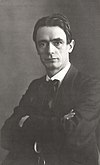
Rudolf Joseph Lorenz Steiner (27 or 25 February 1861 – 30 March 1925) was an Austrian occultist philosopher, social reformer, architect, esotericist, and claimed clairvoyant. Steiner gained initial recognition at the end of the nineteenth century as a literary critic and published philosophical works including The Philosophy of Freedom. At the beginning of the twentieth century he founded an esoteric spiritual movement, anthroposophy, with roots in German idealist philosophy and theosophy; other influences include Goethean science and Rosicrucianism. His ideas are largely pseudoscientific. Others call them parascience. He was also prone to pseudohistory.
In the first, more philosophically oriented phase of this movement, Steiner attempted to find a synthesis between science and spirituality. His philosophical work of these years, which he termed "spiritual science", sought to apply the clarity of thinking characteristic of Western philosophy to spiritual questions,: 291 differentiating this approach from what he considered to be vaguer approaches to mysticism. In a second phase, beginning around 1907, he began working collaboratively in a variety of artistic media, including drama, the movement arts (developing a new artistic form, eurythmy) and architecture, culminating in the building of the Goetheanum, a cultural centre to house all the arts. In the third phase of his work, beginning after World War I, Steiner worked to establish various practical endeavors, including Waldorf education, biodynamic agriculture, and anthroposophical medicine.
Steiner advocated a form of ethical individualism, to which he later brought a more explicitly spiritual approach. He based his epistemology on Johann Wolfgang Goethe's world view, in which "thinking… is no more and no less an organ of perception than the eye or ear. Just as the eye perceives colours and the ear sounds, so thinking perceives ideas." A consistent thread that runs from his earliest philosophical phase through his later spiritual orientation is the goal of demonstrating that there are no essential limits to human knowledge.
Strengthening the Will
Bees
The Interior of the Earth
Knowledge of the Higher Worlds and Its Attainment
The Book of Revelation
Six Steps in Self-Development
How to Know Higher Worlds
The Incarnation of Ahriman
Esoteric Lessons 1904-1909
Start Now!
Theosophy
The Four Temperaments
The Philosophy of Freedom
An Exercise for Karmic Insight
Anthroposophical Leading Thoughts
Staying Connected
Nutrition
Secret Brotherhoods and the Mystery of the Human Double
Atlantis
The Work of the Angel in Our Astral Body
Intuitive Thinking as a Spiritual Path
Goethe's Theory of Knowledge
Angels
Colour
Sexuality, Love and Partnership
On Epidemics
Calendar of the Soul
Freemasonry and Ritual Work
Approaching the Mystery of Golgotha
Life Beyond Death
An Outline of Esoteric Science
Rosicrucian Wisdom
Guidance in Esoteric Training
Esoteric Christianity
Harmony of the Creative Word
The Foundation Stone Meditation
Study of Man
The Four Seasons and the Archangels
From Comets to Cocaine . . .
From Crystals to Crocodiles . . .: Answers to Questions
Transforming the Soul
Verses and Meditations
The Spiritual Hierarchies and the Physical World
The Bhagavad Gita and the West
The Sun Mystery and the Mystery of Death and Resurrection
Evil
Genesis
From Sunspots to Strawberries . . .
Death as Metamorphosis of Life
The Evolution of Consciousness
Anthroposophy in Everyday Life
Zwei Wege zu einem Ziel: Die Philosophie der Freiheit (1894); Theosophie (1904)
What Is Biodynamics?
Human Questions and Cosmic Answers
Healing the Social Organism
Geistige Wesen in der Natur
Die Wirklichkeit des Ich
Goetheanism
Steiner, R: Music
The Philosophy of Spiritual Activity
The Knights Templar
The Time Is at Hand!
Eurythmy as Speech Made Visible
Occult Science
Spiritual Life Now and After Death
The Rose Cross Meditation: An Archetype of Human Development
Initiative
The Spiritual Background to the First World War
Europe Between East and West
The Lord's Prayer
Educating Children Today
Love and Its Meaning in the World
From Jesus to Christ
Supersensible Impulses in the Historical Development of Humanity
Human and Cosmic Thought
Karmic Relationships 3
Karmic Relationships 7: Esoteric Studies (Cw 239)
The Fourth Dimension
The Language of the Cosmos
On Philosophy, History, and Literature

Eurythmy Forms for the Calendar of the Soul

The Hour of Decision
On the Wings of Words
The Tension Between East and West

The Gospel of John and the Other Three Gospels

The Human Being as Body and Soul in Relation to the Cosmos

The Human Being as Spiritual Being Evolving Through the Course of History

Old and New Methods of Initiation

Earthly and Cosmic Man
The Mysteries of the Holy Grail

Angels Speak the Foundation Stone Meditation
Das Sprechen der Engel im Grundsteinspruch
Blackboard Drawings 1919-1924