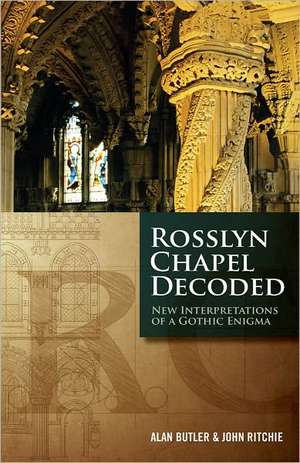
Rosslyn Chapel Decoded
Autor Alan Butler, John Ritchieen Limba Engleză Paperback – mar 2013
Analiza propusă de Alan Butler și John Ritchie pornește de la un studiu de caz fascinant: prezența unei relicve sfinte — craniul Sfântului Matei Evanghelistul — în inima Scoției. Apreciem modul în care autorii folosesc indicii din cărți pierdute și însemnări istorice pentru a demonstra că Sir Gilbert Hay, un polimat al secolului al XV-lea, a adus acest vestigiu la Rosslyn, transformând edificiul într-un spațiu care transcende funcția de biserică parohială. Considerăm că forța acestui volum rezidă în capacitatea de a decoda simbolismul dens al sculpturilor în piatră, care ascund motivații ce ar fi putut atrage condamnarea pentru erezie în epoca construcției. Această lucrare completează perspectiva oferită de The Spiritual Meaning of Rosslyn's Carvings de Jackie Queally, adăugând o dimensiune detectivistă și istorică riguroasă acolo unde Queally se concentrează pe semnificațiile spirituale și ezoterice ale ornamentelor. În timp ce alte ghiduri se rezumă la descrierea vizuală, Rosslyn Chapel Decoded propune o teză curajoasă: capela este un hibrid între un observator astronomic și o replică a Templului lui Solomon, fiind un precursor veritabil al Renașterii. În contextul operei lui Alan Butler, acest volum se aliniază preocupărilor sale pentru istoria alternativă și societățile secrete, teme explorate și în America: Nation of the Goddess. Dacă în Who Built the Moon? autorul chestiona legile astrofizicii, aici aplică aceeași curiozitate critică asupra istoriei bisericești, reușind să extragă fapte concrete dintr-un amestec de legende templiere și masonice.
Preț: 136.47 lei
Carte disponibilă
Livrare economică 07-21 noiembrie
Livrare express 24-30 octombrie pentru 26.84 lei
Specificații
ISBN-10: 1780284926
Pagini: 304
Dimensiuni: 134 x 216 x 22 mm
Greutate: 0.36 kg
Ediția:New
Editura: RED WHEEL/WEISER
V-ar putea interesa
-
 The Temple And The LodgeMichael BaigentPreț: 123.01 lei
 -
 The Book Of HiramChristopher Knight-18%Preț: 76.16 lei93.01 lei
 -
 The Holy Blood And The Holy GrailHenry Lincoln-18%Preț: 77.26 lei94.44 lei
 -
 The Hiram KeyChristopher Knight-18%Preț: 65.47 lei79.79 lei
 -
 The Templar RevelationClive Prince-29%Preț: 77.33 lei108.16 lei
 -
 RelicTom Egeland-26%Preț: 58.65 lei78.87 lei
 -
 Rosslyn Chapel RevealedMichael T R B TurnbullPreț: 190.49 lei
 -
 From Bethlehem to CalvaryAlice A. BaileyPreț: 97.64 lei
 -
 Wild Men and Holy PlacesDaphne BrookePreț: 152.31 lei
 -
 A Rosslyn TreasuryP L SnowPreț: 107.99 lei
 -
 -17%Preț: 67.20 lei80.79 lei
 -
 Twelve Churches: An unlikely history of the buildings that made ChristianityFergus Butler-Gallie-24%Preț: 93.26 lei123.22 lei
 -
 The Jerusalem FilesChristopher MorfordPreț: 122.01 lei
 -
 The Knights TemplarPatrick MastersPreț: 122.43 lei
 -
 How to Build a Haunted House: The History of a Cultural ObsessionCaitlin Blackwell Baines-18%Preț: 65.35 lei79.70 leiNou
 -
 Rosslyn and the GrailMark Oxbrow-19%Preț: 64.37 lei79.12 lei
 -
 The Palace of HolyroodhouseDeborah Clarke-16%Preț: 370.66 lei440.55 lei
 -
 Mystery of Egypt: The First TunnelRadu CinamarPreț: 162.54 lei
 -
 -22%Preț: 147.87 lei189.43 leiRecomandat
De ce să citești această carte
Recomandăm această carte pasionaților de istorie medievală și mistere arhitecturale care doresc să treacă dincolo de mitul popularizat de ficțiune. Cititorul câștigă o înțelegere profundă a modului în care cunoștințele hermetice și relicvele creștine au modelat arhitectura scoțiană. Este o lectură esențială pentru cei care vor să descopere legătura neașteptată dintre o capelă din secolul al XV-lea și Washington, DC, prin prisma unei cercetări documentate.
Despre autor
Alan Butler este un cercetător versatil, scriitor și astrolog profesionist, recunoscut pentru abordările sale neconvenționale asupra istoriei și științei. Interesele sale variază de la influența civilizațiilor antice asupra lumii moderne, până la misterele astronomice. Co-autorul său, John Ritchie, contribuie la rândul său cu o expertiză valoroasă în descifrarea simbolismului istoric. Împreună, aceștia au reușit să aducă o perspectivă proaspătă asupra Capelei Rosslyn, îmbinând rigoarea cercetării de arhivă cu un stil narativ captivant, specific autorilor care caută adevăruri ascunse în spatele miturilor oficiale.