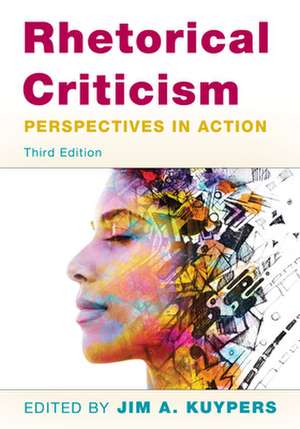
Rhetorical Criticism: Perspectives in Action
Editat de Jim A. Kuypersen Limba Engleză Hardback – 19 iul 2021
Throughout the text, sample essays written by noted experts in the field provide students with models for writing their own criticisms. In addition to covering traditional modes of rhetorical criticism, the book introduces less commonly discussed rhetorical perspectives as well as orientations toward performing criticisms including close-textual analysis, critical approaches, and analysis of visual and digital rhetoric.
The third edition includes the following features:
New chapters on visual rhetoric and digital rhetoricPotentials and Pitfalls sections analyzing individual perspectivesActivities and discussion questions in each chapterGlossary of important terms
| Toate formatele și edițiile | Preț | Express |
|---|---|---|
| Paperback (1) | 370.20 lei 6-8 săpt. | |
| Bloomsbury Publishing – 19 iul 2021 | 370.20 lei 6-8 săpt. | |
| Hardback (1) | 665.80 lei 6-8 săpt. | |
| Bloomsbury Publishing – 19 iul 2021 | 665.80 lei 6-8 săpt. |
Preț: 665.80 lei
Preț vechi: 952.85 lei
-30%
Puncte Express: 999
Preț estimativ în valută:
117.83€ • 137.71$ • 102.30£
117.83€ • 137.71$ • 102.30£
Carte tipărită la comandă
Livrare economică 19 februarie-05 martie
Preluare comenzi: 021 569.72.76
Specificații
ISBN-13: 9781538138137
ISBN-10: 1538138131
Pagini: 384
Ilustrații: 6 b/w illustration
Dimensiuni: 186 x 267 x 28 mm
Greutate: 0.93 kg
Ediția:3
Editura: Bloomsbury Publishing
Colecția Rowman & Littlefield Publishers
Locul publicării:New York, United States
ISBN-10: 1538138131
Pagini: 384
Ilustrații: 6 b/w illustration
Dimensiuni: 186 x 267 x 28 mm
Greutate: 0.93 kg
Ediția:3
Editura: Bloomsbury Publishing
Colecția Rowman & Littlefield Publishers
Locul publicării:New York, United States
Cuprins
Preface
1. Essential Elements of Rhetorical Criticism: The Big Picture
Jim A. Kuypers
OVERVIEW OF RHETORICAL CRITICISM
2. What is Rhetoric?
Jim A. Kuypers and Andrew King
3. What is Rhetorical Criticism?
Jim A. Kuypers
4. Understanding Rhetorical Situations
Marilyn Young and Kathleen Farrell
5. Generic Elements in Rhetoric
Bill Benoit and Mark Glantz
PERSPECTIVES ON CRITICISM
6. The Traditional Perspective
Forbes I. Hill
7. Close Textual Analysis: Approaches and Applications
Stephen H. Browne
8. Criticism of Metaphor
John W. Jordan
9. The Narrative Perspective
Robert C. Rowland
10. Dramatism and Kenneth Burke's Pentadic Criticism
Ryan Erik McGeough and Andrew King
11. Feminist Criticism
Donna Marie Nudd and Kristina Schriver Whalen
12. Ideographical Criticism
Ronald Lee and Adam Blood
EXPANDING OUR CRITICAL HORIZONS
13. Eclectic Rhetorical Criticism: Combining Perspectives for Insights
Jim A. Kuypers
14. Criticism of Visual Rhetoric
Natalia Mielczarek
15. Criticism of Popular Culture and Social Media
Kristen HoerlandZoe Farquhar
16. Criticism of Digital Rhetoric
Michelle G. Gibbons
17. Critical Rhetoric: An Orientation Toward Criticism
Raymie McKerrow
Appendix A. Writing Criticism: Getting Started
Appendix B. Additional Rhetorical Perspectives
Appendix C. Glossary of Terms
Appendix D. "On Objectivity and Politics in Criticism," Edwin Black
Biographical Sketches of Authors
1. Essential Elements of Rhetorical Criticism: The Big Picture
Jim A. Kuypers
OVERVIEW OF RHETORICAL CRITICISM
2. What is Rhetoric?
Jim A. Kuypers and Andrew King
3. What is Rhetorical Criticism?
Jim A. Kuypers
4. Understanding Rhetorical Situations
Marilyn Young and Kathleen Farrell
5. Generic Elements in Rhetoric
Bill Benoit and Mark Glantz
PERSPECTIVES ON CRITICISM
6. The Traditional Perspective
Forbes I. Hill
7. Close Textual Analysis: Approaches and Applications
Stephen H. Browne
8. Criticism of Metaphor
John W. Jordan
9. The Narrative Perspective
Robert C. Rowland
10. Dramatism and Kenneth Burke's Pentadic Criticism
Ryan Erik McGeough and Andrew King
11. Feminist Criticism
Donna Marie Nudd and Kristina Schriver Whalen
12. Ideographical Criticism
Ronald Lee and Adam Blood
EXPANDING OUR CRITICAL HORIZONS
13. Eclectic Rhetorical Criticism: Combining Perspectives for Insights
Jim A. Kuypers
14. Criticism of Visual Rhetoric
Natalia Mielczarek
15. Criticism of Popular Culture and Social Media
Kristen HoerlandZoe Farquhar
16. Criticism of Digital Rhetoric
Michelle G. Gibbons
17. Critical Rhetoric: An Orientation Toward Criticism
Raymie McKerrow
Appendix A. Writing Criticism: Getting Started
Appendix B. Additional Rhetorical Perspectives
Appendix C. Glossary of Terms
Appendix D. "On Objectivity and Politics in Criticism," Edwin Black
Biographical Sketches of Authors
Recenzii
The third edition of Rhetorical Criticism: Perspectives in Action includes new chapters on visual and digital rhetoric while retaining its broad coverage of more traditional perspectives. Sophisticated yet accessible, it remains the best textbook for advanced undergraduate courses in the field and should be required reading for new graduate students.
One of the strengths of Kuypers's text is that he recognizes the role of both creativity and limitations in rhetorical criticism. While this can be confusing for students, this book offers more applications and translations of theory than most other textbooks. The example essays, top picks, and glossary from the previous edition were helpful. New additions in the form of discussion questions and activities for students are welcome and will help student further their understanding of rhetorical theory.
This book will not only enhance students' understanding of rhetoric and improve their skills in analytical writing, but it also - and perhaps most importantly - will foster their creativity. New sections on visual and digital rhetoric encourage students to explore further dimensions of the personal, political, and humanizing art of rhetorical criticism.
One of the strengths of Kuypers's text is that he recognizes the role of both creativity and limitations in rhetorical criticism. While this can be confusing for students, this book offers more applications and translations of theory than most other textbooks. The example essays, top picks, and glossary from the previous edition were helpful. New additions in the form of discussion questions and activities for students are welcome and will help student further their understanding of rhetorical theory.
This book will not only enhance students' understanding of rhetoric and improve their skills in analytical writing, but it also - and perhaps most importantly - will foster their creativity. New sections on visual and digital rhetoric encourage students to explore further dimensions of the personal, political, and humanizing art of rhetorical criticism.