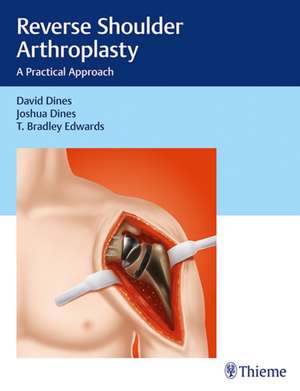
Reverse Shoulder Arthroplasty
Autor David M Dines, Joshua Dines, T Bradley Edwardsen Limba Engleză Hardback – 27 sep 2017
Descoperim în Reverse Shoulder Arthroplasty un protocol riguros de intervenție care începe cu analiza biomecanicii glenosferei și a plăcii de bază, elemente critice pentru succesul pe termen lung al implantului. Autorii David M Dines, Joshua Dines și T Bradley Edwards propun o abordare clinică bazată pe ani de rafinament tehnic, unde decizia chirurgicală este ghidată de algoritmi preciși pentru selecția pacienților, inclusiv a celor tineri și activi, deveniți candidați viabili datorită durabilității crescute a noilor materiale. Subliniem modul în care volumul este structurat pentru a facilita progresia de la fundamentele istorice și biomecanice la tehnici chirurgicale specifice pentru patologii complexe, precum artropatia de coafă sau fracturile acute. Remarcăm includerea unor secțiuni de dezbatere profesională, cum ar fi alegerea între abordul deltopectoral și cel superior, oferind cititorului nu doar o metodă unică, ci o perspectivă critică asupra opțiunilor disponibile. Acolo unde Textbook of Shoulder Surgery de Ian A. Trail acoperă spectrul larg al patologiei umărului, de la tulburări de țesut moale la cazuri pediatrice, acest volum aprofundează exclusiv tehnologia RSA (Reverse Shoulder Arthroplasty), oferind detalii tehnice despre instrumentația specifică pacientului și componentele humerale fără tijă (stemless). De asemenea, în timp ce Complex and Revision Shoulder Arthroplasty se concentrează pe cazurile de revizie și deformări osoase severe, lucrarea de față acționează ca un manual de referință pentru implementarea primară corectă, vizând optimizarea funcției deltoidului și evitarea fenomenului de „scapular notching”. Cele 300 de ilustrații de înaltă calitate și materialele video complementare transformă descrierile teoretice într-un ghid vizual indispensabil în sala de operație.
Preț: 1265.63 lei
Preț vechi: 1332.24 lei
-5%
Carte disponibilă
Livrare economică 17 noiembrie-01 decembrie
Livrare express 03-07 noiembrie pentru 63.74 lei
Specificații
ISBN-10: 1626233608
Pagini: 256
Dimensiuni: 222 x 287 x 20 mm
Greutate: 1.02 kg
Editura: Thieme Publishers New York
De ce să citești această carte
Această lucrare este esențială pentru chirurgii ortopezi care doresc să stăpânească artroplastia inversă de umăr, cea mai rapidă tehnologie de implant în prezent. Cititorul câștigă expertiză în gestionarea complicațiilor precum instabilitatea sau pierderea osoasă glenoidală, beneficiind de sfaturi clinice („clinical pearls”) direct de la pionierii domeniului. Este resursa ideală pentru a trece de la procedurile standard la soluții personalizate pentru pacienți complexi.
Despre autor
Echipa de autori este formată din experți de renume mondial în chirurgia umărului și a cotului. David M. Dines și Joshua Dines sunt figuri proeminente în medicina sportivă și ortopedie, cu o vastă experiență în tratarea sportivilor de performanță și în dezvoltarea tehnologiilor de implant. T. Bradley Edwards este recunoscut pentru contribuțiile sale majore în cercetarea biomecanicii umărului și în perfecționarea tehnicilor de artroplastie inversă. Împreună, aceștia reunesc decenii de practică clinică și inovație, oferind o perspectivă autoritară asupra evoluției și viitorului protezării de umăr.
Descriere
This masterful book from top experts provides clinical insights on reverse shoulder arthroplasty gleaned from hands-on refinement of shoulder replacement techniques. Years of significant biomechanical and clinical research yielded invaluable knowledge that led to important improvements in functional outcome and implant durability. Among these refinements were stronger polyethylene derivatives, better ingrowth technology, and improved connection devices. As the durability and longevity of implant technology increased, younger active patients became suitable candidates for this procedure. In fact, RSA has played a pivotal role in making shoulder arthroplasty the fastest growing implant technology.
In the first two sections, the authors take the reader through the history and evolution of RSA, followed by step-by-step surgical techniques for specific injuries and conditions. The next three sections discuss past and recent outcomes, complications, and rehabilitation. The last section covers special considerations including patient specific instrumentation, convertible humeral and glenoid components, and the future potential of stemless humeral technology.
Key Features
- The latest trends in patient-specific components, guide systems, and instrument design
- The use of RSA for rotator cuff repair, shoulder arthritis, and acute and complex fractures
- In-depth discussion of techniques to improve deltoid function, avoid impingement, and increase implant longevity
- Clinical pearls on how to recognize and handle complications that occur: instability, infection, scapular notching, component loosening, glenoid and humeral bone loss, and RSA failure
- High quality videos and 300 superb illustrations further delineate techniques
This book is a practical resource that enables learning complex procedures, putting them into practice, and handling complications should they arise. It is an essential tool for all orthopaedic surgeons who treat shoulder conditions.
Cuprins
1. History of Reverse Shoulder Arthroplasty
2. Reverse Total Shoulder Arthroplasty: Biomechanics and Design Challenges
3. Evolution of Glenosphere and Baseplate Technology in Reverse Total Shoulder Arthroplasty
4. Evolution of Humeral Component Technology in Reverse Shoulder Arthroplasty
5. Emerging Indications for Reverse Total Shoulder Arthroplasty
Surgical Techniques
6. PreoperativeWork-up and Surgical Approaches for Reverse Shoulder Arthroplasty
7. Debate: Approaches to Reverse Shoulder Arthroplasty: Deltopectoral Approach versus Superior Approach
8. Indications and Techniques of BIO-RSA for Cuff Tear Arthropathy, Including Associated Soft Tissue Transfers for Loss of External Rotation
9. Debate: I Always Repair the Subscapularis Tendon If Possible versus the Subscapularis Tendon: A Vestigial Structure Following Reverse Total Shoulder Arthroplasty?
10. Reverse Shoulder Arthroplasty for Acute Fracture: Indications and Technique
11. Reverse Shoulder Arthroplasty for Fracture Sequelae: Indications and Technique
12. Debate: Hemiarthroplasty or Reverse Shoulder Arthroplasty for Proximal Acute Complex Humeral Fractures
13. Reverse Shoulder Arthroplasty for Massive Anterosuperior Rotator Cuff Failure
14. Reverse Shoulder Arthroplasty for Osteoarthritis withWalch B2 Glenoid: Indications and Specific Technical Considerations
15. Reverse Shoulder Arthroplasty in Revision Shoulder Arthroplasty: What I Look for and How I Do It
Results of Reverse Shoulder Arthroplasty
16. Historic and Recent Results of Reverse Shoulder Arthroplasty
Complications of Reverse Shoulder Arthroplasty
17. Instability after Reverse Total Shoulder Arthroplasty: Evaluation and Treatment
18. Infection after Reverse Shoulder Arthroplasty:Workup, Diagnosis, and Treatment
19. Scapular Notching: Is It a Problem? How DoWe Prevent It?
20. Component Loosening: What Can Be Done to Prevent and Treat It
Rehabilitation
21. Reverse Total Shoulder Arthroplasty Rehabilitation and Activities
Special Considerations
22. Patient-Specific Instruments and Implants in Reverse Shoulder Arthroplasty
23. Debate: Patient-Specific Instrumentation Is Necessary versus It Is Not Necessary in All Cases
24. How I Deal with Humeral Bone Loss in Reverse Shoulder Arthroplasty
25. Dealing with Glenoid Bone Loss in Reverse Shoulder Arthroplasty
26. Convertible Humeral Components in Reverse Shoulder Arthroplasty
27. Stemless Humeral Technology in Reverse Shoulder Arthroplasty: Is It the Next Frontier?
28. The Use of Convertible Glenoid Component Makes Revision to Reverse Total Shoulder Arthroplasty Easier
29. What Can Be Done When a Reverse Shoulder Arthroplasty Fails?