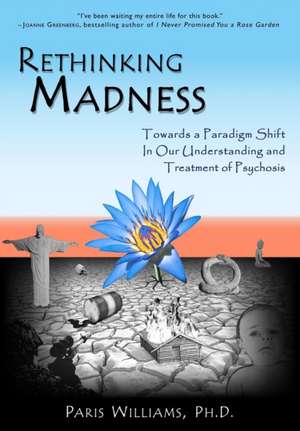
Rethinking Madness
Autor Paris Williamsen Limba Engleză Paperback – 15 apr 2012
Subliniem faptul că Rethinking Madness reprezintă o intervenție critică necesară într-un domeniu dominat de modelul medical al bolilor mintale. Paris Williams aduce în prim-plan o perspectivă bazată pe date care contestă fundamentele psihiatriei contemporane, demonstrând că, după un secol de cercetări costisitoare, nu există dovezi substanțiale care să ateste că schizofrenia este o boală organică a creierului. Ceea ce aduce nou această lucrare este analiza procesului de recuperare nu ca o simplă remisie a simptomelor, ci ca o transformare existențială profundă, integrând poveștile de viață ale subiecților cu literatura de specialitate existentă. Notăm cu interes observația autorului privind disparitățile geografice: persoanele diagnosticate în Occident au șanse mai mici de vindecare decât cele din regiunile defavorizate, sugerând că intervențiile farmacologice agresive pot fi contraproductive. Din punct de vedere stilistic, Paris Williams evită jargonul clinic arid, optând pentru o structură narativă care ghidează cititorul prin dilemele fundamentale ale condiției umane. Cartea este comparabilă cu Madness and Civilization de Michel Foucault în rigoarea cu care chestionează structurile de putere ale instituțiilor medicale, dar este actualizată pentru realitățile neurobiologiei moderne și ale crizei actuale de paradigmă din sănătatea mintală. De asemenea, lucrarea împărtășește preocuparea pentru experiența subiectivă întâlnită în A Philosophy of Madness de Wouter Kusters, însă Paris Williams se concentrează mai mult pe rigoarea empirică a procesului de recuperare și pe impactul sistemic al îngrijirii psihiatrice asupra cronicității.
Preț: 210.62 lei
Carte disponibilă
Livrare economică 13-27 octombrie
Specificații
ISBN-10: 0984986707
Pagini: 398
Dimensiuni: 170 x 244 x 22 mm
Greutate: 0.69 kg
Editura: Sky's Edge Publishing
V-ar putea interesa
-
 Analytic Philosophy and Human LifeThomas Nagel-15%Preț: 161.26 lei190.63 lei
 -
 -18%Preț: 1111.68 lei1355.70 lei
 -
 -14%Preț: 793.99 lei923.25 lei
 -
 James and BradleyTimothy L S SpriggePreț: 400.40 lei
 -
 Preț: 112.03 lei
 -
 Adorno's Critique of Political EconomyDirk BraunsteinPreț: 264.24 lei
 -
 Preț: 191.93 lei
 -
 The Adventures of Paris and CaliVeronica PittmanPreț: 55.89 lei
 -
 Preț: 154.76 lei
 -
 Wege und Seitenwege der PhilosophieRafael Ferber-19%Preț: 651.39 lei804.18 lei
 -
 Moralische VerantwortungChristoph HalbigPreț: 184.04 lei
 -
 Fortschritt und RegressionRahel JaeggiPreț: 181.11 lei
 -
 Einheit und ZerfallMoritz RudolphPreț: 271.93 lei
 -
 Preț: 101.71 lei
 -
 -13%Preț: 776.90 lei892.98 lei
 -
 -13%Preț: 669.85 lei769.94 lei
De ce să citești această carte
Suntem de părere că această carte este esențială pentru profesioniștii din domeniul sănătății mintale, studenții la psihologie și filozofie, dar și pentru persoanele care au trecut prin experiențe psihotice. Cititorul câștigă o înțelegere nuanțată a rezilienței umane și a modului în care nebunia poate fi reîncadrată ca un proces de creștere. Este un argument solid pentru reevaluarea metodelor de tratament actuale în favoarea unei abordări mai umane și mai eficiente.