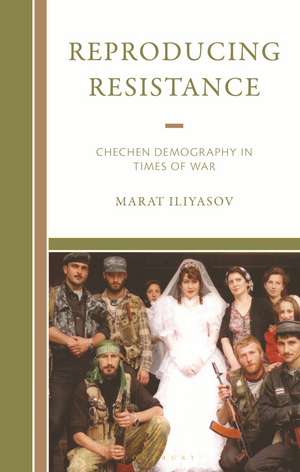
Reproducing Resistance: Chechen Demography in Times of War
Autor Marat Iliyasoven Limba Engleză Hardback – 19 feb 2026
Iliyasov contends that this collective identity is a key factor influencing decisions about family size. Reproducing Resistance suggests that the high fertility rates among groups who perceive their survival to be under threat can serve as an indicator of a community preparing for potential future conflict. This demographic dynamic is reinforced by numerous interviews that the author conducted with Nokhchi natives, offering invaluable insight into the lived experiences and perspectives of the people.
Preț: 579.56 lei
Preț vechi: 865.10 lei
-33%
Puncte Express: 869
Carte disponibilă
Livrare economică 12-26 noiembrie
Livrare prin curier în România Termenul estimat este afișat lângă disponibilitate.
Transport gratuit pentru acest produs Plată online sau ramburs, în funcție de opțiunile comenzii.
Retur gratuit în 14 zile Comandă securizată și suport în română.
Specificații
ISBN-13: 9781666956955
ISBN-10: 1666956953
Pagini: 232
Ilustrații: 8 tables/figures
Dimensiuni: 158 x 232 x 18 mm
Greutate: 0.48 kg
Editura: Bloomsbury Publishing
Colecția Bloomsbury Academic
Locul publicării:New York, United States
ISBN-10: 1666956953
Pagini: 232
Ilustrații: 8 tables/figures
Dimensiuni: 158 x 232 x 18 mm
Greutate: 0.48 kg
Editura: Bloomsbury Publishing
Colecția Bloomsbury Academic
Locul publicării:New York, United States
Cuprins
Acknowledgement
List of figures and Tables
Key facts about the Nokhchi-chuo
Brief chronology of the Russo-Nokhchi Conflict
Introduction
PART ONE
Chapter One: Existential threat as a motivating factor
Chapter Two: Chechen migrants as research objects
PART TWO
Chapter Three: Chechen loss and demographic growth in times of war
Chapter Four: Nokhchi collective identity and resistance
Chapter Five: What composes Nokhchi identity?
PART THREE
Chapter Six: Are the Nokhchi still wolves?
Chapter Seven: Identity, reproduction, and its motivations
Conclusion: What the demographic growth of the Nokhchi population tells us?
Index
Bibliography
About the Author
List of figures and Tables
Key facts about the Nokhchi-chuo
Brief chronology of the Russo-Nokhchi Conflict
Introduction
PART ONE
Chapter One: Existential threat as a motivating factor
Chapter Two: Chechen migrants as research objects
PART TWO
Chapter Three: Chechen loss and demographic growth in times of war
Chapter Four: Nokhchi collective identity and resistance
Chapter Five: What composes Nokhchi identity?
PART THREE
Chapter Six: Are the Nokhchi still wolves?
Chapter Seven: Identity, reproduction, and its motivations
Conclusion: What the demographic growth of the Nokhchi population tells us?
Index
Bibliography
About the Author
Recenzii
As birth rates globally fall below replacement level, Marat Iliyasov provides a well-researched account of a notable exception. Drawing on history, IR theory, demographic data and extensive interviews, Iliyasov focuses on why fertility rates for Chechens, especially those identifying as Nokhchi have been outliers. Iliyasov cites existential threats from recurring outside aggression fostering strong collective identity and impressive resilience.
By centering its analysis on demography and procreation, Ilyasov's book offers a novel interpretation of Nokhchi resilience in the face of Russian colonial domination. It brilliantly details how a nation can withstand deportation, famine, and wars of conquest and eradication in a never-ending quest for freedom and survival. This indispensable book deepens our understanding of Nokhchi collective identity and patriotism, moving beyond simplistic warrior stereotypes.
I cannot think of a better place than this book to gain deep insight into the people known to most of the world as Chechens. The fact that 'Chechen' and 'Chechnya' are Russian words is but one example of how the history and culture of this people, who instead call themselves Nokhchi, have been understood primarily from or through a Russian perspective. Dr. Marat Iliyasov provides an important corrective, drawing on his own native Nokhchi perspective and impressive social scientific training to improve our understanding of these people and their resilience in the face of Russian imperialism since the 19th century. This resilience, he shows, penetrates deep, impacting some of the most personal and intimate decisions people make in surprising ways.
By centering its analysis on demography and procreation, Ilyasov's book offers a novel interpretation of Nokhchi resilience in the face of Russian colonial domination. It brilliantly details how a nation can withstand deportation, famine, and wars of conquest and eradication in a never-ending quest for freedom and survival. This indispensable book deepens our understanding of Nokhchi collective identity and patriotism, moving beyond simplistic warrior stereotypes.
I cannot think of a better place than this book to gain deep insight into the people known to most of the world as Chechens. The fact that 'Chechen' and 'Chechnya' are Russian words is but one example of how the history and culture of this people, who instead call themselves Nokhchi, have been understood primarily from or through a Russian perspective. Dr. Marat Iliyasov provides an important corrective, drawing on his own native Nokhchi perspective and impressive social scientific training to improve our understanding of these people and their resilience in the face of Russian imperialism since the 19th century. This resilience, he shows, penetrates deep, impacting some of the most personal and intimate decisions people make in surprising ways.