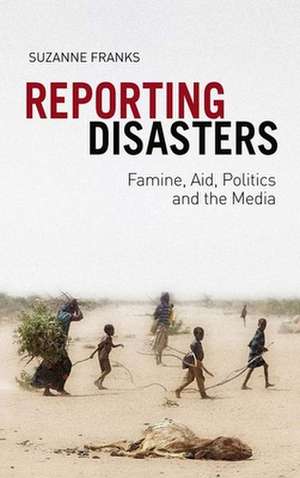
Reporting Disasters
Autor Suzanne Franksen Limba Engleză Paperback – mar 2014
Nivel de studiu: referință profesională și cercetare academică (licență și master). Reporting Disasters reprezintă o analiză critică esențială pentru studenții la jurnalism și științe politice, investigând modul în care media internațională a construit imaginea foametei din Etiopia între 1984 și 1985. Suzanne Franks utilizează accesul privilegiat la arhivele BBC și ale guvernului britanic pentru a demonta mitul succesului absolut al intervenției umanitare declanșate de presiunea mediatică. Ne-a atras atenția rigoarea cu care autoarea demonstrează că, deși evenimentul a mobilizat resurse fără precedent, relatările au fost adesea incomplete sau eronate, ducând la politici de ajutor care au ignorat cauzele politice profunde ale crizei. Suntem de părere că volumul oferă o perspectivă necesară asupra distorsiunilor informaționale. În timp ce publicul își amintește de succesul festivalurilor de tip Live Aid, Suzanne Franks arată cum „foametea biblică” a fost o construcție narativă ce a forțat reacții politice reactive, nu strategice. Cititorii familiarizați cu Famine and Foreigners: Ethiopia Since Live Aid de Peter Gill vor aprecia modul în care acest volum completează tabloul istoric, concentrându-se nu doar pe evenimentele din teren, ci pe mecanismele interne ale redacțiilor și pe interfața dintre presă și decidenții statali. Structura lucrării facilitează înțelegerea procesului prin care o știre devine un eveniment global de o imensitate copleșitoare. Spre deosebire de un manual tehnic precum Reporting Disaster on Deadline de Lee Wilkins, care oferă ghiduri de bune practici, lucrarea de față funcționează ca o examinare sociologică a impactului pe care jurnalismul de criză îl are asupra realității geopolitice pe termen lung.
Preț: 181.96 lei
Carte disponibilă
Livrare economică 07-21 noiembrie
Specificații
ISBN-10: 1849042888
Pagini: 256
Ilustrații: illustrations (black and white)
Dimensiuni: 139 x 214 x 23 mm
Greutate: 0.33 kg
Editura: HURST & CO
V-ar putea interesa
-
 Our Final CenturyMartin ReesPreț: 114.59 lei
 -
 -33%Preț: 577.59 lei865.27 lei
 -
 Natural Resources and Social ConflictM. SchnurrPreț: 403.33 lei
 -
 Performance AffectsJ. ThompsonPreț: 465.42 lei
 -
 Psychosocial Capacity Building in Response to DisastersJoshua MillerPreț: 268.46 lei
 -
 -15%Preț: 436.85 lei513.94 lei
 -
 Disaster and DevelopmentAndrew E. CollinsPreț: 464.90 lei
 -
 Perils of a Restless PlanetErnest Jr. ZebrowskiPreț: 295.48 lei
 -
 -18%Preț: 1498.29 lei1827.18 lei
 -
 Preț: 115.95 lei
 -
 Preț: 388.00 lei
 -
 Advanced Seismic Hazard Assessment: Part I: Seismic Hazard AssessmentGiuliano F. Panza-20%Preț: 633.17 lei791.45 lei
De ce să citești această carte
Recomandăm această carte oricărui viitor jurnalist sau specialist în relații internaționale care dorește să înțeleagă puterea și capcanele reportajului de criză. Veți câștiga o viziune critică asupra modului în care media poate distorsiona realitatea în încercarea de a genera empatie, oferind instrumente analitice pentru a evalua campaniile umanitare contemporane prin prisma lecțiilor neînvățate din 1984.
Descriere scurtă
Recenzii
'Reporting Disasters makes a powerful case for a better understanding of the causes of hunger. Franks shows how the way starving people in Ethiopia were portrayed on TV - the famous 'Biblical famine' of 1984 - distorted the world's response, inspiring aid deliveries that may have done more harm than good. The coverage failed to understand the politics of famine. This is the best kind of history - one that challenges stereotypes and asks uncomfortable questions.' - David Loyn, BBC International Development Correspondent 'This is the compelling life story of a transformational news event. Famine footage from Ethiopia allied to the pop star glamour of Live Aid confirmed the predominance of television news and changed the aid business for ever. Thirty years on, with fresh revelations from inside Government and the BBC, Suzanne Franks' study takes on contemporary significance as TV news and overseas aid confront potentially disabling new challenges.' - Peter Gill, journalist and author of Famine and Foreigners: Ethiopia Since Live Aid 'A fascinating, thoroughly researched and eminently readable book which makes a major contribution to our understanding of television's impact on politics, policy-makers and audiences. Highly recommended for anyone interested in the relationship between media and politics.' - Steven Barnett, Professor of Communications, University of Westminster
'Reporting Disasters makes a powerful case for a better understanding of the causes of hunger. Franks shows how the way starving people in Ethiopia were portrayed on TV - the famous 'Biblical famine' of 1984 - distorted the world's response, inspiring aid deliveries that may have done more harm than good. The coverage failed to understand the politics of famine. This is the best kind of history - one that challenges stereotypes and asks uncomfortable questions.' - David Loyn, BBC International Development Correspondent 'This is the compelling life story of a transformational news event. Famine footage from Ethiopia allied to the pop star glamour of Live Aid confirmed the predominance of television news and changed the aid business for ever. Thirty years on, with fresh revelations from inside Government and the BBC, Suzanne Franks' study takes on contemporary significance as TV news and overseas aid confront potentially disabling new challenges.' - Peter Gill, journalist and author of Famine and Foreigners: Ethiopia Since Live Aid 'This fascinating book is a must-read for anyone with an interest in the enduring effects on the aid industry of the nexus of global politics, celebrity and the media of the mid-1980s. Franks' sweeping narrative offers an unprecedented, detailed insight into events which were to define a generation's view of Africa in the wake of Michael Buerk's iconic 1984 television news report about the Ethiopian famine.' - Leigh Daynes, Executive Director of Medecins du Monde in the UK 'As we approach the thirtieth anniversary of the 1984 famine and the iconic BBC TV film by Michael Buerk and Mohammed Amin, Suzanne Franks provides us with a comprehensive and detailed analysis of how that film came to be made and its profound impacts on the various actors in the humanitarian drama - donors, humanitarian agencies, celebrities and fundraisers and on the media itself. Using this watershed moment in the media coverage of disasters, she explores the relationship between the media and humanitarian actors, exposing the overlapping and sometimes conflicting interests of journalists and humanitarian agencies and the ways in which they are reconciled - often presenting the public with oversimplifications and occasionally significant misrepresentations. This impressive book is a significant addition to the literature and deserves to become a standard reference in training courses for both journalists and humanitarian workers.' - John Borton, Senior Research Associate, Humanitarian Policy Group, Overseas Development Institute 'A fascinating, thoroughly researched and eminently readable book which makes a major contribution to our understanding of television's impact on politics, policy-makers and audiences. Highly recommended for anyone interested in the relationship between media and politics.' - Steven Barnett, Professor of Communications, University of Westminster