
Reportage Illustration: Visual Journalism
Autor Reportage Drawing Gary Embury, Professor Mario Minichielloen Limba Engleză Paperback – 11 ian 2018
Observăm o reîntoarcere fascinantă către desenul documentar într-o eră dominată de digital, iar Reportage Illustration de Reportage Drawing Gary Embury și Professor Mario Minichiello surprinde tocmai această energie a prezenței fizice a artistului la fața locului. Narațiunea vizuală a cărții este construită pentru a ne purta prin experiențe senzoriale diverse: simțim tensiunea din schițele realizate în sălile de judecată și vibrația mulțimii de la un concert rock, totul prin intermediul celor 200 de ilustrații color care demonstrează forța jurnalismului vizual.
Structura volumului este una progresivă, menită să transforme observatorul pasiv într-un narator grafic. Reținem organizarea riguroasă a capitolelor, care debutează cu o perspectivă istorică asupra influenței artiștilor de război, continuă cu selecția tactilă a materialelor și media — de la creion la tehnologie digitală — și culminează cu strategii de lucru „on location”. Studiile de caz, precum cel despre George Butler în Siria sau Gary Embury la Bristol Bike Project, nu sunt simple exemple, ci ferestre deschise către realitatea dură sau vibrantă pe care ilustratorul trebuie să o traducă instantaneu pe hârtie.
Complementar lucrării Reportage Drawing de Louis Netter, care explorează modul în care desenul modelează adevărul și înțelegerea lumii vizuale, volumul de față se distinge printr-o abordare mult mai aplicată și didactică. În timp ce Netter analizează funcția comunicativă a imaginii, Reportage Illustration oferă instrumente concrete și exerciții practice pentru dezvoltarea unui limbaj vizual propriu. Ne-a atras atenția modul în care autorii integrează interviurile cu profesioniști din colectivul „First Hand Reportage”, oferind o perspectivă corală asupra unei profesii care îmbină arta cu rigoarea jurnalistică. Calitatea producției de la Bloomsbury Visual Arts asigură o redare fidelă a texturilor și a gestualității specifice desenului realizat sub presiunea momentului.
Preț: 217.37 lei
Preț vechi: 265.18 lei
-18%
Carte disponibilă
Livrare economică 03-17 noiembrie
Livrare express 17-23 octombrie pentru 87.76 lei
Specificații
ISBN-10: 1474224598
Pagini: 176
Ilustrații: 200 colour illus
Dimensiuni: 208 x 268 x 16 mm
Greutate: 0.6 kg
Editura: Bloomsbury Publishing
Colecția Bloomsbury Visual Arts
Locul publicării:London, United Kingdom
V-ar putea interesa
-
 You and MeJang and FoxPreț: 79.92 lei
 -
 A Beautiful WorldJames NorburyPreț: 138.52 lei
 -
 Drawing for IllustrationMartin Salisbury-15%Preț: 203.95 lei240.19 lei
 -
 Introduction to JournalismCarole FlemingPreț: 246.72 lei
 -
 Preț: 370.02 lei
 -
 Dear New YorkBrandon StantonPreț: 287.60 lei
 -
 -8%Preț: 227.63 lei247.89 lei
 -
 -19%Preț: 206.09 lei254.75 lei
 -
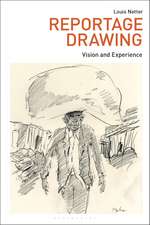 Reportage Drawing: Vision and ExperienceLouis Netter-14%Preț: 147.56 lei172.24 lei
 -
 IllustrationAlan Male-23%Preț: 222.46 lei287.38 lei
 -
 Writing Graphic Novels For DummiesKensuke OkabayashiPreț: 115.21 lei
 -
 Preț: 172.77 lei
 -
 Sketching in the CityToby HaselerPreț: 123.12 lei
 -
 The Fundamentals of IllustrationProfessor Lawrence ZeegenPreț: 216.15 lei
 -
 Editorial Design Third Edition: Digital and PrintCath Caldwell-30%Preț: 176.20 lei250.54 lei
 -
 JournalismJoe Sacco-24%Preț: 120.16 lei159.14 lei
 -
 The War ArtistJan Casey-25%Preț: 53.67 lei71.77 lei
 -
 Framed InkMarcos Mateu-Mestre-18%Preț: 144.34 lei175.01 lei
 -
 -21%Preț: 237.93 lei301.04 lei
 -
 Preț: 136.74 lei
De ce să citești această carte
Recomandăm această carte studenților la arte și jurnaliștilor care doresc să exploreze o formă de documentare mai intimă și mai profundă decât fotografia. Veți câștiga nu doar tehnici de desen rapid și strategii de lucru pe teren, ci și capacitatea de a sintetiza realitatea într-un mod personal. Este un ghid esențial pentru oricine vrea să transforme observația în mărturie vizuală, beneficiind de expertiza unor autori premiați care au lucrat pentru marile publicații ale lumii.
Descriere
Cuprins
Background
The rise of reportage and the influence of the war artist
The camera and the eye
Case study: George Butler/Syria
Interview: Jill Gibbon
Chapter 2: Materials, Media and Methods
Choosing the right materials
Technology and digital media
Case Study: Jenny Soep/ Capturing a live event
Exercise: Drawing a live event
Box: Checklist of materials
Interview: Julia Midgley
Interview: Tim Vyner
Chapter 3: Developing a Visual Language
Individual approaches
Case Study: Jedidiah Dore/New York City
Case Study: Sue Coe/Elephant Nature Park
Exercise: Developing your visual language
Interview: First Hand Reportage Collective
Interview: Olivier Kugler
Chapter 4: On Location
Beginning a project
Case Study: Gary Embury/ The Bristol Bike Project
Interview: Lucinda Rogers
Interview: Jenny Soep
Chapter 5: Capturing a sense of place
Case Study: Veronica Lawler/Mystic Seaport
Checklist
Tips and techniques: On location
Case Study: Luisa Crosbie/ Her Majesty's Theatre, London
Case Study: Anne Howeson/ Drawing and Memory
Interview: Bo Soremsky
Chapter 6: Creating a Narrative
Developing the story
Story selection and developing content
Tips and techniques
Outlining your story
Interview: Louis Netter
Interview: Chloe Regan
Exercise: Creating a story using a fixed viewpoint
Chapter 7: Becoming a Visual Journalist
Creating a digital portfolio
Tips in preparing your portfolio
Editing your portfolio
The world of work
Finding work
Speculative work
Working through a gallery
Direct calling and arranging interviews
Responsibilities
Human ethics and professional practice
Tips and checklists
Case Study: Mario Minichiello/Weekend Financial Times
Exercise: Developing a reportage illustration brief
Conclusion
The future of reportage
Interview: Martin Harrison
Contacts
Credits
Index
Recenzii
Offers practical advice on the nitty-gritty of becoming a professional ... [The authors have] pulled together a great bunch of artists to feature in the book ... The book is excellent in encouraging readers to continue to experiment and explore, even when they may have found their own hard-won visual language ... This is a book that challenges us to confront what we are saying in our work and how we are saying it.
Interest in reportage keeps growing, and this book is a great primer on the subject ... Authors Gary Embury and Mario Minichiello are practitioners and educators ... and they bring clear information and an enthusiasm for their subject which is infectious ... The book provides plenty of examples of riveting work and a strong argument for the power of illustration as a witness and recorder of events through first hand observation.