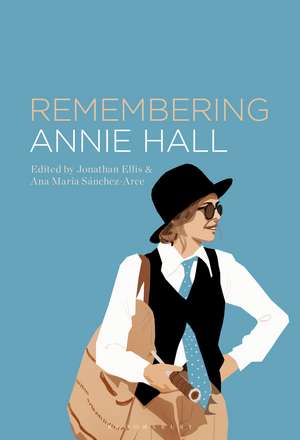
Remembering Annie Hall
Editat de Dr. Jonathan Ellis, Ana María Sánchez-Arceen Limba Engleză Hardback – 21 sep 2023
At the same time as exploring the film's continuing influence on contemporary cinema, this book's contributors engage explicitly and implicitly with ongoing debates about Allen's cinematic output following the renewal of accusations against Allen by his adopted daughter Dylan Farrow in 2014 and 2018. The book is alive to debates within film studies about the limits of auteur theory and the role of the spectator.
Preț: 597.65 lei
Preț vechi: 927.58 lei
-36%
Puncte Express: 896
Carte tipărită la comandă
Livrare economică 02-16 decembrie
Livrare prin curier în România Termenul estimat este afișat lângă disponibilitate.
Transport gratuit pentru acest produs Plată online sau ramburs, în funcție de opțiunile comenzii.
Retur gratuit în 14 zile Comandă securizată și suport în română.
Specificații
ISBN-13: 9781501358494
ISBN-10: 1501358499
Pagini: 272
Ilustrații: 20 bw illus
Dimensiuni: 152 x 229 x 25 mm
Greutate: 0.53 kg
Editura: Bloomsbury Publishing
Colecția Bloomsbury Academic
Locul publicării:New York, United States
ISBN-10: 1501358499
Pagini: 272
Ilustrații: 20 bw illus
Dimensiuni: 152 x 229 x 25 mm
Greutate: 0.53 kg
Editura: Bloomsbury Publishing
Colecția Bloomsbury Academic
Locul publicării:New York, United States
V-ar putea interesa
-
 Documentary Resistance: Social Change and Participatory MediaAngela J. Aguayo-31%Preț: 694.84 lei1007.81 lei
 -
 Maya Deren – Incomplete ControlSarah KellerPreț: 262.93 lei
 -
 The Cinema of Ang Lee – The Other Side of the Screen 2eWhitney Crother DilleyPreț: 240.71 lei
 -
 The Cinema of Clint Eastwood – Chronicles of AmericaDavid SterrittPreț: 214.21 lei
 -
 The Cinema of Robert RodriguezFrederick Luis AldamaPreț: 200.93 lei
 -
 The Tim Burton EncyclopediaSamuel J. Umland-14%Preț: 588.71 lei684.55 lei
 -
 Mediating the Windrush ChildrenJosiane RanguinPreț: 403.96 lei
 -
 Guillermo del Toro: Film as Alchemic ArtKeith McDonald-24%Preț: 772.24 lei1021.59 lei
 -
 -33%Preț: 421.12 lei627.05 lei
 -
 The Cinematic Misadventures of Ed WoodAndrew J. RauschPreț: 158.62 lei
 -
 The Cinematic Misadventures of Ed Wood (Hardback)Andrew J. RauschPreț: 239.36 lei
 -
 Gendered Frames, Embodied Cameras: Varda, Akerman, Cabrera, Calle, and MaïwennCybelle H. McFadden-23%Preț: 322.08 lei417.69 lei
 -
 -38%Preț: 834.95 lei1337.00 lei
 -
 Boro, L'Île d'AmourKamila Kuc-23%Preț: 758.88 lei985.56 lei
 -
 -20%Preț: 174.35 lei217.95 lei
 -
 Hispanic and Lusophone women filmmakersParvati Nair-48%Preț: 122.78 lei235.38 lei
 -
 Outlaw Masters of Japanese FilmChris D.-19%Preț: 196.25 lei241.46 lei
 -
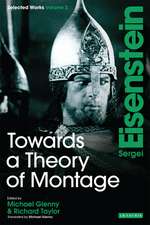 Towards a Theory of Montage: Sergei Eisenstein Selected Works, Volume 2Sergei Eisenstein-12%Preț: 246.38 lei281.17 lei
 -
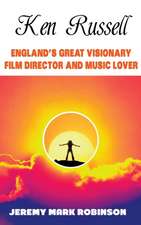 KEN RUSSELLJeremy Mark RobinsonPreț: 329.51 lei
 -
 TOMMYJeremy Mark RobinsonPreț: 116.21 lei
 -
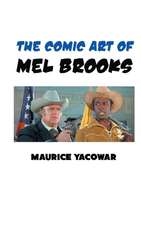 THE COMIC ART OF MEL BROOKSMaurice YacowarPreț: 246.44 lei
 -
 European IntertextsPatsy Stoneman-23%Preț: 536.62 lei696.91 lei
Cuprins
List of Illustrations
List of Contributors
Acknowledgements
Introduction: After the Fall
Jonathan Ellis (University of Sheffield, UK) and Ana María Sánchez-Arce (Sheffield Hallam University, UK)
1. Annie Hall and the Invention of Film Studies
Annette Kuhn (Queen Mary University of London, UK)
2. The Story of Woody & Diane: Stars and Hit Patterns in the New Hollywood
Peter Krämer (De Montfort University, UK)
3. "Not a Morose Type": The Legacy of Annie Hall's Windsor Font
J.T. Welsch (University of York, UK)
4. Annie Hall as a Memory-Film
Sue Vice (University of Sheffield, UK)
5. I love speaking to you: Narcissism and Annie Hall
Reidar Due (Magdalen College, Oxford University, UK)
6. Narrative Transformations of Joke-work in Annie Hall
Ruth D Johnston (Pace University, USA)
7. The Mechanical Bride: On Not-Knowing in and after Annie Hall
Sarah Kennedy (University of Cambridge and Downing College, UK)
8. "I'm not haunted by Annie Hall. I'm happy to be Annie Hall": The Tangled Relationship between Annie and Diane
Julie Lobalzo Wright (University of Warwick, UK)
9. The Spanish Annie Hall: Pedro Almodóvar's Mujeres al borde de un ataque de nervios
Ana María Sánchez-Arce (Sheffield Hallam University, UK)
10. "Don't look back": The Relationship between Richard Linklater's Before. Trilogy and Annie Hall
Jonathan Ellis (University of Sheffield, UK)
11. Dancing and Falling: Annie Hall's Influence on Frances Ha
Jessica Hannington (University of Sheffield, UK)
12. 'The Sadness of Goodbye in a Funny Movie': Desiree Akhavan's Appropriate Behavior and the Melancholic Legacy of Annie Hall in Contemporary US Film and Television Break-Up Narratives
Hannah Hamad (Cardiff University, UK)
Index
List of Contributors
Acknowledgements
Introduction: After the Fall
Jonathan Ellis (University of Sheffield, UK) and Ana María Sánchez-Arce (Sheffield Hallam University, UK)
1. Annie Hall and the Invention of Film Studies
Annette Kuhn (Queen Mary University of London, UK)
2. The Story of Woody & Diane: Stars and Hit Patterns in the New Hollywood
Peter Krämer (De Montfort University, UK)
3. "Not a Morose Type": The Legacy of Annie Hall's Windsor Font
J.T. Welsch (University of York, UK)
4. Annie Hall as a Memory-Film
Sue Vice (University of Sheffield, UK)
5. I love speaking to you: Narcissism and Annie Hall
Reidar Due (Magdalen College, Oxford University, UK)
6. Narrative Transformations of Joke-work in Annie Hall
Ruth D Johnston (Pace University, USA)
7. The Mechanical Bride: On Not-Knowing in and after Annie Hall
Sarah Kennedy (University of Cambridge and Downing College, UK)
8. "I'm not haunted by Annie Hall. I'm happy to be Annie Hall": The Tangled Relationship between Annie and Diane
Julie Lobalzo Wright (University of Warwick, UK)
9. The Spanish Annie Hall: Pedro Almodóvar's Mujeres al borde de un ataque de nervios
Ana María Sánchez-Arce (Sheffield Hallam University, UK)
10. "Don't look back": The Relationship between Richard Linklater's Before. Trilogy and Annie Hall
Jonathan Ellis (University of Sheffield, UK)
11. Dancing and Falling: Annie Hall's Influence on Frances Ha
Jessica Hannington (University of Sheffield, UK)
12. 'The Sadness of Goodbye in a Funny Movie': Desiree Akhavan's Appropriate Behavior and the Melancholic Legacy of Annie Hall in Contemporary US Film and Television Break-Up Narratives
Hannah Hamad (Cardiff University, UK)
Index
Recenzii
In this excellent collection of articles, a brilliant and diverse group of film experts explore Annie Hall in depth and in all of its dimensions as an iconic film as opposed to concentrating primarily, as other studies often do, on director Woody Allen. The contrast, as discussed in many of the articles, between the reception of Annie Hall by critics and the public when the film first appeared and how it is seen today dramatizes not only changing views of the movie but also how our understanding of film as an art form and as a cultural force has matured over several decades. Remembering Annie Hall should be remembered and kept firmly in mind for future studies of this film.
Like it or not, Annie Hall has been a highly influential and much-watched film that many remember fondly. Remembering Annie Hall reassesses this landmark movie, offering new insights not only into the picture itself but also its position within wider film culture and the study of it. Featuring a range of scholars, the book is far from celebratory but critical and incisive, scrutinizing both the film and its director.
What does it mean to remember Annie Hall today, in light of Woody Allen's tarnished reputation? How do we approach (if we still want to) a genre-defining, hugely influential, erstwhile charming and popular film whose primary author is regarded by many as critically beyond the pale?
These are the core questions that this excellent collection of essays engages with, clear-sightedly and directly, deftly avoiding 'auteur apologism' and glib pleas to separate art and artist - which would be tricky to accommodate with something as autobiographical as Annie Hall anyway. Instead, these thematically and theoretically varied essays by some of the leading scholars in the field, along with an incisive interrogative introduction, permit the reader to re-approach and remember the archetypal 'nervous romance' of the 1970s in new ways, acknowledging that it is not solely a Woody Allen film and that its legacy and influence is complex and manifold. All the while, it addresses one of the major critical dilemmas of our time: what should we 'do' with the work of problematic filmmakers?
Like it or not, Annie Hall has been a highly influential and much-watched film that many remember fondly. Remembering Annie Hall reassesses this landmark movie, offering new insights not only into the picture itself but also its position within wider film culture and the study of it. Featuring a range of scholars, the book is far from celebratory but critical and incisive, scrutinizing both the film and its director.
What does it mean to remember Annie Hall today, in light of Woody Allen's tarnished reputation? How do we approach (if we still want to) a genre-defining, hugely influential, erstwhile charming and popular film whose primary author is regarded by many as critically beyond the pale?
These are the core questions that this excellent collection of essays engages with, clear-sightedly and directly, deftly avoiding 'auteur apologism' and glib pleas to separate art and artist - which would be tricky to accommodate with something as autobiographical as Annie Hall anyway. Instead, these thematically and theoretically varied essays by some of the leading scholars in the field, along with an incisive interrogative introduction, permit the reader to re-approach and remember the archetypal 'nervous romance' of the 1970s in new ways, acknowledging that it is not solely a Woody Allen film and that its legacy and influence is complex and manifold. All the while, it addresses one of the major critical dilemmas of our time: what should we 'do' with the work of problematic filmmakers?