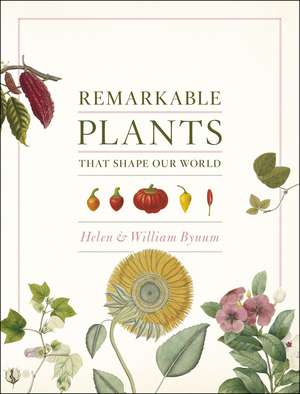
Remarkable Plants That Shape Our World
Autor Helen Bynum, William Bynumen Limba Engleză Hardback – 5 oct 2014
Considerăm că Remarkable Plants That Shape Our World vine să completeze o lacună importantă în literatura academică și de popularizare a științei, oferind o sinteză rară între rigoarea botanică și istoria culturală. Deși există numeroase enciclopedii tehnice, volumul de față reușește să ancoreze biologia plantelor în experiența cotidiană, de la cerealele de la micul dejun până la fibrele textile. Structura cărții este organizată riguros în opt secțiuni tematice, începând cu „Transformers”, unde sunt analizate plantele fundamentale pentru sedentarizarea umană (grâul, orezul, porumbul), și continuând cu secțiuni precum „Heal and Harm” sau „Revered and Adored”. Această progresie permite cititorului să înțeleagă nu doar utilitatea speciilor, ci și încărcătura lor simbolică.
Textul completează perspectiva oferită de 50 Plants that Changed the World de Stephen A. Harris, adăugând o dimensiune vizuală superioară prin utilizarea celor 160 de planșe color din colecțiile Kew Gardens și o analiză mai detaliată a 80 de specii, față de cele 50 ale lucrării menționate. În contextul operei autorului, observăm o continuitate a interesului pentru intersecția dintre știință și societate; dacă în Great Discoveries in Medicine, Helen Bynum explora evoluția cunoașterii medicale, aici extinde cadrul către resursele naturale care au făcut posibile aceste descoperiri. Stilul este precis, academic dar accesibil, evitând jargonul excesiv în favoarea unei narațiuni istorice documentate, susținută de ilustrații botanice de o acuratețe remarcabilă.
Preț: 281.83 lei
Carte disponibilă
Livrare economică 16-30 noiembrie
Specificații
ISBN-10: 022620474X
Pagini: 240
Ilustrații: 160 color plates, 15 halftones
Dimensiuni: 197 x 248 x 28 mm
Greutate: 0.97 kg
Editura: University of Chicago Press
Colecția University of Chicago Press
V-ar putea interesa
-
 Spitting Blood: The history of tuberculosisHelen Bynum-23%Preț: 80.69 lei105.45 lei
 -
 How the Earth Turned Green: A Brief 3.8-Billion-Year History of PlantsJoseph E. ArmstrongPreț: 391.47 lei
 -
 Preț: 483.98 lei
 -
 The Profit of the Earth: The Global Seeds of American AgricultureCourtney FullilovePreț: 325.50 lei
 -
 Constructed Climates: A Primer on Urban EnvironmentsWilliam G. Wilson-23%Preț: 569.84 lei740.06 lei
 -
 -16%Preț: 220.86 lei261.64 lei
 -
 Encyclopedia of BotanyAustin Balfour-18%Preț: 736.14 lei897.73 lei
 -
 A vegetação herbáceo-arbustiva das VeredasFrancisco Ferreira de Miranda SantosPreț: 234.30 lei
 -
 Ensino de Fisiologia VegetalNicia Eloisa da Gama JunqueiraPreț: 267.21 lei
 -
 A vegetação da Mata da Pavuna, Botucatu, SP, BrasilLeonardo BiralPreț: 190.83 lei
 -
 Moraceae Gaudich. (excl. Dorstenia e Ficus) da Serra da MantiqueiraAlessandra dos Santos-8%Preț: 417.24 lei453.52 lei
 -
 Germinação de sementes da região AmazônicaAdy Correa da Costa OliveiraPreț: 267.47 lei
 -
 Aus der Bai von ParanaguáJulius PlatzmannPreț: 308.70 lei
 -
 Geschichte der BotanikErnst Heinrich MeyerPreț: 309.10 lei
 -
 The farm woodlotEdward CheyneyPreț: 286.69 lei
 -
 Developments in Medicinal Mushroom Biology and Theraeutic PropertiesK. K. & Ajith T. A. Janardhanan-19%Preț: 468.44 lei578.32 lei
De ce să citești această carte
Recomandăm această carte oricărui pasionat de botanică sau istorie care dorește să înțeleagă dependența profundă a civilizației umane de regnul vegetal. Cititorul câștigă o perspectivă interdisciplinară asupra a 80 de plante esențiale, beneficiind de o arhivă vizuală de excepție de la Royal Botanic Gardens, Kew. Este un instrument util pentru a înțelege cum resurse aparent banale, precum bumbacul sau cafeaua, au dictat rute comerciale și schimbări sociale majore.
Despre autor
Helen Bynum este un istoric recunoscut al științei și medicinei, specializată în impactul social al descoperirilor biologice. A editat lucrări de referință precum Great Discoveries in Medicine și Dictionary of Medical Biography, și este autoarea volumului Spitting Blood, o istorie culturală a tuberculozei. Experiența sa în cercetarea arhivelor medicale și științifice se reflectă în Remarkable Plants That Shape Our World prin acuratețea datelor istorice și capacitatea de a sintetiza informații complexe într-o formă narativă coerentă. Alături de William Bynum, ea transformă botanica într-o fereastră către înțelegerea evoluției umane.
Descriere scurtă
Remarkable Plants celebrates the wonder and utility of the green kingdom, taking a detailed look at how plants have shaped our world. It focuses on eighty key species and richly explores their history, highlighting their importance and bringing to light surprising stories. Organized thematically into eight sections, the book starts with “Transformers” (including rice, beans, olives) and moves through sections such as “Heal and Harm” (poppy, aloe, strychnos) and “Revered and Adored” (lotus, frankincense, rose). Each species is introduced with its common and scientific names and followed by an exploration of its cultural, historical, botanical, and symbolic associations. Hundreds of botanical illustrations show full plants as well as highlight distinctive leaves, blooms, and fruits.
Rooted in one of the world’s most important and renowned temples of greenery, the Royal Botanic Gardens, Kew, Remarkable Plants is a symbiotic balance of science and art that will open readers’ eyes to the deep influence of the natural world on our modern one.
Notă biografică
Cuprins
Transformers: Settling Down, Tending the Fields
Wheat, Barley, Lentil, Pea: Founder Foods of the Fertile Crescent
Rice, Millets, Soybean, Grams: Asian Assets
Maize, Beans, Squash: The "Three Sisters" of the Americas
Potato, Sweet Potato, Groundnut, Quinoa: South American Heirlooms
Sorghum, Yams, Cowpea: Staples South of the Sahara
Taro, Breadfruit: Fuelling Oceania
Alfalfa, Oat: Speed the Chariot and the Plough
Olive: The Quintessential Oil
Grape: In Vino Veritas
Taste: Beyond the Bare Necessities
Saffron: The Spice of Conspicuous Consumption
Nutmeg, Cloves, Pepper: Riches of the Indies
Chilli Peppers: Some Like It Hot
Garlic, Onion, Shallots, Leek: Hellfire and Brimstone?
Brassicas: Eat Your Greens
Asparagus: A Delicacy Ancient and Modern
Hop: The Bitter in Beer
Tomato: The Love Apple
Heal and Harm: Getting the Balance Right
Poppy: Pleasure, Pain, and Addiction
Cinchona, Artemisia: Fighting Malaria
Rauvolfia: Ancient Ayurvedic Drug
Coca: Stimulant and Nerve Blocker
Strychnos: Medicine as Poison
Rhubarb: Potent Purge to "Superfood"
Willow: Tree of Sorrow and Pain Reliever
Citrus: Vitamins and Zest
Aloe: The Succulent and Its Healing Gel
Mexican Yam: Making “the Pill”
Madagascar Periwinkle: Delicate Flower, Powerful Treatment
Technology and Power: The Material World
Cedar of Lebanon: Foundation of the Phoenician Empire
Oak: Might and Majesty
Yew: Medieval Longbows, Modern Medicine
Flax: Linen and Lino
Hemp: Textiles and Old Rope
Cotton: Clothing the World
Bamboo: Versatility and Strength in a Stem
Mahogany: Furniture Timber of Choice
Cash Crops: Making It Pay
Tea: Tips of a Global Trade
Coffee: Waking Up the World
Sugar Cane: The Slave Trade’s Sweetener
Chocolate: Food of the Gods
Tobacco: The Sot Weed Factor
Indigo, Woad: Searching for True Blue
Rubber: Amazonia’s Precious Latex
Banana: The World’s Favorite Fruit
Oil Palm: Economics Versus the Environment
Landscape: Plant Aesthetics on the Grand Scale
Larch: Stately Conifers of the Northern Forests
Redwoods: Titans of the Tree World
Saguaro Cactus: Icon of the Wild West
Silver Tree Fern: Shining Māori Symbol
Eucalyptus: Australia’s Signature Tree
Rhododendron: Flowering Mountains
Mangroves: Between Land and Sea
Revered and Adored: From the Sacred to the Exquisite
Lotus: Sacred Flower of Purity and Rebirth
Date Palm: Bread of the Desert
Frankincense: The Odor of Sanctity
Pomegranate: Fertility, Abundance, Renewal
Apple: Fruit of Temptation and Eternal Life
Chinese Plum or Japanese Apricot: Herald of Spring
Rose: Flower of Love
Tulip: A Mania for a Bulb
Orchids: Strange and Beautiful Blooms
Peony: Flower of Riches and Honor
Wonders of Nature: The Extraordinary Plant World
Baobab: The Upside-Down Tree
Welwitschia: Strange Desert Phenomenon
Giant Waterlily: ‘A Vegetable Wonder’
Pitcher Plant: Caught in a Trap
Rafflesia: The Biggest Bloom
Sunflower: Nature’s Inspiration
Gingko: The Great Survivor
Further Reading
Sources of Quotations
Sources of Illustrations
Index