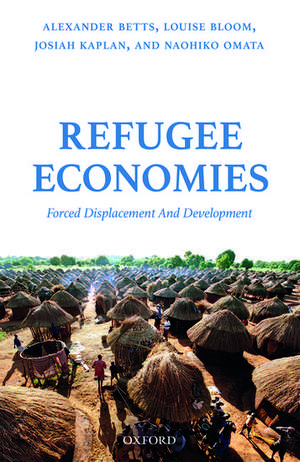
Refugee Economies: Forced Displacement and Development
Autor Alexander Betts, Louise Bloom, Josiah Kaplan, Naohiko Omataen Limba Engleză Hardback – 17 noi 2016
Găsim în Refugee Economies o lucrare fundamentală care reușește să umple un gol semnificativ în literatura academică: lipsa datelor empirice despre viața economică a refugiaților. Această ediție publicată de OUP Oxford nu se limitează la o analiză teoretică, ci aduce în prim-plan mecanismele de piață prin care persoanele strămutate își gestionează resursele. Abordarea este una interdisciplinară, oferind o perspectivă rară asupra refugiaților nu ca beneficiari pasivi de asistență, ci ca actori economici activi, antreprenoriali și conectați la fluxurile globale.
Ne-a atras atenția alegerea Ugandei ca studiu de caz central. Spre deosebire de alte regiuni, Uganda permite refugiaților dreptul la muncă și libertatea de mișcare prin „Strategia de Auto-Suficiență”, oferind autorilor un laborator unic pentru a observa ce se întâmplă atunci când libertățile economice de bază sunt respectate. Analiza este susținută de un aparat grafic riguros, incluzând 12 tabele și 14 figuri care ilustrează sistemele de alocare a resurselor.
Putem afirma că lucrarea reprezintă o evoluție naturală în opera lui Alexander Betts. Dacă în Survival Migration – Failed Governance and the Crisis of Displacement autorul se concentra pe eșecurile guvernanței internaționale, în volumul de față mută reflectorul pe capacitatea de reziliență economică. Ca alternativă la Refugee Entrepreneurship pentru cursurile de economie politică sau studii de dezvoltare, Refugee Economies are avantajul de a oferi un cadru teoretic integrat, bazat pe date primare masive, depășind simpla descriere a fenomenului antreprenorial.
Preț: 324.30 lei
Carte tipărită la comandă
Livrare economică 23-28 iulie
Specificații
ISBN-10: 0198795688
Pagini: 272
Ilustrații: 5 Maps, 14 Figures, 12 Tables
Dimensiuni: 162 x 241 x 20 mm
Greutate: 0.53 kg
Editura: OUP OXFORD
Colecția OUP Oxford
Locul publicării:Oxford, United Kingdom
V-ar putea interesa
-
 -23%Preț: 448.41 lei583.40 lei
 -
 -34%Preț: 750.10 lei1128.32 lei
 -
 -30%Preț: 358.99 lei516.43 lei
 -
 Outsiders No More?: Models of Immigrant Political IncorporationJennifer Hochschild-11%Preț: 355.74 lei399.71 lei
 -
 Refugees in International RelationsAlexander Betts-12%Preț: 377.39 lei429.57 lei
 -
 Cultural Integration of Immigrants in EuropeYann Algan-14%Preț: 751.37 lei873.69 lei
 -
 Circular Migration between Europe and its Neighbourhood: Choice or Necessity?Anna Triandafyllidou-34%Preț: 809.83 lei1221.57 lei
 -
 Preț: 382.18 lei
 -
 Preț: 423.74 lei
 -
 Preț: 265.35 lei
 -
 Migration and Climate ChangeEtienne PiguetPreț: 310.58 lei
 -
 Seeking Authenticity in Place, Culture, and the SelfN. OsbaldistonPreț: 378.97 lei
 -
 Preț: 325.37 lei
 -
 -14%Preț: 259.03 lei301.11 lei
 -
 -19%Preț: 48.83 lei60.41 lei
De ce să citești această carte
Este o recomandare esențială pentru cercetătorii în științe sociale și decidenții politici care doresc să înțeleagă cum asistența umanitară poate fi transformată în oportunitate sustenabilă. Cititorul câștigă o perspectivă bazată pe date concrete din Uganda, care demonstrează că, în condiții de libertate economică, refugiații pot contribui activ la societățile gazdă, demontând mitul „povarei” economice inevitabile.
Despre autor
Alexander Betts este profesor la Universitatea din Oxford și un expert recunoscut la nivel mondial în domeniul migrației forțate. Autor prolific, printre lucrările sale de referință se numără Survival Migration – Failed Governance and the Crisis of Displacement și Protection by Persuasion. Expertiza sa acoperă relațiile internaționale, guvernanța globală a migrației și politicile de protecție ale UNHCR. Prin cercetările sale, Betts a influențat dezbaterile contemporane despre modul în care instituțiile internaționale, create post-Al Doilea Război Mondial, trebuie să se adapteze la crizele de deplasare din secolul XXI.