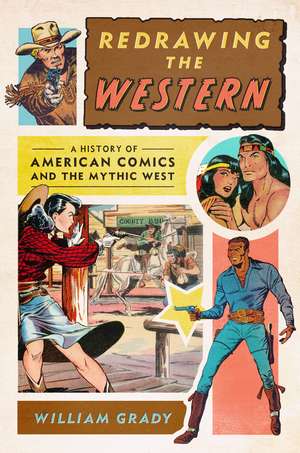
Redrawing the Western: A History of American Comics and the Mythic West: World Comics and Graphic Nonfiction Series
Autor William Gradyen Limba Engleză Hardback – 12 noi 2024
Această monografie, semnată de William Grady și publicată de University of Texas Press, propune o reevaluare istorică a unui gen adesea subestimat în studiile de critică literară: Western-ul în benzile desenate americane. Recomandăm acest volum ca pe o resursă academică esențială pentru înțelegerea modului în care „mitul Vestului” a fost construit, deconstruit și adaptat în cultura populară. Redrawing the Western nu se limitează la o simplă cronologie, ci explorează modul în care poveștile despre justiție și cucerire de la frontieră au servit drept vehicule pentru mesaje politice complexe, adresate tinerilor cititori din diverse epoci.
Structura cărții este organizată în două părți principale, urmărind o progresie logică de la originile genului în presa ilustrată a secolului al XIX-lea până la „epoca de aur” a benzilor desenate din perioada 1940-1970. Primele capitole analizează anxietățile legate de închiderea frontierei și adaptările din perioada Marii Depresiuni, în timp ce a doua parte se concentrează pe subversiunea mitului în contextul Războiului Rece și al tulburărilor sociale din anii '60. Cititorii familiarizați cu The Comic Book Western de Christopher Conway vor aprecia modul în care volumul de față completează perspectiva globală cu o analiză profundă a contextului socio-politic intern american, oferind un aparat critic riguros susținut de cele 75 de ilustrații incluse.
Ne-a atras atenția în mod deosebit capitolul dedicat modului în care Războiul din Vietnam a forțat o revizuire a violenței și a eroismului în benzile desenate Western. Autorul reușește să demonstreze că, departe de a fi simple lecturi de divertisment, aceste publicații au reflectat tensiunile unei națiuni în schimbare, poziționând benzile desenate alături de film și literatură în procesul de formare a identității americane.








Preț: 400.23 lei
Carte disponibilă
Livrare economică 09-23 decembrie
Specificații
ISBN-10: 1477329986
Pagini: 304
Ilustrații: 75 b&w illustrations
Dimensiuni: 152 x 229 x 33 mm
Greutate: 0.71 kg
Editura: University of Texas Press
Colecția University of Texas Press
Seria World Comics and Graphic Nonfiction Series
De ce să citești această carte
Recomandăm această lucrare cercetătorilor și studenților interesați de istoria culturii americane și de studiile media. Redrawing the Western oferă o perspectivă inedită asupra modului în care benzile desenate au modelat percepția publică asupra istoriei și justiției. Este o lectură fundamentală pentru a înțelege cum un gen aparent simplist ascunde substraturi politice profunde, totul într-un format grafic bogat ilustrat și riguros documentat.
Despre autor
William Grady este un cercetător specializat în istoria benzilor desenate și a culturii populare americane. Expertiza sa în analiza genului Western i-a adus recunoașterea comunității academice, volumul său fiind desemnat „Cea mai bună carte a unui singur autor” în 2025 de către Midwest Popular Culture Association. Prin contribuțiile sale în cadrul seriei World Comics and Graphic Nonfiction Series, Grady s-a impus ca o voce autoritară în reevaluarea importanței culturale a mediului grafic în contextul istoriei Statelor Unite.
Descriere scurtă
2025 Longlist, Reading the West Book Award in Nonfiction, Mountains & Plains Independent Booksellers Association
A history of American Western genre comics and how they interacted with contemporaneous political and popular culture.
Redrawing the Western charts a history of the Western genre in American comics from the late 1800s through the 1970s and beyond. Encompassing the core years in which the genre was forged and prospered in a range of popular media, Grady engages with several key historical timeframes, from the origins of the Western in the nineteenth-century illustrated press; through fin de siècle anxieties with the closing of the frontier, and the centrality of cowboy adventure across the interwar, postwar, and high Cold War years; to the revisions of the genre in the wake of the Vietnam War and the Western’s continued vitality in contemporary comics storytelling.
In its study of stories about vengeance, conquest, and justice on the contested frontier, Redrawing the Western highlights how the “simplistic” conflicts common in Western adventure comics could disguise highly political undercurrents, providing young readers with new ways to think about the contemporaneous social and political milieu. Besides tracing the history, forms, and politics of American Western comics in and around the twentieth century, William Grady offers an original reassessment of the important role of comics in the development of the Western genre, ranking them alongside popular fiction and film in the process.
Notă biografică
Cuprins
- List of Illlustrations
- Introduction. Rethinking the Western Genre through Comics
- Part 1. The Origins of the Mythic West in Comics, 1800s–1930s
- Chapter 1. “Print the Legend”: Imagining the American West in the Nineteenth-Century Illustrated Press
- Chapter 2. The Spectacle of the Southwest: Postfrontier Imaginings of the Far West in Newspaper Comic Strips
- Chapter 3. Saddling Up in the Slump: Retooling the Western during the Depression
- Part 2. A Golden Age of Western Comics, 1940s–1970s
- Chapter 4. Cowboys, Crooks, and Comic Books: The Western Stands Tall
- Chapter 5. Nuclear Showdown: Western Comic Books Ride through the Cold War
- Chapter 6. “I Know It’s Not in the Romantic Western Spirit”: Subverting the Mythic West in Postwar Comics
- Chapter 7. Blood on the Borders: Mixing the Wild West with Political Unrest in Comics from the Troubled 1960s and 1970s
- Coda. Walking on the Bones of the Dead: Comics and the Western’s “Afterlife”
- Acknowledgments
- Notes
- Bibliography
- Index
Recenzii
A compact and highly readable introduction to the field of Western comics...I have a new appreciation for these previously undervalued cultural artifacts.