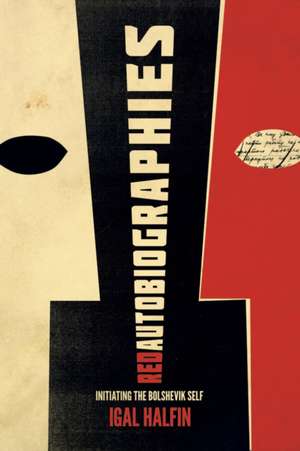
Red Autobiographies
Autor Igal Halfinen Limba Engleză Paperback – 4 feb 2011
Preț: 225.79 lei
Puncte Express: 339
Carte tipărită la comandă
Livrare economică 23 noiembrie-07 decembrie
Livrare prin curier în România Termenul estimat este afișat lângă disponibilitate.
Transport gratuit de la 400.00 lei Plată online sau ramburs, în funcție de opțiunile comenzii.
Retur gratuit în 14 zile Comandă securizată și suport în română.
Specificații
ISBN-13: 9780295991122
ISBN-10: 0295991127
Pagini: 224
Ilustrații: black & white illustrations
Dimensiuni: 151 x 228 x 15 mm
Greutate: 0.33 kg
Ediția:New.
Editura: University of Washington Press
ISBN-10: 0295991127
Pagini: 224
Ilustrații: black & white illustrations
Dimensiuni: 151 x 228 x 15 mm
Greutate: 0.33 kg
Ediția:New.
Editura: University of Washington Press
V-ar putea interesa
-
 -23%Preț: 488.62 lei634.58 lei
 -
 SexuationRenata SaleclPreț: 215.92 lei
 -
 Between Two FiresAlaina LemonPreț: 253.97 lei
 -
 Reimagining the American PacificRob WilsonPreț: 256.10 lei
 -
 Preț: 213.08 lei
 -
 The Absent CityRicardo PigliaPreț: 153.62 lei
 -
 The Color of SexMason StokesPreț: 248.18 lei
 -
 Preț: 277.80 lei
 -
 Preț: 469.84 lei
 -
 Preț: 463.67 lei
 -
 Preț: 500.47 lei
 -
 Studies in the Age of ChaucerSebastian SobeckiPreț: 450.84 lei
 -
 Journey to BeatriceCharles S. SingletonPreț: 346.79 lei
 -
 The Idea of the American South, 1920–1941Michael O`brienPreț: 346.79 lei
 -
 Two Studies of Friedrich HölderlinWerner HamacherPreț: 258.44 lei
 -
 Transnational Russian StudiesAndy ByfordPreț: 453.65 lei
 -
 Mad MaxMartyn ConterioPreț: 237.52 lei
 -
 Housing the Family – Locating the Single–Family Home in GermanyChristiane CantauwPreț: 226.97 lei
Recenzii
." . . Halfin's first-rate readings of this material makes for very compelling reading." -Auri C. Berg, "Canadian Slavonic Papers", March-June 2012
Cuprins
Introduction
1. Party Admissions in Paranoid Times
2. Workers Toward the Light
3. Peasant Enrollment
4. The Intelligentsia
Conclusion
Appendix: The Case of Fiodor Fiodorovich Raskol'nikov: Bolshevick Authobiographies Across the 1917 Divide
1. Party Admissions in Paranoid Times
2. Workers Toward the Light
3. Peasant Enrollment
4. The Intelligentsia
Conclusion
Appendix: The Case of Fiodor Fiodorovich Raskol'nikov: Bolshevick Authobiographies Across the 1917 Divide
Descriere
Studies admission records to Soviet Communist party cells in the 1920s for what they reveal about the politics of self-representation in Bolshevik political culture