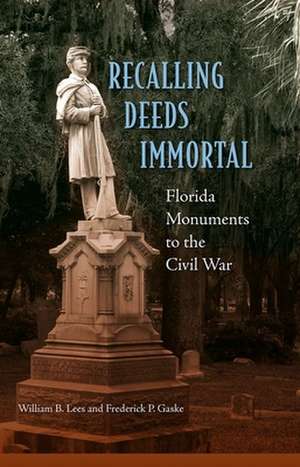
Recalling Deeds Immortal
Autor William B Lees, Frederick P Gaskeen Limba Engleză Hardback – 21 oct 2014
Notăm cu interes apariția volumului Recalling Deeds Immortal, o lucrare ce aduce o perspectivă sistematică asupra peisajului memorialistic al Floridei, de la perioada Reconstrucției până în contemporaneitate. Spre deosebire de studiile care se concentrează strict pe aspectele militare, autorii William B Lees și Frederick P Gaske cartografiază și decodează simbolismul fiecărui monument dedicat Războiului Civil din acest stat, transformând obiectele din piatră și bronz în documente istorice vii. Putem afirma că forța acestui studiu rezidă în analiza detaliată a modului în care memoria colectivă a fost modelată de grupuri de presiune socială. Lucrarea demonstrează cum construcția acestor monumente a devenit un „câmp de luptă” ideologic între asociații precum United Daughters of the Confederacy și Grand Army of the Republic. În timp ce majoritatea monumentelor din Florida celebrează valorile Confederate și conceptul de „Lost Cause”, autorii scot la lumină și o minoritate fascinantă de monumente ale Uniunii, ale căror mesaje sunt mult mai temperate. Această dualitate oferă o imagine nuanțată a tensiunilor politice și regionale care au persistat mult după încheierea conflictului armat. Ca alternativă la Monuments to the Lost Cause de Cynthia Mills pentru cursurile de istorie americană sau antropologie culturală, volumul de față vine cu avantajul unei focalizări geografice stricte și a unui inventar complet al siturilor din Florida. Dacă Americans Remember Their Civil War de Barbara A. Gannon oferă o privire de ansamblu la nivel național asupra comemorării, Recalling Deeds Immortal preferă o analiză de profunzime, explicând dimensiunile sociale și emblematice ale fiecărei inscripții și statui, oferind astfel un instrument de lucru indispensabil cercetătorilor memoriei istorice.
Preț: 219.87 lei
Carte disponibilă
Livrare economică 12-26 iunie
Specificații
ISBN-10: 0813049962
Pagini: 352
Dimensiuni: 163 x 243 x 29 mm
Greutate: 0.69 kg
Editura: University Press of Florida
V-ar putea interesa
-
 The Lost Diary of Annie Oakley's Wild West StagehandClive DickinsonPreț: 43.60 lei
 -
 The First Maya Civilization: Ritual and Power Before the Classic PeriodFrancisco Estrada-BelliPreț: 390.58 lei
 -
 The Great Hurricane: 1938Cherie BurnsPreț: 85.85 lei
 -
 Blood of the ProphetsWill BagleyPreț: 217.52 lei
 -
 Slavery in FloridaLarry Eugene RiversPreț: 150.99 lei
 -
 A Journey Into Florida Railroad HistoryGregg M TurnerPreț: 110.17 lei
 -
 Communists and Perverts Under the PalmsStacy BraukmanPreț: 158.51 lei
 -
 Preț: 325.52 lei
 -
 Jim Courtright of Fort WorthRobert K DearmentPreț: 140.26 lei
De ce să citești această carte
Această lucrare este esențială pentru cercetătorii istoriei americane și ai antropologiei culturale, oferind un ghid complet al monumentelor din Florida. Cititorul câștigă o înțelegere profundă a modului în care arta publică a fost utilizată pentru a rescrie narațiunea Războiului Civil. Este o recomandare certă pentru cei interesați de „Civil War Memory” și de modul în care simbolurile de piatră reflectă luptele politice pentru controlul istoriei.
Descriere scurtă
A complete guide. The authors locate every Civil War monument in Florida and explain their symbolism. Daniel L. Schafer, author of "Thunder on the River: The Civil War in Northeast Florida"
One hundred and fifty years ago, Florida was shaken by battle, blockade, economic deprivation, and the death of native sons both within and far outside its borders. Today, tributes to the valor and sacrifice of Florida s soldiers, sailors, and civilians can be found from the Panhandle to the Keys. Authors Lees and Gaske look at the diversity of Civil War monuments built in Florida between Reconstruction and the present day, elucidating their emblematic and social dimensions.
Most monuments built in Florida honor the Confederacy, praising the valor of Southern soldiers and often extolling the righteousness of their Lost Cause. At the same time, a fascinating minority of Union monuments also exists in the state and these bear notably muted messages. "Recalling Deeds Immortal "shows how the creation of these bronze and stone monuments created new social battlegrounds as, over the years, groups such as the Ladies Memorial Associations, United Daughters of the Confederacy, and the Grand Army of the Republic competed to control the messages behind the memorialization of fallen soldiers and veterans. Examining the evolution of Civil War monuments, the authors demonstrate that the construction of these memorials is itself an important part of Civil War and post Civil War history.
"