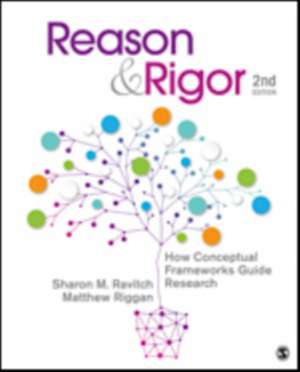
Reason & Rigor
Autor Sharon M. Ravitch, Matthew Rigganen Limba Engleză Paperback – 21 ian 2016
Chapter 8 is the second new chapter and provides a student's perspective on the role of conceptual frameworks in the research process from beginning to end. Many more visuals have been included which assist in illustrating key ideas and relationships providing a clear roadmap for the reader, combined with a thorough updating of the relevant research.
Preț: 638.95 lei
Preț vechi: 829.80 lei
-23%
Carte tipărită la comandă
Livrare economică 06-20 ianuarie 27
Specificații
ISBN-10: 1483340406
Pagini: 264
Dimensiuni: 191 x 235 x 14 mm
Greutate: 0.36 kg
Ediția:2. Auflage
Editura: Sage Publications, Inc
Locul publicării:Thousand Oaks, United States
V-ar putea interesa
-
 Research and Fieldwork in DevelopmentDaniel Hammett-8%Preț: 642.27 lei698.11 lei
-
 Matters of InterpretationMichael J NakkulaPreț: 382.69 lei
-
 Dynamic ModelingRobert HuckfeldtPreț: 318.88 lei
-
 Research DesignsPaul E SpectorPreț: 331.63 lei
-
 Confirmatory Factor AnalysisJ. Scott LongPreț: 318.46 lei
-
 Multiple Regression in PracticeWilliam Dale BerryPreț: 318.66 lei
-
 Linear Probability, Logit, and Probit ModelsJohn H. AldrichPreț: 333.98 lei
-
 Introduction to Applied DemographyNorfleet W. RivesPreț: 318.88 lei
-
 Cluster AnalysisMark S. AldenderferPreț: 318.37 lei
-
 Using Microcomputers in ResearchThomas William MadronPreț: 318.25 lei
-
 AnovaEllen R. GirdenPreț: 325.97 lei
-
 -27%Preț: 1168.15 lei1607.88 lei
-
 Participatory Research with Children and Young PeopleSusan Groundwater-SmithPreț: 404.23 lei
-
 Mixed Methods Applications in Action ResearchNataliya V. Ivankova-19%Preț: 722.89 lei892.45 lei
-
 The Nuts and Bolts of Grant WritingCynthia E. Carr-15%Preț: 460.48 lei541.75 lei
-
 Evaluability AssessmentMichael S. Trevisan-15%Preț: 464.00 lei545.89 lei
-
 Empowerment EvaluationDavid M. Fetterman-23%Preț: 907.49 lei1178.56 lei
-
 Visualization Analysis and DesignTamara Munzner-20%Preț: 631.97 lei789.96 lei
-
 Credible and Actionable EvidenceStewart I. Donaldson-15%Preț: 642.28 lei755.62 lei
-
 Thinking QualitativelyJohnny Saldaña-15%Preț: 644.78 lei758.56 lei
Recenzii
“[This book] is a very good examination of the ways conceptual frameworks play themselves out in different contexts examining the different aspects of the conceptual frameworks as they appear in literature that has been published (including the dissertation).”
“[This text] provides an excellent overview of the use of conceptual frameworks to guide research.”
Cuprins
Conceptual Frameworks Explored and Defined
Elements of a Conceptual Framework
Organization of this Book
Concluding Thoughts: Using Conceptual Frameworks
Chapter 2: Why Conceptual Frameworks?
What (and Where) is Theory?
Whose Theory is It, and Where Does It Come From?
What is a Literature Review, and What is It For?
The Case for Conceptual Frameworks: Concluding Thoughts
Chapter 3: Origins of a Conceptual Framework: The Birth of Grit
Background and context: An overview of the work in focus
The argument
Origins: Conversations with the dead and the living
Formulating the concept: From conversing to inquiring
Forming and advancing the argument
Chapter 4: Excavating Questions
“Excavating” Research Questions
About the Author
Background and Context: An Overview of the Work in Focus
The Argument
Conceptual Frameworks and Research Design
The Co-evolution of Conceptual Frameworks and Research Design
Conceptual Frameworks and Research Design: Concluding Thoughts
Reflection Questions
Chapter 5: The Role of the Conceptual Framework in Data Collection and Fieldwork
Who You Are, How You Think, and What You Study
About the Author
Background and Context: An Overview of the Work in Focus
The Argument
Hyphenated Selves as a Theoretical Framework
The Hyphen as Method: Positionality and Practice
Conceptual Frameworks and Fieldwork: Concluding Thoughts
Chapter 6: Conceptual Frameworks and the Analysis of Data
Examining the Influence of an Ever-Emerging Conceptual Framework
About the Author
Background and Context: An Overview of the Work in Focus
The Argument
From Argument to Analysis
Transcription as Data Analysis
Evolving and Shifting Frameworks of Analysis
Conceptual Frameworks and Data Analysis: Concluding Thoughts
Chapter 7: Expanding the Conversation, Extending the Argument: The Role of Conceptual Frameworks in Presenting, Explaining, and Contextualizing Findings
About the Author
Background and Context: AN OVERVIEW OF THE WORK IN FOCUS
Being in Conversation With Theory: Influences on Thought and Action
The Argument
Conclusion
Chapter 8: Reflections on the Making and Re-making of a Conceptual Framework - William K. Dunworth
Developing a Conceptual Framework
Challenges in the field
Revisiting Conceptual Frameworks: Turning Artifacts into Processes
“Everything is data”: Returning to the field
Revising the conceptual framework and integrating findings
Chapter 9: The Conceptual Framework as Guide and Ballast
Developing a Conceptual Framework
Starting Points: Self and Audience
Making—and Breaking—Your Plans
The Conversation: From Listening to Speaking
Strategies and Exercises for Developing Conceptual Frameworks
Identifying Your Interests, Beliefs, and Motivations for Doing Research
Examination of the “Conversations Already Happening”
Ongoing Questions and Concerns about the Research
Concept Maps
Research Memos
Research Journal
Reason and Rigor
Notă biografică
Sharon M. Ravitch is a professor of practice at the University of Pennsylvania's Graduate School of Education. She engages in numerous applied research projects in India, serving as a visiting scholar at the Tata Institute of Social Sciences (TISS) in Mumbai and working as a co-researcher and key resource expert in policy advocacy, professional development, and community-based participatory research related to corporate social responsibility through TISS's corporate social responsibility hub. She is involved in the design and implementation of assessment and evaluation of statewide performance through mixed-methods research in the Ministry of Human Resource Development's major policy initiative, Rashtriya Uchchatar Shiksha Abhiyan (RUSA), a countrywide reform initiative aimed to resurrect India's state public university system. Ravitch is also an expert adviser at the Center for Academic Leadership and Education Management at TISS. The center provides professional development and policy advocacy support to school education leaders across India. Ravitch works in the center's capacity-building program to collaboratively develop case studies and technology-innovation frameworks for the higher education and K-12 sectors using a participatory approach. She received the prestigious GIAN Scholar Award from the government of India for 2016-2017 and the RUSA Scholar Award for 2017-2018. Ravitch also received a Fulbright Fellowship to engage in research and applied development work in India from 2017 to 2019.
Ravitch has published five books: Applied Research for Sustainable Change: A Guide for Education Leaders (with Nicole Carl, 2019); Qualitative Research: Bridging the Conceptual, Theoretical, and Methodological (2nd ed., with Nicole Carl, 2020); Reason and Rigor: How Conceptual Frameworks Guide Research (2012; 2nd ed., with Matthew Riggan, 2016); School Counseling Principles: Diversity and Multiculturalism (2006); and Matters of Interpretation: Reciprocal Transformation in Therapeutic and Developmental Relationships With Youth (with Michael Nakkula, 1998).