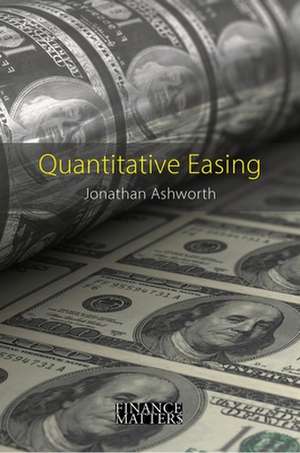
Quantitative Easing
Autor Jonathan Ashworthen Limba Engleză Paperback – 16 iul 2020
Preț: 235.06 lei
Puncte Express: 353
Carte disponibilă
Livrare economică 10-24 noiembrie
Livrare express 24-30 octombrie pentru 23.90 lei
Livrare prin curier în România Termenul estimat este afișat lângă disponibilitate.
Transport gratuit de la 400.00 lei Plată online sau ramburs, în funcție de opțiunile comenzii.
Retur gratuit în 14 zile Comandă securizată și suport în română.
Specificații
ISBN-13: 9781788212229
ISBN-10: 1788212223
Pagini: 192
Dimensiuni: 155 x 231 x 18 mm
Greutate: 0.32 kg
Editura: EDINBURGH UNIVERSITY PRESS
ISBN-10: 1788212223
Pagini: 192
Dimensiuni: 155 x 231 x 18 mm
Greutate: 0.32 kg
Editura: EDINBURGH UNIVERSITY PRESS
V-ar putea interesa
-
 Azerbaijan as a Regional Economic DriverSehlare MakgetlanengPreț: 322.52 lei
 -
 Adjusting the CourseRoberto Sansn MizrahiPreț: 103.21 lei
 -
 Newborn KosovaFaton BislimiPreț: 95.08 lei
 -
 Urban Land Acquisition and Involuntary ResettlementVincent RoquetPreț: 256.22 lei
 -
 Unleash Your BusinessDennis LivelyPreț: 62.84 lei
 -
 Tribal Development of Energy Resources and the Creation of Energy Jobs on Indian LandsU. Of the Committee on Natural ResourcesPreț: 93.28 lei
 -
 Preț: 120.05 lei
 -
 AfricaAbu G. MogesPreț: 168.84 lei
 -
 The Dialectic of Economic DevelopmentJohn Tataw MangaPreț: 131.18 lei
 -
 The Road for Egypt in the 21st CenturyDr Moustafa ElshafeiPreț: 223.02 lei
 -
 Preț: 98.04 lei
 -
 FDI Success StoriesPatrick Steven DinePreț: 118.41 lei
 -
 Are We Doomed to Secular Stagnation?Uwe PetersenPreț: 83.98 lei
 -
 Rectificando El CaminoMarco Antonio Eguino HumerezPreț: 126.21 lei
 -
 Converting Political Power to Economic PowerJames E. CovingtonPreț: 84.70 lei
 -
 The Free Market and Its EnemyLeonard E. ReadPreț: 41.90 lei
 -
 Global Perspectives on Development Administration and Cultural ChangeGbenga Emmanuel Afolayan-18%Preț: 958.62 lei1169.05 lei
 -
 Murdering PovertyArrey Elvis NtuiPreț: 100.03 lei
 -
 Pathways to Shared Prosperity in NigeriaDr Temitope W. OshikoyaPreț: 155.59 lei
 -
 Innovating for Rural Markets in IndiaDr Subho ChattopadhyayPreț: 41.53 lei
 -
 ProductivityMichael HaynesPreț: 200.24 lei
 -
 Technology and Innovation Report 2015United Nations PublicationsPreț: 301.79 lei
Notă biografică
Jonathan Ashworth is an independent economist. He has worked as an economist at Morgan Stanley and Barclays Wealth and his work has been widely cited in the media including The Economist, The Financial Times and The Wall Street Journal. He has also worked as an economist in the productivity and structural reform team at HM Treasury, where he did work on the famous "Five Tests" for whether Britain should join the euro.
Descriere
A thorough and perspicacious analysis of auantitative easing (QE), what has become a recovery method of last resort, that will be essential reading for anyone wanting to understand central banking's role in the national economy.