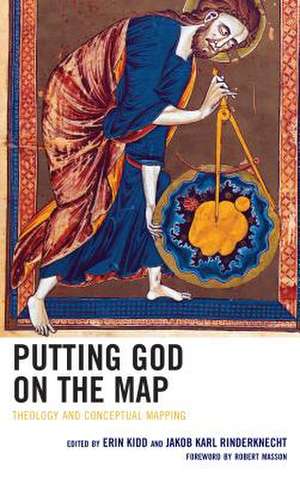
Putting God on the Map: Theology and Conceptual Mapping
Editat de Erin Kidd, Jakob Karl Rinderknecht Cuvânt înainte de Robert Masson Contribuţii de Kathryn Lilla Cox, Julia Feder, Christopher M. Hadley, Jason P. Roberts, Stephen R. Shaver, Adam Willowsen Limba Engleză Hardback – 15 sep 2018
This edited volume offers an introduction to conceptual mapping that is accessible to those with no previous knowledge of the field, and demonstrates the substantial resources this interdisciplinary research has for thinking about a variety of theological questions. The book begins with a chapter introducing the reader to the basics of conceptual mapping. The remaining chapters apply these insights to a variety of theological topics including anthropology, sacramental theology, biblical studies, ecumenical theology, and ethics.
Preț: 645.88 lei
Preț vechi: 965.80 lei
-33%
Puncte Express: 969
Carte tipărită la comandă
Livrare economică 01-15 decembrie
Livrare prin curier în România Termenul estimat este afișat lângă disponibilitate.
Transport gratuit pentru acest produs Plată online sau ramburs, în funcție de opțiunile comenzii.
Retur gratuit în 14 zile Comandă securizată și suport în română.
Specificații
ISBN-13: 9781978703964
ISBN-10: 1978703961
Pagini: 282
Ilustrații: 23 b/w illustrations;
Dimensiuni: 154 x 232 x 22 mm
Greutate: 0.82 kg
Editura: Bloomsbury Publishing
Colecția Fortress Academic
Locul publicării:New York, United States
ISBN-10: 1978703961
Pagini: 282
Ilustrații: 23 b/w illustrations;
Dimensiuni: 154 x 232 x 22 mm
Greutate: 0.82 kg
Editura: Bloomsbury Publishing
Colecția Fortress Academic
Locul publicării:New York, United States
Cuprins
Foreword
Robert Masson
Chapter One: An Introduction to Conceptual Mapping
Erin Kidd & Jakob Karl Rinderknecht
Chapter Two: The Embodied Mind and How to Pray With One
Erin Kidd
Chapter Three: Homo Symbolicus: Cognition and Communion
Julia Feder
Chapter Four: Conceptual Blending, Human Distinctiveness, and the Image of God
Jason P. Roberts
Chapter Five: Kenosis as a Pauline Metaphor within a Double-scope Blend
Christopher M. Hadley
Chapter Six: Eucharistic Spirituality and Metaphoric Asymmetry
Stephen R. Shaver
Chapter Seven: Conceptual Mapping and Reception in Ecumenical Theology
Jakob Karl Rinderknecht
Chapter Eight: My Good, Your Good, and the Good: Conceptual Mapping and Altruism
Adam Willows
Chapter Nine: Beyond 'Cannot Be Resolved': Considering Ways Forward for Frozen Embryos
Kathryn Lilla Cox
Robert Masson
Chapter One: An Introduction to Conceptual Mapping
Erin Kidd & Jakob Karl Rinderknecht
Chapter Two: The Embodied Mind and How to Pray With One
Erin Kidd
Chapter Three: Homo Symbolicus: Cognition and Communion
Julia Feder
Chapter Four: Conceptual Blending, Human Distinctiveness, and the Image of God
Jason P. Roberts
Chapter Five: Kenosis as a Pauline Metaphor within a Double-scope Blend
Christopher M. Hadley
Chapter Six: Eucharistic Spirituality and Metaphoric Asymmetry
Stephen R. Shaver
Chapter Seven: Conceptual Mapping and Reception in Ecumenical Theology
Jakob Karl Rinderknecht
Chapter Eight: My Good, Your Good, and the Good: Conceptual Mapping and Altruism
Adam Willows
Chapter Nine: Beyond 'Cannot Be Resolved': Considering Ways Forward for Frozen Embryos
Kathryn Lilla Cox
Recenzii
I enjoyed reading Putting God on the Map and consider it essential for getting a handle on some "first principles" of theology . . . Putting God on the Map is exemplary theological prolegomena and a genuine example of how interdisciplinary studies can be beneficial.
Kidd and Rinderknecht have assembled an excellent collection of essays that brings insights from the cognitive sciences to bear on key loci in Christian theology and theological anthropology. Together, these essays shed important new light on how distinctive aspects of human embodiment and our capacities for symbolic thinking can shape our ideas about God, our engagement with God, and our understanding of humanity's relationship to God. The book is engaging and accessible; and, focusing as it does on issues at the intersection of philosophy, theology, and the cognitive sciences, it is also richly interdisciplinary.
Cognitive linguistics offers incredibly helpful tools to understand what is going on in theological debates. This book nicely adds to the growing list of people using conceptual blending to help Christians better understand, and perhaps even resolve, debates ranging from the Eucharist to frozen embryos.
Kidd and Rinderknecht have assembled an excellent collection of essays that brings insights from the cognitive sciences to bear on key loci in Christian theology and theological anthropology. Together, these essays shed important new light on how distinctive aspects of human embodiment and our capacities for symbolic thinking can shape our ideas about God, our engagement with God, and our understanding of humanity's relationship to God. The book is engaging and accessible; and, focusing as it does on issues at the intersection of philosophy, theology, and the cognitive sciences, it is also richly interdisciplinary.
Cognitive linguistics offers incredibly helpful tools to understand what is going on in theological debates. This book nicely adds to the growing list of people using conceptual blending to help Christians better understand, and perhaps even resolve, debates ranging from the Eucharist to frozen embryos.