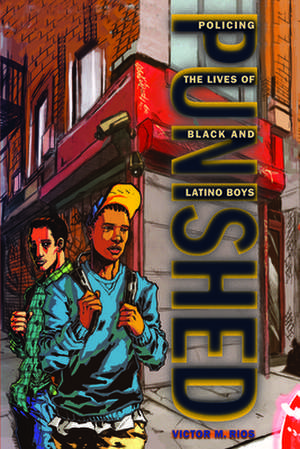
Punished
Autor Victor M Riosen Limba Engleză Paperback – 27 iun 2011
Bazându-ne pe datele sociologice și etnografice riguroase colectate de Victor M Rios, apreciem că Punished reprezintă o resursă fundamentală pentru înțelegerea mecanismelor de control social în mediile urbane defavorizate. Autorul, el însuși un fost delincvent juvenil care a reușit să obțină un doctorat la Berkeley, revine în Oakland pentru a documenta viața a 40 de tineri prinși într-un cerc vicios al supravegherii și pedepsei. Credem că valoarea acestui studiu rezidă în capacitatea de a demonstra cum instituțiile care ar trebui să protejeze tinerii — școala și poliția — contribuie activ la stigmatizarea și incriminarea lor timpurie. Textul este structurat pentru a echilibra rigoarea academică cu narațiunile vii, oferind o perspectivă intimă asupra modului în care identitatea se formează sub presiunea politicilor punitive. Spre deosebire de abordările pur teoretice, Punished oferă o analiză a rezistenței și a transformării personale, refuzând o concluzie fatalistă. Această lucrare completează perspectiva oferită de Homeboys Forever, adăugând o dimensiune critică asupra rolului specific al sistemului de justiție penală în modelarea traiectoriilor de viață, dincolo de dinamica internă a bandelor descrisă de Valdez. De asemenea, dacă Young Men’s Experiences of Long-Term Imprisonment se concentrează pe perioada detenției, volumul de față investighează „conducta” (pipeline) care duce spre închisoare, oferind contextul sociopolitic al supravegherii cotidiene. Analiza lui Rios este esențială pentru curriculumul de sociologie și studii etnice, fiind premiată de American Sociological Association pentru profunzimea sa.
Preț: 269.22 lei
Carte tipărită la comandă
Livrare economică 19 noiembrie-03 decembrie
Specificații
ISBN-10: 0814776388
Pagini: 240
Ilustrații: black & white illustrations
Dimensiuni: 154 x 228 x 19 mm
Greutate: 0.3 kg
Editura: NEW YORK UNIVERSITY PRESS
V-ar putea interesa
-
 Eyes on the PrizeJuan WilliamsPreț: 148.96 lei
 -
 Preț: 204.94 lei
 -
 Preț: 116.68 lei
 -
 Whose Black Politics?: Cases in Post-Racial Black LeadershipAndra GillespiePreț: 489.67 lei
 -
 The Imperative of IntegrationElizabeth AndersonPreț: 206.26 lei
 -
 The Protest Psychosis: How Schizophrenia Became a Black DiseaseJonathan M. MetzlPreț: 180.35 lei
 -
 Terms of Inclusion: Black Intellectuals in Twentieth-Century BrazilPaulina L. AlbertoPreț: 316.86 lei
 -
 Preț: 277.07 lei
 -
 Mary Turner and the Memory of LynchingJulie Buckner ArmstrongPreț: 237.60 lei
 -
 Child of the FireKirsten BuickPreț: 165.20 lei
 -
 San Francisco ChinatownPhilip P ChoyPreț: 93.08 lei
 -
 Our Southern Home-Scottsboro to Montgomery to BirminghamWaights Taylor JrPreț: 197.34 lei
 -
 Preț: 288.24 lei
 -
 Benjamin Elijah Mays, Schoolmaster of the MovementRandal Maurice JelksPreț: 291.14 lei
 -
 Carry Me HomeDiane McwhorterPreț: 163.30 lei
 -
 An American Diplomat in Franco SpainMichael Aaron RocklandPreț: 82.08 lei
 -
 -8%Preț: 629.76 lei684.51 lei
 -
 Preț: 177.32 lei
 -
 Floating, Brilliant, GoneFranny ChoiPreț: 86.37 lei
 -
 This Way to the SugarHieu Minh NyugenPreț: 131.95 lei
De ce să citești această carte
Recomandăm această carte cititorilor interesați de sociologie urbană și dreptate socială. Veți câștiga o înțelegere profundă a modului în care mediul social și politicile publice pot predetermina succesul sau eșecul tinerilor marginalizați. Este o lectură esențială pentru a înțelege rădăcinile inegalității sistemice, oferind soluții empatice pentru eliminarea culturii pedepsei în favoarea dezvoltării umane.
Descriere scurtă
2012 Best Book Award, Latino/a Sociology Section, presented by the American Sociological Association
2012 Finalist, C. Wright Mills Book Award presented by the Study of Social Problems
A classic ethnography that reveals how urban police criminalize black and Latino boys
Victor Rios grew up in the ghetto of Oakland, California in the 1980s and 90s. A former gang member and juvenile delinquent, Rios managed to escape the bleak outcome of many of his friends and earned a PhD at Berkeley and returned to his hometown to study how inner city young Latino and African American boys develop their sense of self in the midst of crime and intense policing. Punished examines the difficult lives of these young men, who now face punitive policies in their schools, communities, and a world where they are constantly policed and stigmatized.
Rios followed a group of forty delinquent Black and Latino boys for three years. These boys found themselves in a vicious cycle, caught in a spiral of punishment and incarceration as they were harassed, profiled, watched, and disciplined at young ages, even before they had committed any crimes, eventually leading many of them to fulfill the destiny expected of them. But beyond a fatalistic account of these marginalized young men, Rios finds that the very system that criminalizes them and limits their opportunities, sparks resistance and a raised consciousness that motivates some to transform their lives and become productive citizens. Ultimately, he argues that by understanding the lives of the young men who are criminalized and pipelined through the criminal justice system, we can begin to develop empathic solutions which support these young men in their development and to eliminate the culture of punishment that has become an overbearing part of their everyday lives.