Cantitate/Preț
Produs

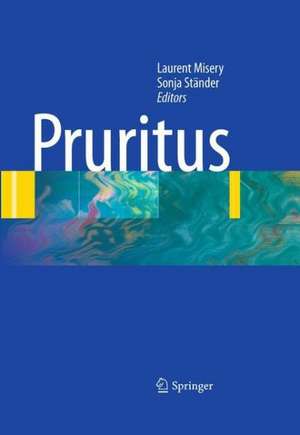
Pruritus

Editat de Laurent Misery, Sonja Ständer
en Limba Engleză Paperback – 19 oct 2014
Numerous treatments have been proposed. But the treatment of itch remains difficult and it depends on its etiology. The understanding of the pathophysiogeny of itch is necessary. Fortunately, many very interesting results of research have been reported in the recent years. 'Pruritis' will explain the pathophysiogeny of itch, describe all causes, and give guidelines for management and treatment.
Citește tot Restrânge

Carte tipărită la comandă

Livrare economică 20-26 mai


Specificații

ISBN-13: 9781447157243
ISBN-10: 1447157249
Pagini: 372
Ilustrații: XXII, 348 p.
Dimensiuni: 193 x 260 x 21 mm
Greutate: 0.78 kg
Ediția:2010
Editura: Springer
Locul publicării:London, United Kingdom

Public țintă

Professional/practitioner

Cuprins

Neurophysiology.- Neuroanatomy of Itch.- Neuroreceptors and Neuromediators.- The Brain in the Skin: Neuro-Epidermal Synapses.- Central Transmission: From Skin to Brain.- Modulation of Pruritus: Peripheral and Central Sensitisation.- Interaction of Pruritus and Pain.- Neuroimaging.- Measurement of Itch.- Experimental Models of Itch.- Clinics.- Pruritus, Pain and Other Abnormal Skin Sensations.- The Epidemiology of Pruritus.- Classification.- Examination of Patients.- Inflammatory Diseases.- Pruritus in Autoimmune Diseases.- Urticaria.- Pruritic Skin Diseases in Travellers.- Pruritus in Cutaneous T-cell Lymphoma.- Anal Pruritus.- Secondary Reactive Conditions in Pruritic Skin.- Aquadynia and Aquagenic Pruritus.- Sensitive Skin.- Neurogenic Pruritus with Cerebral and/or Medullary Abnormalities.- Localized Neuropathic Pruritus.- Brachioradial Pruritus.- Other Neurological Causes of Itch.- Chronic Kidney Disease-Associated Pruritus.- Pruritus in Patients with Hepatobiliary Diseases.- Endocrine Diseases.- Pruritus in the Course of Malignancy.- Drugs.- Interaction Between Pruritus and Stress or Other Psychosomatic Factors.- Psychosomatic Aspects and Psychiatric Conditions.- Psychosomatics and Psychiatry.- Psychogenic Pruritus.- Pruritus in Children.- Pruritus Vulvae.- Treatment.- General Principles and Guidelines.- Menthol.- Capsaicin.- Topical Immunomodulators.- Cannabinoid-Receptor Agonists.- Other Topical Treatments.- Antihistamines.- Anticonvulsants for the Treatment of Pruritus.- Opioid Receptor Antagonists or Agonists.- Serotonin Reuptake Inhibitors and Other Antidepressants in the Treatment of Chronic Pruritus.- Systemic Immunosuppressants in the Treatment of Pruritus.- Other Systemic Treatments.- Psychological Intervention.- Ultraviolet Phototherapy of Pruritus.- Itchand Acupuncture.- Future Perspectives: Outlook.

Caracteristici

Comprehensive reference on pruritis Contains up-to-date information on management

Recenzii

“The purpose is to provide a comprehensive resource on all aspects of pruritus (etiology, pathophysiology, neural pathways, and medications). The audience is dermatologists. … Our current understanding and research on pruritus is presented in this meaty reference. For those of us who love knowing the intricacies of molecular pathways, this book will be relished.” (Patricia Wong, Doody's Book Reviews, November, 2016)

Descriere

Descriere de la o altă ediție sau format:

This book provides a thorough and comprehensive reference in the management of pruritus, designed to be a convenient resource for all physicians confronted with patients suffering from itch. The Editors have recruited a board of internationally renowned experts to provide an in-depth analysis of the causes and management of pruritus, including the current concepts in pathophysiology and novel therapeutics.
Acute and chronic pruritus can represent significant management issues both as a common physiological sensation and as a manifestation of dermatologic and non-dermatologic diseases. All patients suffering from itch know that it is a very awkward sensation. Unfortunately, this often significant symptom is frequently considered less severe in comparison with pain. The consequences are that research on this field has been poorer than research on pain and that pruritus is therefore more difficult to treat.
Pruritus, Second edition addresses the new concepts and discoveries that have modified our understanding of this condition. It explains the pathophysiology of itch, describes all causes, and provides guidelines for management and treatment.