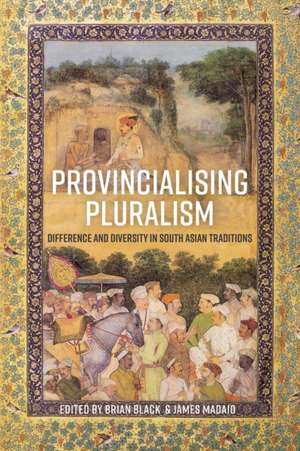
Provincialising Pluralism
Editat de Brian Black, James Madaioen Limba Engleză Hardback – 8 ian 2026
This diverse collection is the first in-depth treatment of the variety of ways that South Asian traditions theorise plurality. Bringing together case studies across South Asia's distinctive religious landscape, it marks a significant contribution to re-thinking pluralism in the 21st century.
Preț: 692.71 lei
Preț vechi: 1294.48 lei
-46% Nou
Puncte Express: 1039
Preț estimativ în valută:
122.62€ • 142.43$ • 106.23£
122.62€ • 142.43$ • 106.23£
Carte disponibilă
Livrare economică 09-23 februarie
Preluare comenzi: 021 569.72.76
Specificații
ISBN-13: 9781350436039
ISBN-10: 1350436038
Pagini: 544
Dimensiuni: 176 x 248 x 36 mm
Greutate: 0.45 kg
Editura: BLOOMSBURY ACADEMIC
Locul publicării:London, United Kingdom
ISBN-10: 1350436038
Pagini: 544
Dimensiuni: 176 x 248 x 36 mm
Greutate: 0.45 kg
Editura: BLOOMSBURY ACADEMIC
Locul publicării:London, United Kingdom
Cuprins
Table of Contents
Introduction: Brian Black and James Madaio.
Part 1: Pluralisms in Ancient South Asia
Chapter 1: Claire Maes: '"I heard it through the grapevine." Gossip and Rumour in the Pali Canon as Strategies to Deal with Religious Others'
Chapter 2: Sonam Kachru: 'Asoka's Principled Pluralism'
Chapter 3: Mark McClish: 'Pluralism and Religious Policy in the Arthasastra'
Chapter 4: Brian Black: 'The Mahabharata's Dharmic Pluralism'
Chapter 5: Vrinda Dalmiya: 'In Defence of Double-Think: Stances, Standpoints, and Justice in the Mahabharata and Feminist Epistemology'
Chapter 6: Jessica Frazier: 'Collaboration, Inference, and Virtue in the Caraka Samhita'
Chapter 7: Anil Mundra: 'Pluralistic Selves: Jain Engagements with Doctrinal Difference and Identity'
Chapter 8: Patrick Lambelet: 'Weaving Many into One: Plurality and Unity in the Buddhist Mantrayana'
Part 2: Pluralisms in Pre-Modern South Asia
Chapter 9: Nancy M. Martin: 'Forging Self and Sampraday: Inclusion, Equality, and Religious Diversity in Pre-Modern Bhakti'
Chapter 10: Pashaura Singh: 'Religious Pluralism and the Bhagat Bani in the Guru Granth Sahib'
Chapter 11: Jaroslav Strnad: 'Plurality of Spiritual Paths in the Dadupanthi Community of 17th Century Rajasthan'
Chapter 12: Rembert Lutjeharms: 'Encounters with the Inconceivable: Experience and Inclusivism in Early Gaudiya Vaisnava Theology'
Chapter 13: Rosie Edgley and Jacqueline Suthren Hirst: 'Addressing Plurality in Madhusudana Sarasvati's Bhagavadgita commentary'
Chapter 14: Supriya Gandhi: 'Reconciling Difference Through Tatbiq: Pluralism and Comparative Religion at the Mughal Court
Part 3: Pluralisms in Modern South Asia
Chapter 15: Scott R. Stroud: 'Ambedkar, Pragmatic Buddhism, and Democratic Pluralism'
Chapter 16: Elise Coquereau-Saouma: 'Witnessing and Realising Plurality in 20th Century Indian Philosophy'
Chapter 17: Arindam Chakrabarti: 'Seesaw Worlds, Interrogative Reality, and Alternative Theories of Error: From Kalidas Bhattacharya back to Abhinavagupta'
Chapter 18: James Madaio: 'Plurality and the Other in Ramchandra Gandhi's Hermeneutics of Being'
Chapter 19: Humeira Iqtidar: 'Is Tolerance Liberal? Javed Ahmed Ghamidi and the Non-Muslim Minority'
Chapter 20: Brian Black and James Madaio: 'Concluding Reflections: Thinking Pluralistically about Pluralism'
Introduction: Brian Black and James Madaio.
Part 1: Pluralisms in Ancient South Asia
Chapter 1: Claire Maes: '"I heard it through the grapevine." Gossip and Rumour in the Pali Canon as Strategies to Deal with Religious Others'
Chapter 2: Sonam Kachru: 'Asoka's Principled Pluralism'
Chapter 3: Mark McClish: 'Pluralism and Religious Policy in the Arthasastra'
Chapter 4: Brian Black: 'The Mahabharata's Dharmic Pluralism'
Chapter 5: Vrinda Dalmiya: 'In Defence of Double-Think: Stances, Standpoints, and Justice in the Mahabharata and Feminist Epistemology'
Chapter 6: Jessica Frazier: 'Collaboration, Inference, and Virtue in the Caraka Samhita'
Chapter 7: Anil Mundra: 'Pluralistic Selves: Jain Engagements with Doctrinal Difference and Identity'
Chapter 8: Patrick Lambelet: 'Weaving Many into One: Plurality and Unity in the Buddhist Mantrayana'
Part 2: Pluralisms in Pre-Modern South Asia
Chapter 9: Nancy M. Martin: 'Forging Self and Sampraday: Inclusion, Equality, and Religious Diversity in Pre-Modern Bhakti'
Chapter 10: Pashaura Singh: 'Religious Pluralism and the Bhagat Bani in the Guru Granth Sahib'
Chapter 11: Jaroslav Strnad: 'Plurality of Spiritual Paths in the Dadupanthi Community of 17th Century Rajasthan'
Chapter 12: Rembert Lutjeharms: 'Encounters with the Inconceivable: Experience and Inclusivism in Early Gaudiya Vaisnava Theology'
Chapter 13: Rosie Edgley and Jacqueline Suthren Hirst: 'Addressing Plurality in Madhusudana Sarasvati's Bhagavadgita commentary'
Chapter 14: Supriya Gandhi: 'Reconciling Difference Through Tatbiq: Pluralism and Comparative Religion at the Mughal Court
Part 3: Pluralisms in Modern South Asia
Chapter 15: Scott R. Stroud: 'Ambedkar, Pragmatic Buddhism, and Democratic Pluralism'
Chapter 16: Elise Coquereau-Saouma: 'Witnessing and Realising Plurality in 20th Century Indian Philosophy'
Chapter 17: Arindam Chakrabarti: 'Seesaw Worlds, Interrogative Reality, and Alternative Theories of Error: From Kalidas Bhattacharya back to Abhinavagupta'
Chapter 18: James Madaio: 'Plurality and the Other in Ramchandra Gandhi's Hermeneutics of Being'
Chapter 19: Humeira Iqtidar: 'Is Tolerance Liberal? Javed Ahmed Ghamidi and the Non-Muslim Minority'
Chapter 20: Brian Black and James Madaio: 'Concluding Reflections: Thinking Pluralistically about Pluralism'
Recenzii
Attempts to mine the past of India or China for philosophical purpose are often met with accusations of anachronism. Through detailed and sophisticated case studies, the authors of Provincialising Pluralism have demonstrated how the past can and does speak to the present. This is a master work of historical interpretation answering some urgent issues relating to pluralism in a globalised world.
'This is a landmark volume in South Asian studies and intellectual history, distinguished by its capacious canvas and the scholarly depth of the essays. The contributors pluralize "pluralism" itself, making a distinctive contribution to the rich debates on pluralism and syncretism that have characterised South Asia's long intellectual and religious history.'
'This stimulating collection of essays understands pluralism less as a modern social and political ethic and more as an epistemic framework for understanding plurality. It makes a convincing case that a long, varied tradition of South Asian understandings of diversities exist that has the potential to enrich how humans view each other's distinctiveness and try to respond to it.'
'The essays included in this thoughtful volume analyse a variety of pluralisms across Indian philosophical discourses and time periods. It is a challenging collection which makes a timely intervention in our current debates about the past and the potential for pluralism in the future.'
'This is a landmark volume in South Asian studies and intellectual history, distinguished by its capacious canvas and the scholarly depth of the essays. The contributors pluralize "pluralism" itself, making a distinctive contribution to the rich debates on pluralism and syncretism that have characterised South Asia's long intellectual and religious history.'
'This stimulating collection of essays understands pluralism less as a modern social and political ethic and more as an epistemic framework for understanding plurality. It makes a convincing case that a long, varied tradition of South Asian understandings of diversities exist that has the potential to enrich how humans view each other's distinctiveness and try to respond to it.'
'The essays included in this thoughtful volume analyse a variety of pluralisms across Indian philosophical discourses and time periods. It is a challenging collection which makes a timely intervention in our current debates about the past and the potential for pluralism in the future.'