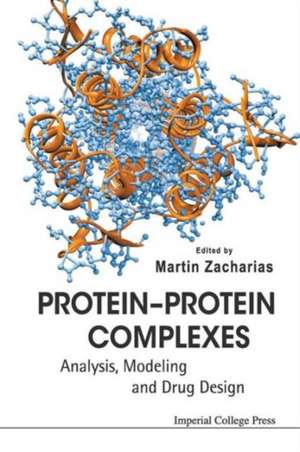
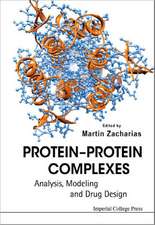
Protein-Protein Complexes
Editat de Martin Zachariasen Limba Engleză Paperback – 3 mai 2010
Nivelul de studiu: masterat, doctorat și referință profesională pentru cercetători în biochimie și biologie structurală. În volumul Protein-Protein Complexes, editat de Martin Zacharias, suntem de părere că cititorul găsește una dintre cele mai riguroase sinteze ale progresului recent în elucidarea structurilor proteice. Spre deosebire de abordările pur teoretice, acest volum se ancorează în datele obținute prin analiză structurală directă, investigând forțele motrice din spatele asocierii proteinelor și dinamica interfețelor acestora.
Structura celor 15 capitole este concepută pentru a ghida specialistul de la fundamentele fizico-chimice către aplicații practice în designul de medicamente. Apreciem în mod deosebit modul în care textul integrează metodele de determinare experimentală (RMN, raze X) cu algoritmii computaționali de docking. Cartea completează perspectiva oferită de Computational Protein-Protein Interactions de Ruth Nussinov, adăugând o componentă experimentală solidă și detalii despre cum cunoașterea interfețelor poate fi utilizată pentru a influența interacțiunile prin molecule mici sau peptide mimetice. În timp ce volumul lui Nussinov se concentrează pe predicția funcției din secvență, lucrarea de față prioritizează mecanismele de recunoaștere la nivel atomic.
Tonul este unul academic precis, evitând speculațiile și bazându-se pe analize de bioinformatică și modelare moleculară. Este un instrument de lucru esențial pentru cei care doresc să înțeleagă nu doar că două proteine interacționează, ci și „cum” și „de ce” se întâmplă acest lucru la nivel structural, oferind bazele necesare pentru proiectarea de noi interfețe proteice în biotehnologie.
Preț: 496.66 lei
Preț vechi: 584.30 lei
-15%
Carte tipărită la comandă
Livrare economică 27 noiembrie-11 decembrie
Specificații
ISBN-10: 1848163398
Pagini: 390
Dimensiuni: 152 x 226 x 18 mm
Greutate: 0.61 kg
Editura: Imperial College Press
Locul publicării:London, England, United Kingdom
V-ar putea interesa
-
 Separation Methods In ProteomicsGary B. Smejkal-18%Preț: 1701.01 lei2074.40 lei
 -
 Mass Spectrometry of GlycoproteinsJennifer J. Kohler-15%Preț: 708.47 lei833.49 lei
 -
 MetalloproteinsYvain Nicolet-15%Preț: 705.83 lei830.38 lei
 -
 Proline: Biosynthesis, Regulation & Health BenefitsBouzid Nedjimi-27%Preț: 1000.32 lei1362.96 lei
 -
 -27%Preț: 1718.45 lei2340.40 lei
 -
 Protein-Protein ComplexesZacharias-18%Preț: 816.66 lei995.93 lei
 -
 Preț: 282.48 lei
 -
 Preț: 95.09 lei
 -
 Preț: 157.88 lei
 -
 -15%Preț: 665.43 lei782.86 lei
 -
 The Protein Folding Problem and Its SolutionsArieh Ben-Naim-15%Preț: 677.80 lei797.41 lei
 -
 The Protein Folding Problem and Its SolutionsArieh Ben NaimPreț: 234.32 lei
 -
 Protein Folding Dynamics and StabilityPrakash Saudagar-18%Preț: 1438.64 lei1754.43 lei
De ce să citești această carte
Această resursă este esențială pentru cercetătorii care doresc să treacă de la simpla observare a interacțiunilor proteice la manipularea lor deliberată. Oferă o bază teoretică și practică pentru designul de medicamente și mutageneză, fiind ideală pentru studenții la master sau doctorat care au nevoie de o înțelegere profundă a interfețelor moleculare și a metodelor de docking.