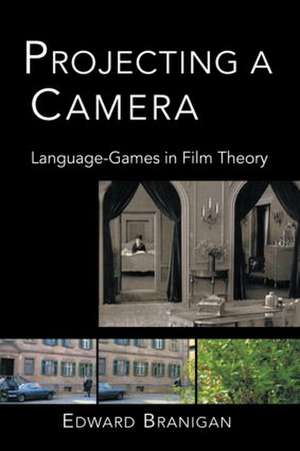
Projecting a Camera: Language-Games in Film Theory
Autor Edward Braniganen Limba Engleză Paperback – 13 ian 2006
With its thorough grounding in the philosophy of spectatorship and narrative, Projecting a Camera takes the study of film to a new level. With the care and precision that he brought to Narrative Comprehension and Film, Edward Branigan maps the ways in which we must understand the role of the camera, the meaning of the frame, the role of the spectator, and other key components of film-viewing. By analyzing how we think, discuss, and marvel about the films we see, Projecting a Camera, offers insights rich in implications for our understanding of film and film studies.
| Toate formatele și edițiile | Preț | Express |
|---|---|---|
| Paperback (1) | 249.11 lei 3-5 săpt. | |
| Taylor & Francis – 13 ian 2006 | 249.11 lei 3-5 săpt. | |
| Hardback (1) | 817.97 lei 3-5 săpt. | |
| Taylor & Francis – 13 ian 2006 | 817.97 lei 3-5 săpt. |
Preț: 249.11 lei
Preț vechi: 345.37 lei
-28%
Puncte Express: 374
Preț estimativ în valută:
44.09€ • 51.52$ • 38.28£
44.09€ • 51.52$ • 38.28£
Carte disponibilă
Livrare economică 29 ianuarie-12 februarie
Preluare comenzi: 021 569.72.76
Specificații
ISBN-13: 9780415942546
ISBN-10: 0415942543
Pagini: 456
Ilustrații: 4 b/w images, 13 tables and 1 halftone
Dimensiuni: 152 x 229 x 24 mm
Greutate: 0.84 kg
Ediția:1
Editura: Taylor & Francis
Colecția Routledge
Locul publicării:Oxford, United Kingdom
ISBN-10: 0415942543
Pagini: 456
Ilustrații: 4 b/w images, 13 tables and 1 halftone
Dimensiuni: 152 x 229 x 24 mm
Greutate: 0.84 kg
Ediția:1
Editura: Taylor & Francis
Colecția Routledge
Locul publicării:Oxford, United Kingdom
V-ar putea interesa
-
 Preț: 311.77 lei
 -
 2130 volte "Vivere"Mattia CattaneoPreț: 85.71 lei
 -
 Tracking Color in Cinema and Art: Philosophy and AestheticsEdward Branigan-21%Preț: 305.73 lei385.87 lei
 -
 Narrative Comprehension and FilmEdward Branigan-29%Preț: 847.97 lei1197.26 lei
 -
 SheProvAkilah LoganPreț: 101.05 lei
 -
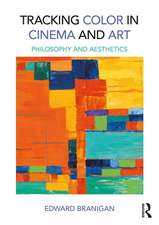 Tracking Color in Cinema and Art: Philosophy and AestheticsEdward Branigan-30%Preț: 892.02 lei1270.73 lei
 -
 -23%Preț: 241.79 lei312.48 lei
 -
 The Methuen Book of Shakespeare AnecdotesRalph BerryPreț: 230.00 lei
 -
 The Routledge Encyclopedia of Film TheoryEdward Branigan-25%Preț: 348.82 lei465.27 lei
 -
 Scenic Automation HandbookGareth Conner-25%Preț: 384.06 lei509.43 lei
 -
 VS. ROBERT SCHUMANNMyla Lichtman-FieldsPreț: 89.00 lei
 -
 Raymond BellourHilary Radner-22%Preț: 629.99 lei806.51 lei
 -
 Preț: 232.67 lei
 -
 Hollywood Secrets and Scandals (hardback)Sue CameronPreț: 225.85 lei
 -
 AjakaMayowa Peters SajaPreț: 88.76 lei
 -
 RelationshipsTsl PublicationsPreț: 82.62 lei
 -
 Pussy LibertyValerie Isaiah SadohPreț: 39.99 lei
 -
 Preț: 91.61 lei
 -
 -23%Preț: 821.11 lei1066.38 lei
 -
 Right@Sight for Piano, Grade 3Thomas A. JohnsonPreț: 58.35 lei
Cuprins
Preface
Acknowledgments
Terminological note
1. The Life of a Camera
2. A Camera-in-the-Text
3. What Is a Camera?
4. How Frame Lines (and Film Theory) Figure
5. When Is a Camera?
Notes
Works cited
Index
Acknowledgments
Terminological note
1. The Life of a Camera
2. A Camera-in-the-Text
3. What Is a Camera?
4. How Frame Lines (and Film Theory) Figure
5. When Is a Camera?
Notes
Works cited
Index
Notă biografică
Edward Branigan is Director of Graduate Studies and a Professor of Film Studies at the University of California, Santa Barbara, and is an attorney. He is the author of Point of View in the Cinema and Narrative Comprehension and Film, which was awarded the Katherine Singer Kovacs prize in Cinema Studies.
Recenzii
"Projecting a Camera is not the type of book you can read in a weekend and then put aside. It offers a daunting challenge to our everyday, intuitive understanding of film and theoretical concepts. Its scope, breadth of argument and insights into film theory are simply breathtaking. Like Deleuze’s two cinema books (1986, 1989), it may take the discipline several years to come to terms with Branigan’s innovative perspective, to implement his original insights, and rethink film studies along the lines he proposes."--Warren Buckland, New Review of Film and Television Studies
Descriere
With its thorough grounding in the philosophy of spectatorship and narrative, Projecting a Camera takes the study of film to a new level. With the care and precision that he brought to Narrative Comprehension and Film, Edward Branigan maps the ways in which we must understand the role of the camera, the meaning of the frame, the role of the spectator, and other key components of film-viewing. By analyzing how we think, discuss, and marvel about the films we see, Projecting a Camera, offers insights rich in implications for our understanding of film and film studies.