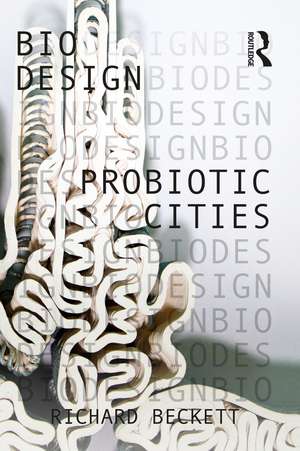
Probiotic Cities: Bio Design
Autor Richard Becketten Limba Engleză Paperback – 20 oct 2023
Preț: 319.48 lei
Puncte Express: 479
Carte indisponibilă temporar
Doresc să fiu notificat când acest titlu va fi disponibil:
Se trimite...
Specificații
ISBN-13: 9781032076102
ISBN-10: 1032076100
Pagini: 130
Ilustrații: 56
Dimensiuni: 129 x 198 x 12 mm
Greutate: 0.17 kg
Ediția:1
Editura: Taylor & Francis
Colecția Routledge
Seria Bio Design
Locul publicării:Oxford, United Kingdom
ISBN-10: 1032076100
Pagini: 130
Ilustrații: 56
Dimensiuni: 129 x 198 x 12 mm
Greutate: 0.17 kg
Ediția:1
Editura: Taylor & Francis
Colecția Routledge
Seria Bio Design
Locul publicării:Oxford, United Kingdom
Public țintă
Professional Practice & DevelopmentCuprins
1. Introduction 2. Architecture for the Holobiont 3. Micro-Scale: Probiotic Materiality 4. Meso-Scale: Probiotic Design Interventions 5. Macro-Scale: Probiotic Cities 6. Conclusion
Notă biografică
Richard Beckett is an architect and Associate Professor of Bioaugmented Design at The Bartlett School of Architecture, University College London (UCL). He is Director of Research Cluster 7 on the BPro Architectural Design master’s programme, and leads Studio 3 on the Landscape Architecture course. His research is focused on design operating at the intersection of computation, biofabrication, and microbial ecologies in buildings and cities. His research on probiotic design won the RIBA President's Research Award in 2021. He has built numerous projects and has been exhibited internationally, including at Archilab – 'Naturalising Architecture', the Pompidou Centre and at Cooper Hewitt, Smithsonian Design Museum – 'Nature'.
Descriere
Probiotic Cities presents highly experimental design research at the intersection of architecture, engineering and microbiology. The book defines a new microbial paradigm for architecture that engages with broader emerging ecological or ‘more than human’ philosophies for design within the age of the Anthropocene.